


Copper Fireplace Scuttle
A copper fireplace scuttle brings warmth and character to a hearth, holding coal or logs within durable metalwork.

Copper Fireplace Scuttle
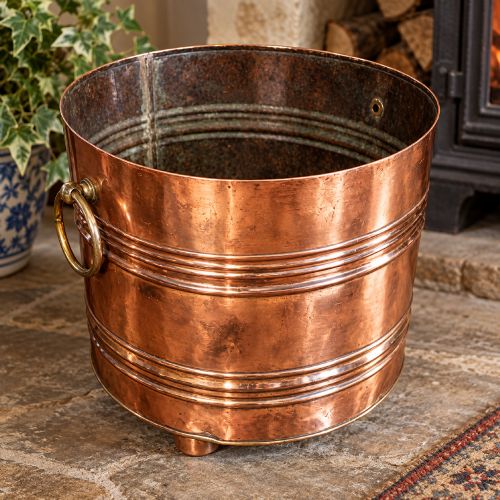
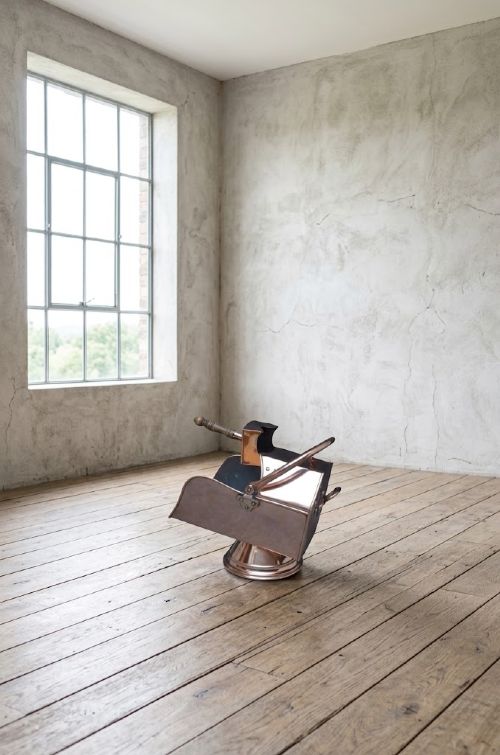
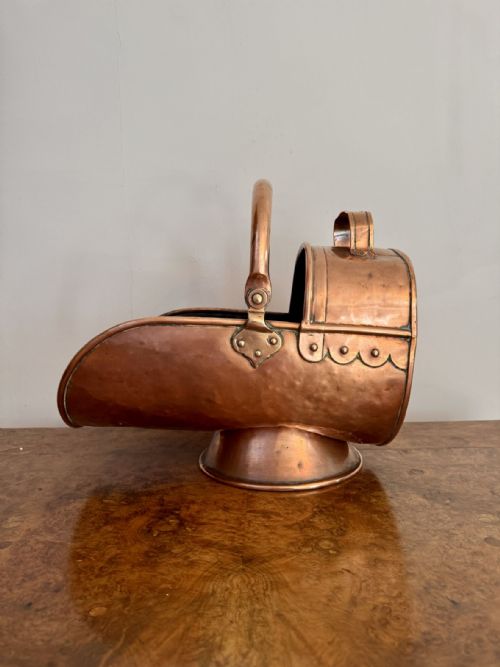
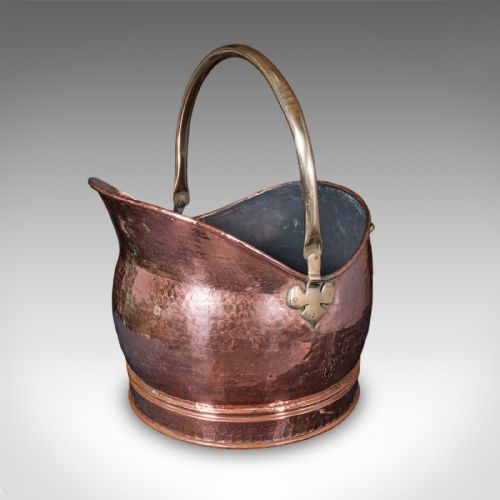
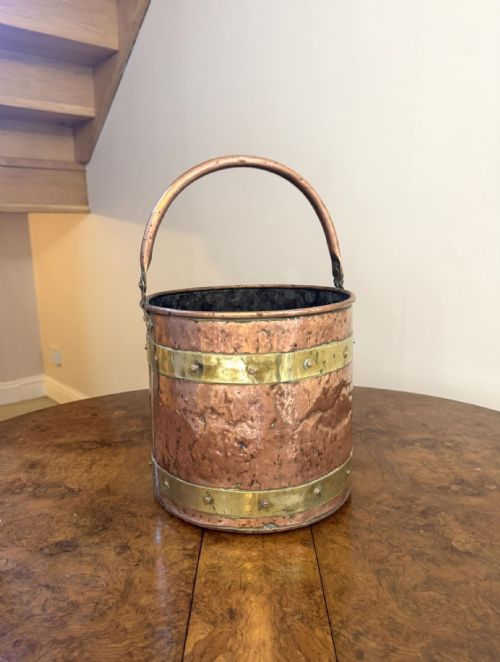
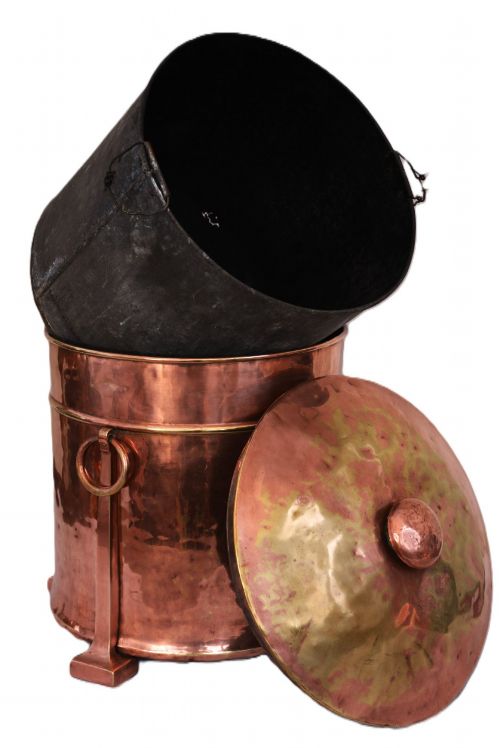
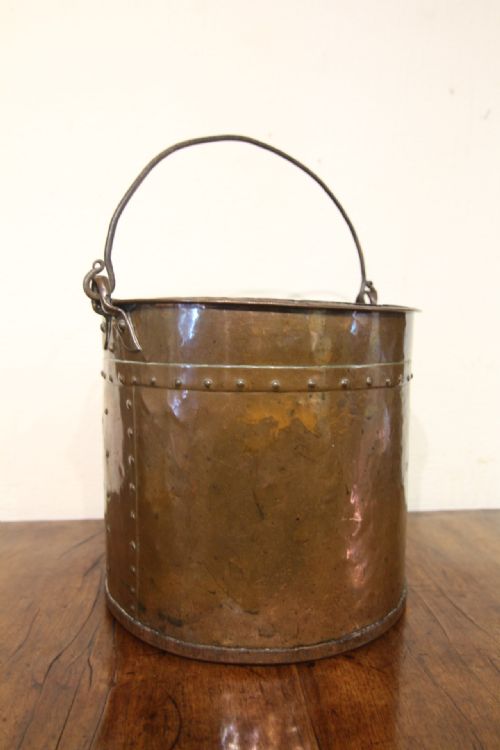
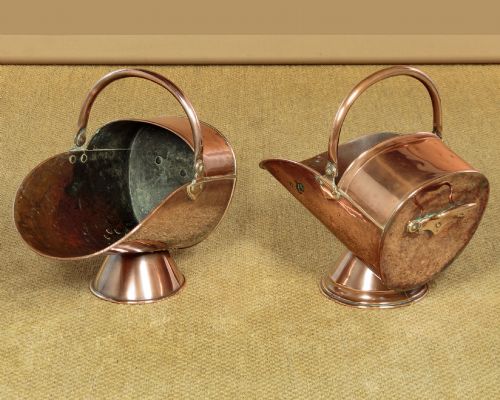
A copper fireplace scuttle serves a practical hearthside function while displaying traditional metalworking craft. These vessels store coal or logs near an open fire, appearing in helmet shapes, cylindrical bins and bucket forms.
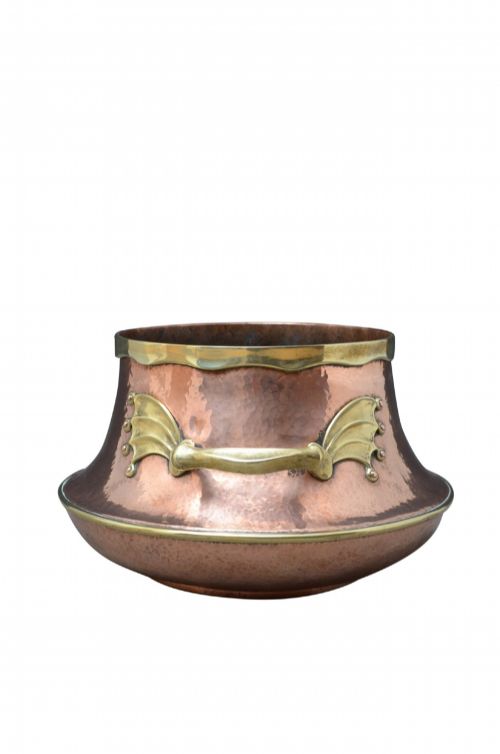
Most examples date from the Victorian period through to the Edwardian era and the Arts and Crafts movement. They function as both fireside storage and decorative metalwork, often doubling as planters or jardinieres when retired from active hearth service.
Materials and construction
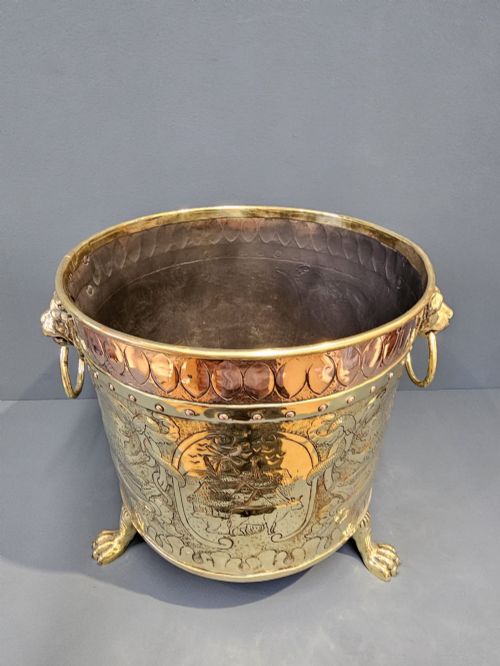
Makers shaped sheet copper by hand, joining seams with visible rivets or smooth soldering. Brass bands, handles and feet often reinforce the copper body, contrasting the warm reddish metal with bright yellow brass.
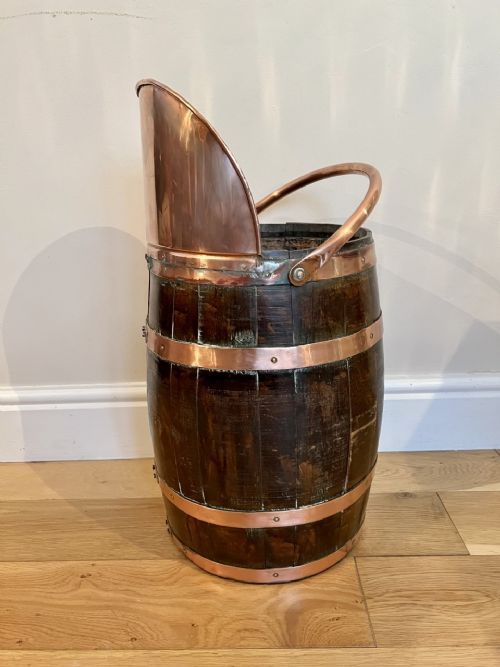
Many items incorporate iron handles, wrought iron bails or wooden components such as oak staves and handles. Surface decoration ranges from plain handbeaten finishes to elaborate embossed patterns typical of Arts and Crafts and Victorian design.
Many a hardworking coal bucket eventually retires from soot duty to spend its golden years holding ferns as a smart parlor planter.
What separates examples
Quality rests in the weight of the metal and the integrity of the construction rather than surface shine alone. Heavy gauge copper with secure riveting and solid brass mountings indicates sturdier manufacture.
Detailing on handles, swing bails and handbeaten hammer marks distinguishes standard utility items from more considered decorative pieces. The proportion of the vessel and the crispness of any embossed ornament also mark out better examples.
The Copper Fireplace Scuttle Glossary
- Coal scuttle
- A container designed to hold coal for a fireplace, often featuring a sloping mouth or a hinged lid for easy pouring. Many include a fixed handle and a swinging bail.
- Helmet scuttle
- A coal bucket shaped with a flared rim resembling a classical helmet, usually resting on a small foot or three brass feet. This form allows fuel to be tipped forward cleanly.
- Arts and Crafts
- A design movement spanning the late nineteenth and early twentieth centuries that prioritised visible handcrafting, simple forms and honest materials over machine production. Copper buckets from this period often display handbeaten textures.
- Jardiniere
- An ornamental pot or vessel for holding flowers or plants, frequently repurposed from copper coal buckets and log bins once they leave active fireside use.
- Wrought iron
- Iron beaten and shaped by hand into hardware such as handles and brackets, valued for its fibrous texture and strength.
Copper Fireplace Scuttle: Frequently Asked Questions
What is a copper fireplace scuttle used for?
These vessels store coal, slack or logs beside a fireplace for convenient refuelling. They keep fuel contained neatly on the hearth while adding a reflective metallic element to the room.
Many examples also serve secondary decorative purposes as planters, umbrella stands or general storage bins when no longer kept by an active fire.
How do I date a copper coal scuttle?
Dating relies on stylistic clues and construction methods, observing details such as hand-riveted seams and hammered surfaces. Victorian and Edwardian pieces often show distinct aesthetic influences ranging from ornate embossing to plain utilitarian riveting.
Georgian examples tend to follow simpler helmet lines with heavy brass mounts, while Arts and Crafts pieces embrace hammered textures and exposed construction.
Are these scuttles still suitable for real fires?
Most antique copper scuttles remain entirely sturdy enough to hold logs or coal beside a fireplace. The thick gauge copper and iron handles were built for daily domestic utility.
Care should be taken to check for watertightness if storing damp logs or using the vessel as a planter, as older soldered seams can develop minor seepage over time.
How do I clean and polish antique copper?
Maintenance depends on whether you prefer a bright polished finish or a deep, aged patina with natural dark oxidation. Gentle cleaning with warm soapy water removes soot and dust without disturbing the surface.
Avoid harsh modern chemical abrasives that strip the historic character from handbeaten copper and brass surfaces.