


Continental Figurine Pair
These continental figurine pair selections bring centuries of European craftsmanship directly to your mantelpiece.
Continental Figurine Pair
The selections span multiple eras, with nineteenth-century Victorian and Rococo Revival examples appearing frequently alongside earlier eighteenth-century models and twentieth-century earthenwares. These objects often depict figures in pastoral or courtly settings, sometimes incorporating functional elements such as sweetmeat dishes or candlesticks.
Origins vary across European centres including Germany, France and Belgium, with porcelain remaining the dominant medium alongside occasional sterling silver and carved wood. Buyers find both monumental large-scale figures and miniature dog models, reflecting the broad scope of continental European ceramic and metal production.
Assessing quality in continental figurine pairs
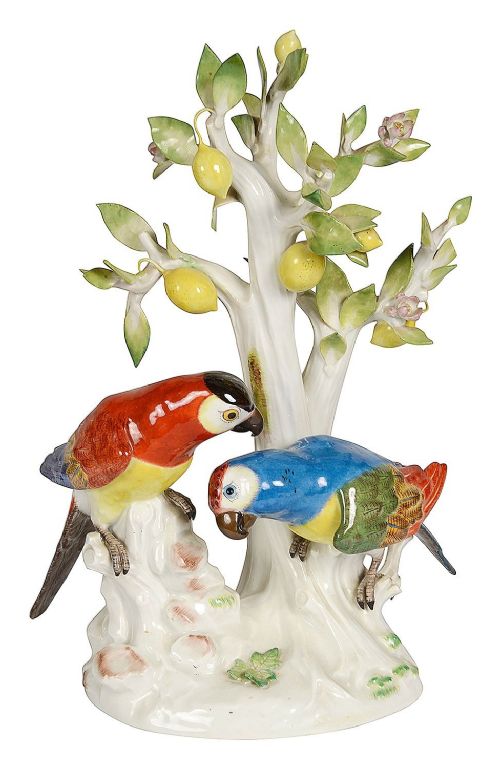
Scale and ambition dictate distinction, with large-scale figures standing fifty centimetres tall demonstrating superior sculptural confidence compared to smaller, mass-produced items. The survival of fragile appended elements, such as leaves, branches and delicate floral attributes, indicates superior handling and preservation over time.
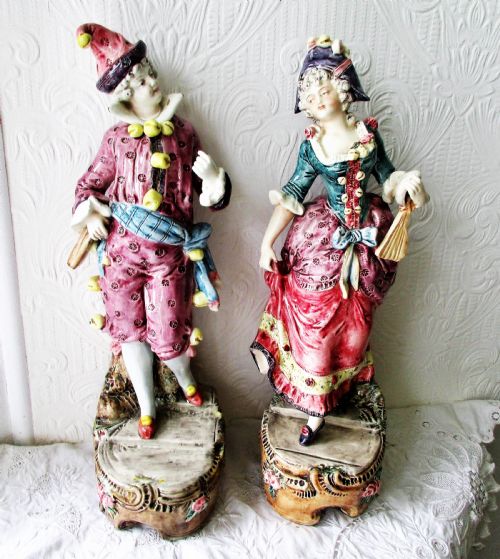
The presence of factory marks, impressed ciphers, or well-documented studio attributions provides historical weight and confirms the origin of the modelling. Craftsmanship extends to the matching symmetry of the pair, where balanced postures and complementary colour palettes maintain visual harmony between the two pieces.
Listings for continental figurine pairs feature works spanning the seventeenth to the twentieth centuries, utilising hard-paste porcelain, sterling silver, earthenware, and wood.
Meissen·Samson of Paris·C G Schierholz·Volkstedt·Carl Thieme·Vion et Baury
The Continental Figurine Pair Glossary
- Hard-paste porcelain
- A durable ceramic composition fired at very high temperatures, composed of kaolin and petuntse. It provides a dense, vitrified body that resists scratching and holds fine sculptural detail.
- Bisque porcelain
- Unglazed porcelain fired once to create a matte, porous finish with a tactile, marble-like texture. It was frequently utilised for nineteenth-century figures to emphasise anatomical and facial subtleties.
- Sweetmeat dish
- A small vessel or bowl integrated into a figurine grouping, originally designed to hold confectionery, nuts or sweetmeats during formal dining. These pieces combine sculptural art with functional tabletop utility.
- Rococo Revival
- A nineteenth-century design style drawing inspiration from the asymmetrical curves, natural motifs and ornamental exuberance of the eighteenth-century Rococo movement. It manifests in scrollwork bases and dynamic, swirling drapery.
- Polychrome
- Multi-coloured decoration applied to ceramics or metalwork using various enamel pigments. This technique allows for realistic depictions of costume, flora and fauna across the figurine surface.
Continental Figurine Pair: Frequently Asked Questions
What periods do these figures come from?
The listings include pieces spanning from the seventeenth century through to the early twentieth century. Nineteenth-century Victorian and Rococo Revival examples appear most frequently.
Earlier eighteenth-century items also feature alongside vintage twentieth-century earthenware and silver productions from various European schools.
Are these figures always made of porcelain?
While porcelain is the most common medium, the selection extends to other materials. Sterling silver is used for animal sculptures like cockerels and grouse.
Wood appears in carved angel candlesticks, and earthenware forms certain twentieth-century carnival figurines.
How were sweetmeat figures used?
Sweetmeat figures incorporated small bowls or dishes into their sculptural designs to hold confectioneries on dining tables. They served both as decorative centrepieces and functional tableware for wealthy households.
Guests would access the sweets held within or beside the figures during dessert courses.
How do I identify reproduction marks?
Many nineteenth-century factories produced pieces in the style of earlier makers like Chelsea or Meissen. Identifying genuine period pieces relies on examining the quality of the hand-painting, paste density, and impressed factory ciphers rather than relying on painted marks alone.
Expert handling helps distinguish nineteenth-century revival works from eighteenth-century originals.