



Continental Ceramic Figures
Continental ceramic figures bring historical character to a room through sculpted porcelain and earthenware shaped across European kilns.
Continental Ceramic Figures
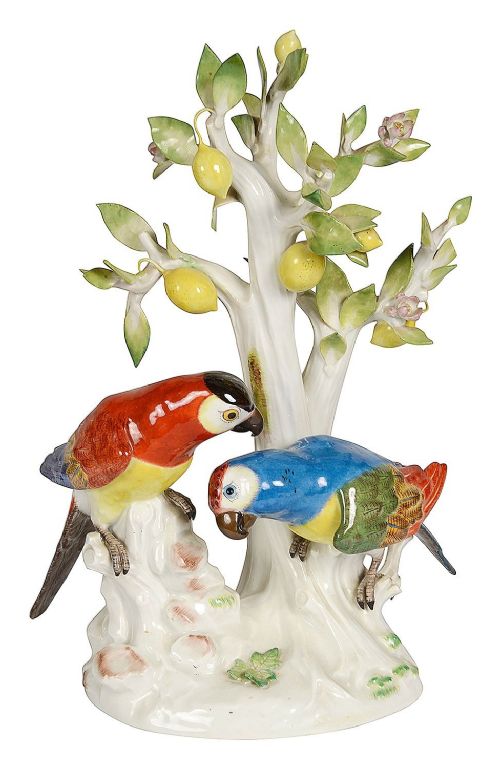
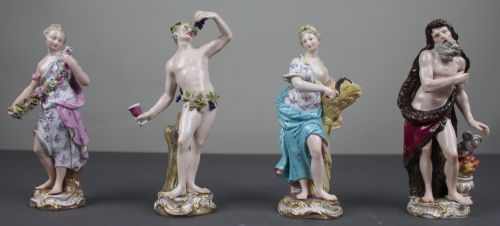
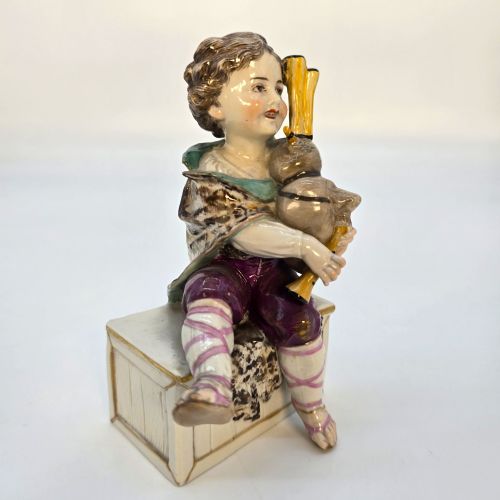
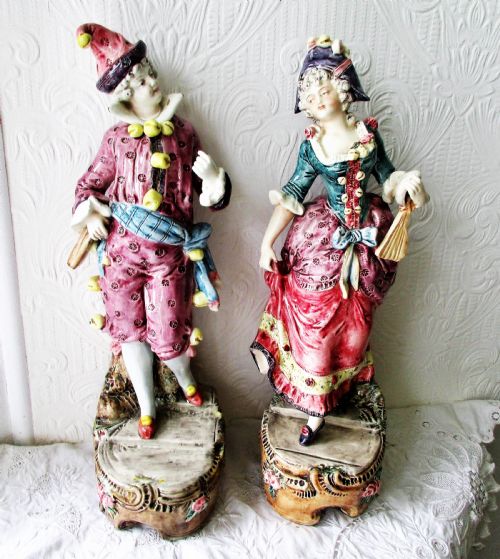
The objects take diverse forms, including pairs of parrots under lemon trees, seasonal sets of children, mythological depictions of Venus and Cupid, and monumental figures of maidens or pugs. These pieces reflect the sculptural ambitions of European porcelain manufactories such as Meissen, Volkstedt, and Samson of Paris.
Buyers will find both hard-paste porcelain and bisque porcelain employed to capture human, animal, and botanical subjects with varying degrees of scale and complexity. These pieces function primarily as decorative cabinet or mantel ornaments rather than utilitarian vessels.
Materials and production techniques
Makers utilised hard-paste porcelain and unglazed bisque porcelain as the primary foundational materials for shaping these figures in moulds or through manual modelling. Hard-paste porcelain provided a dense, vitrified body capable of holding sharp details during high-temperature firing.
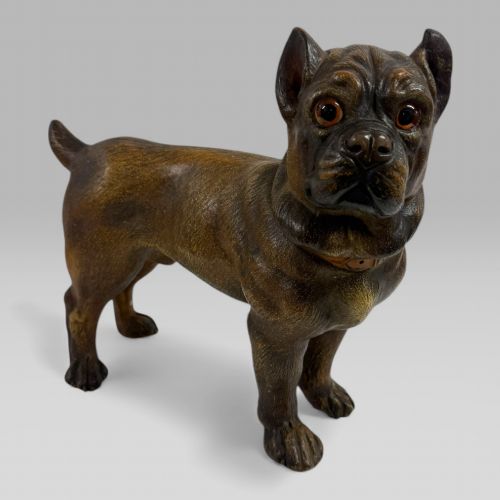
Even fierce guard dogs look charming when rendered in miniature nineteenth-century porcelain.
Distinctions in quality
Quality rests upon the crispness of the modelling and the precision of the hand-painted enamels, where finely rendered facial expressions and intricate lace or botanical details distinguish superior studio output from standard production. The fluidity of the sculpted pose and the depth of the porcelain body demonstrate the skill behind the workshop.
Larger monumental pieces or complex multi-figure groups present greater technical challenges during firing and assembly, marking out ambitious works from simpler single-figure items.
Meissen Porcelain·Volkstedt Rudolstadt Factory·Samson of Paris·Royal Dux·C G Schierholz·Vion et Baury·Carl Thieme Dresden
The Continental Ceramic Figures Glossary
- Bisque Porcelain
- Unburnt or unglazed porcelain fired to a matte, porous finish that resembles white marble. This material highlights sculptural contours without the distraction of glossy glazes.
- Hard-Paste Porcelain
- A durable ceramic composition of kaolin and petuntse fired at very high temperatures. It forms a dense, vitrified body standard in traditional European figures.
- Enamel
- Vitreous paints applied over or under the glaze to add colour to porcelain surfaces. These pigments undergo subsequent firing to fuse permanently with the ceramic body.
- Sweetmeat Dish
- A small ceremonial dish or figurative container designed to hold confections or sweetmeats at a dining table. They often incorporate sculpted human or animal figures as part of the composition.
- Gilt
- A thin layer of gold or gold leaf applied to the surface of porcelain to highlight decorative borders, clothing details, and bases. It adds a reflective metallic accent to the fired colours.
Continental Ceramic Figures: Frequently Asked Questions
Where were most continental ceramic figures made?
The majority of these figures originated in renowned European porcelain centres located in Germany, France, and Austria. Prominent workshops and factories operated in towns like Meissen, Rudolstadt, and Paris.
Production often centred around state-sponsored or private kilns that developed distinct regional styles and sculpting traditions throughout the eighteenth and nineteenth centuries.
What subjects are common in these figures?
Common subjects include pastoral scenes, allegorical representations of the seasons or the senses, and mythological figures drawn from classical antiquity. Animals, birds, and children at play also appear frequently across various manufacturing periods.
Many designs drew inspiration from earlier eighteenth-century models, with nineteenth-century makers reinterpreting Rococo and neoclassical themes for Victorian interiors.
How should I display porcelain figures at home?
These pieces require stable display surfaces away from high-traffic areas or vibrations that could cause them to tip over. Enclosed cabinets or mantelpieces offer protection from dust and accidental impacts.
Direct sunlight should be avoided to prevent any long-term fading of the hand-painted enamel colours and delicate gilding found on the surfaces.