
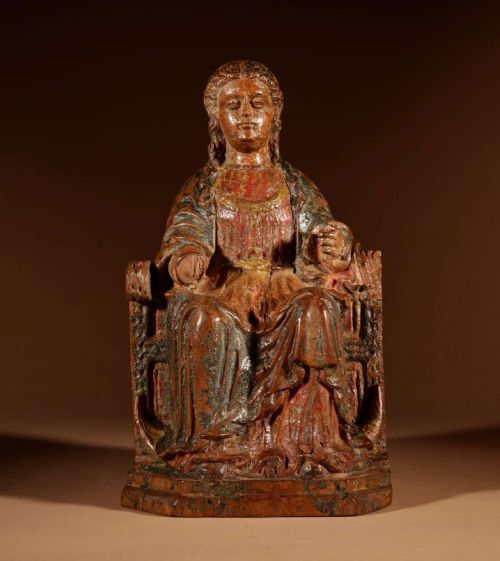
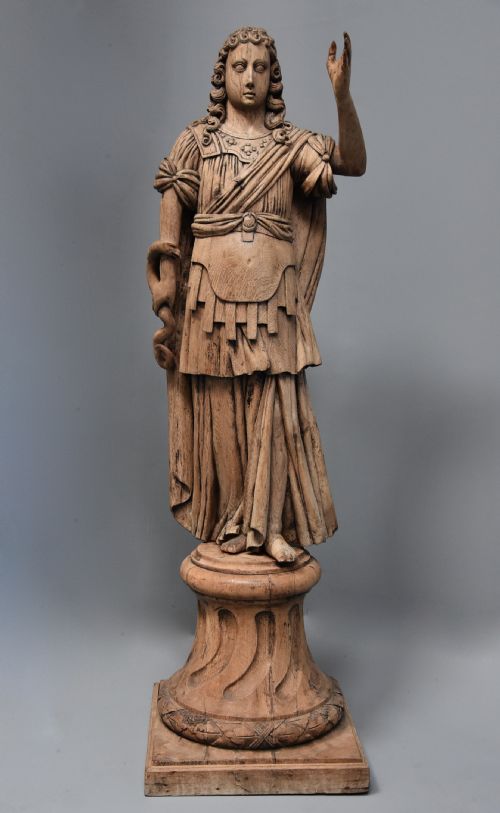
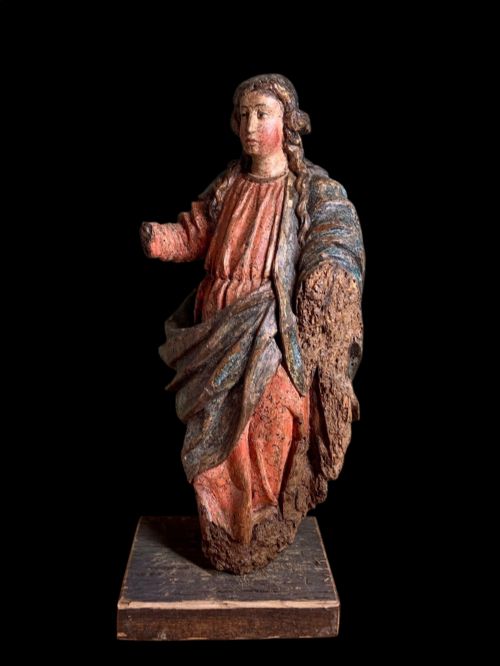
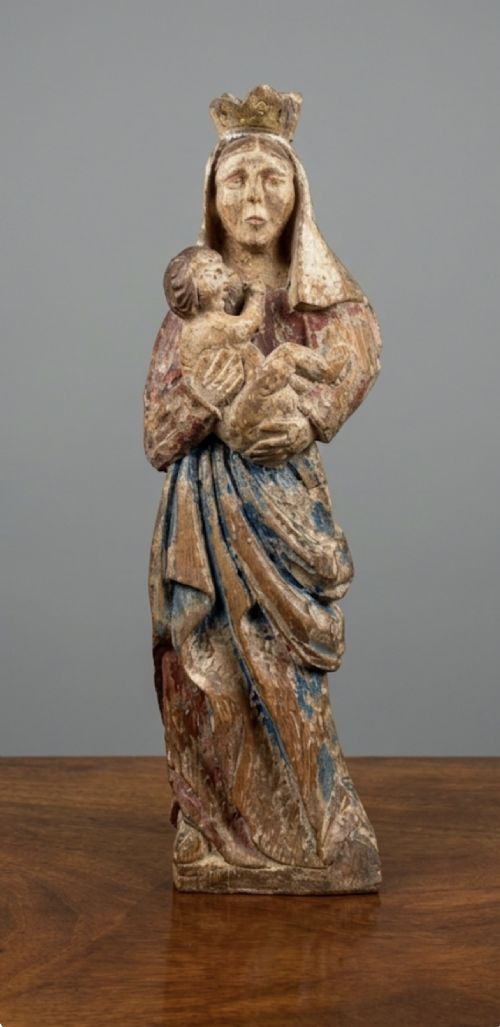

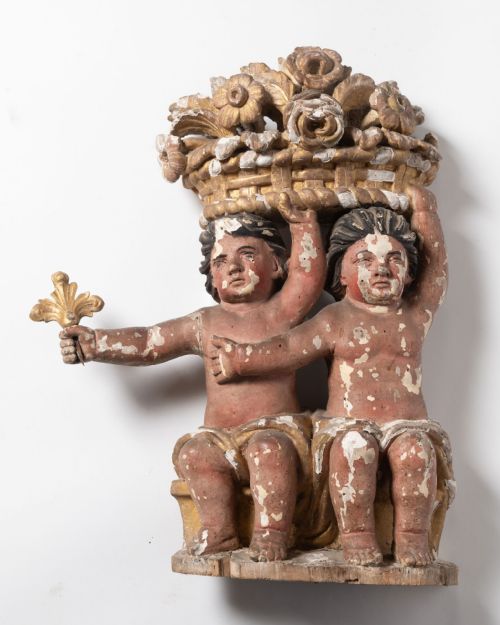
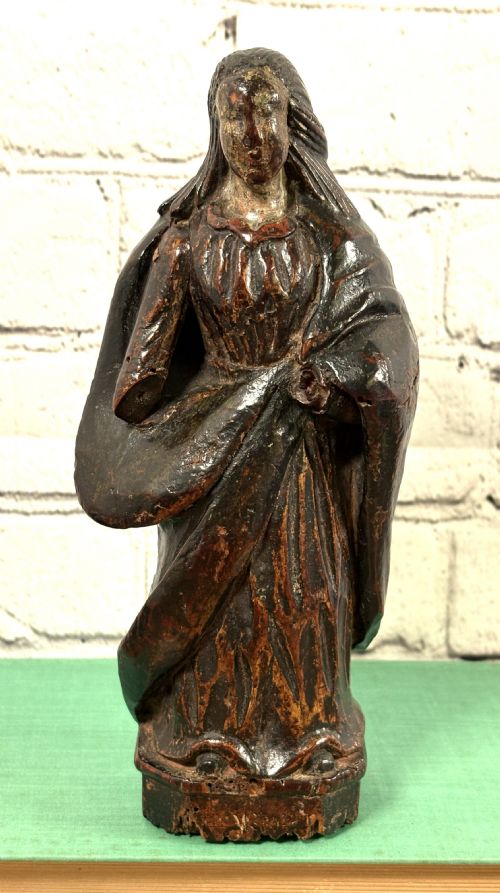


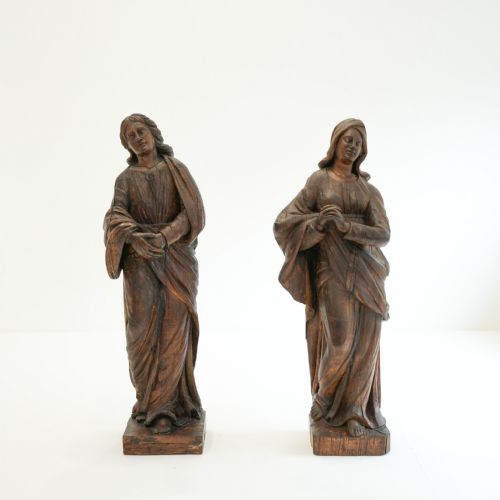


Continental Carved Wood Figure
A continental carved wood figure brings devotional presence, Baroque movement, and medieval gravity into a room through centuries of European hand-carving tradition.
Continental Carved Wood Figure
A continental carved wood figure encompasses religious sculptures, saints, angels, and figurative works originating from European workshops across the sixteenth, seventeenth, and eighteenth centuries. These carvings frequently depict biblical figures, including Madonna and child groups, saints with their attributes, and representations of Christ.
The versions most commonly met on this page span the seventeenth and eighteenth centuries, often rendered in oak, limewood, or walnut. Alongside ecclesiastical statues, buyers encounter decorative objects and functional pieces such as carved wooden figure candlesticks.
Geographic origins extend across Italy, Germany, and Croatia, reflecting distinct regional wood-carving practices. Pieces range from intimate devotional carvings to life-size figures originally created for altarpieces or church interiors.
Materials and Techniques
Many surfaces received layers of gesso preparation before being painted in polychrome pigments or covered in gold leaf. Silvering and polychrome decoration added lifelike presence to religious statues, while other pieces relied on the natural grain of hardwood.
Among the solemn saints and quiet figures, an unexpected nineteenth-century continental carousel horse stands ready for a very different kind of ride.
Assessing Quality
Quality rests in the anatomical conviction of the carving, particularly the rhythm of drapery and the sensitivity given to hands and facial expressions. Master carvers achieved depth and movement that lesser hands missed.
The survival of original polychrome paint or gilding elevates a piece, as does the crispness of tool work in dense timbers like oak or limewood.
The Continental Carved Wood Figure Glossary
- Polychrome
- Painted in several colours. This surface treatment was applied over gesso to give religious statues a lifelike appearance.
- Gesso
- A plaster mixture applied to wood as a base for paint or gold leaf. It provided a smooth surface for detailed decoration.
- Santos
- A carved figure of a saint. These devotional statues were often dressed in textiles or placed on plinths.
- Limewood
- A fine-grained timber favoured by European carvers. It allowed for intricate undercut details without splitting.
- Socle
- A short plinth or pedestal supporting a statue. It elevates the base of the carved figure.
Continental Carved Wood Figure: Frequently Asked Questions
How were these figures originally displayed?
Many figures stood within churches, mounted on altarpieces, or placed on brackets alongside religious architecture.
Smaller devotional examples were housed in domestic spaces or private chapels for personal prayer.
What woods were used for carving?
Carvers selected timbers based on regional availability and the scale of the intended sculpture. Oak, limewood, walnut, and pine appear frequently across the listings.
Softer woods like limewood suited intricate facial details, while oak provided structural strength for larger statues.
How do you date a wooden figure?
Dating relies on stylistic markers of drapery, hair, and facial carving that align with periods like the Baroque or Renaissance. Tool marks and the ageing of the timber also provide clues.
Construction methods, such as pegging and the condition of underlying gesso, further help establish age.
Did all figures retain their paint?
Original polychrome surfaces often wore away over centuries through cleaning, handling, or deliberate stripping. Many pieces now show bare wood with traces of old gesso.
Surviving paint provides important evidence of a piece's original visual impact.
What is a Santos figure?
A Santos figure represents a saint or holy person carved for religious devotion, particularly within Catholic traditions. They range from small tabletop sculptures to life-size processional works.
Some examples include articulated limbs or specialised bases like plinths.