






Continental Carved Statue
A continental carved statue brings centuries of European devotion and artistry directly into a room, offering tangible history through wood, paint, and gold leaf.
Continental Carved Statue
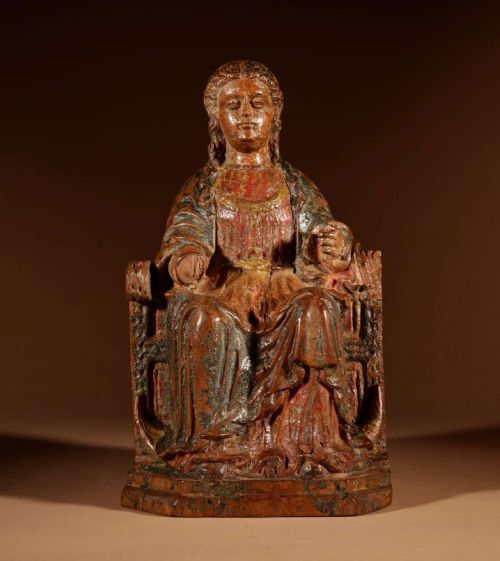
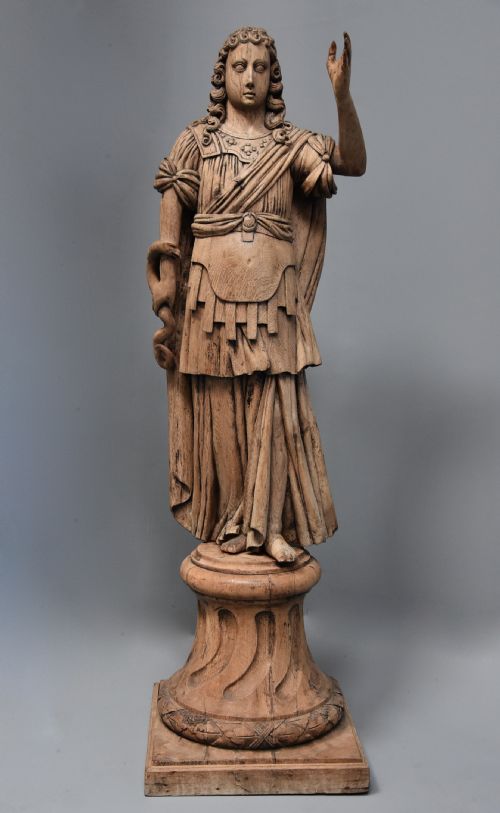
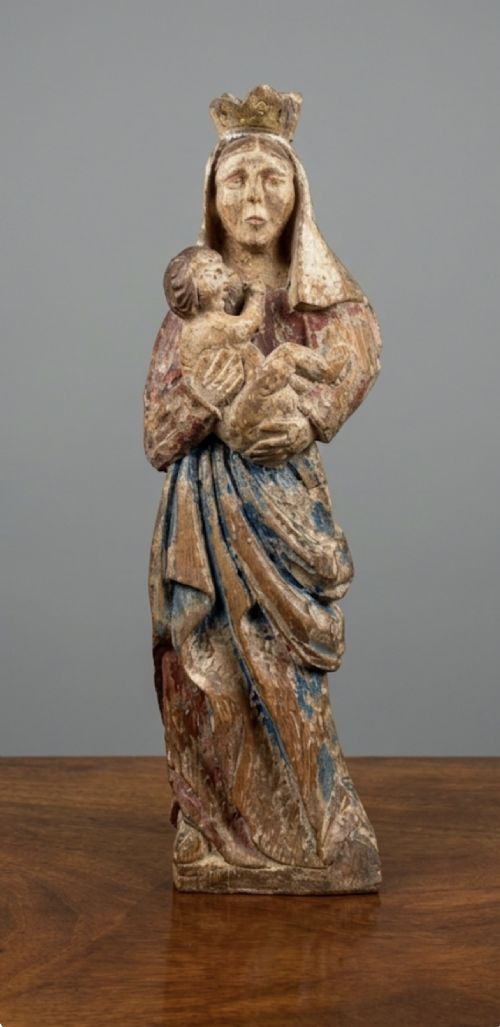
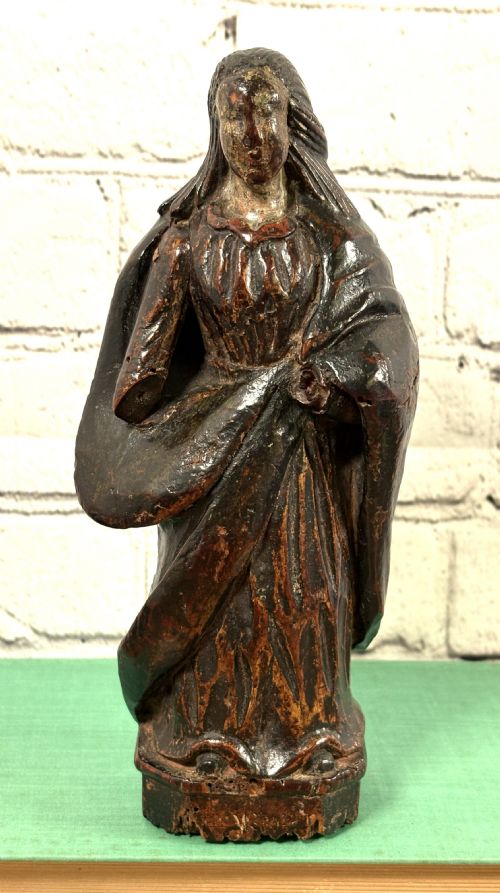
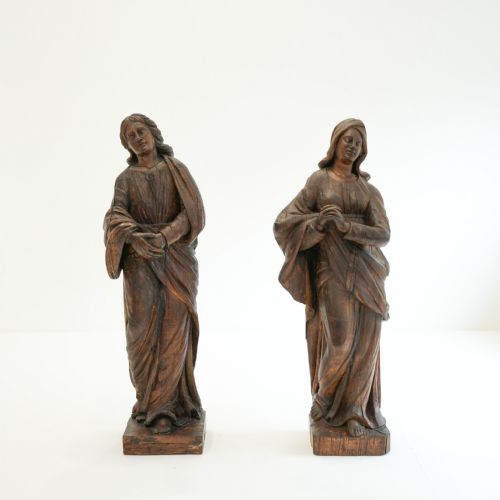
A continental carved statue is a wooden figural sculpture originating from mainland Europe, encompassing subjects from saints and madonnas to shepherds and flower sellers. These pieces span several centuries, with religious figures forming a dominant group across the selection.
The versions most frequently met on this page date from the seventeenth and eighteenth centuries, executed in oak, limewood, and walnut. Many take the form of saints or biblical figures, reflecting the ecclesiastical origins of European woodcarving tradition.
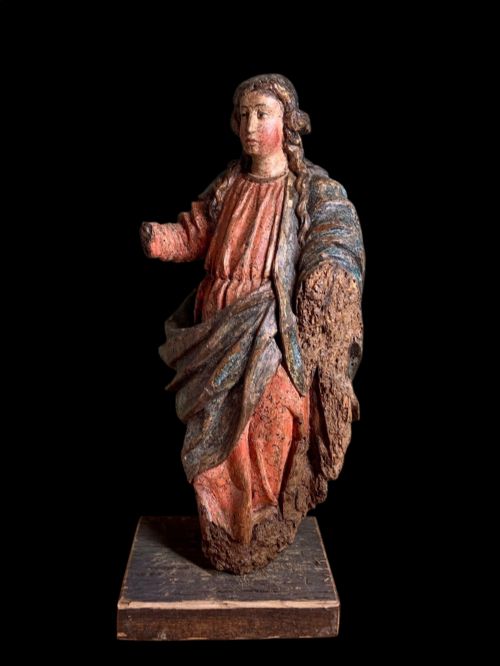
Figural works also extend to life-size proportions and smaller devotional carvings, sometimes retaining traces of their original polychrome paint or gilding. Regional variations include German limewood pieces and Italian polychrome statues.
How they were made
Carvers shaped these statues from domestic hardwoods and softwoods such as oak, walnut, lime, pine, and applewood. Timber selection depended on regional availability and the level of intricate detail required by the design.
Surfaces were often prepared with gesso before receiving layers of polychrome paint, silvering, or gold leaf. This polychromy added lifelike colour and spiritual splendour to figures intended for altars, churches, and domestic shrines.
Listings feature woods spanning oak, walnut, limewood, pine, applewood, and general hardwood.
What varies in quality
The quality of a continental carved statue rests in the anatomical command and expressive depth of the carving. Master carvers captured fluid drapery folds and lifelike hands, whereas simpler vernacular pieces display stiffer, more rustic proportions.
The survival of original surface decoration heavily influences character. Statues retaining untouched early polychrome pigment or genuine gilding present a different visual presence compared to stripped timber or later overpainting.
The Continental Carved Statue Glossary
- Polychrome
- Painted in several colours. This finish was commonly applied over gesso to wooden religious sculptures.
- Gesso
- A plaster-like mixture used as a base for paint or gold leaf on wood. It created a smooth surface for detailed decoration.
- Giltwood
- Wood that has been coated with thin sheets of gold leaf. It gave sculptures a luminous appearance under candlelight.
- Santos
- A carved figure representing a saint or holy person, originating from Catholic traditions. These figures were often dressed in textiles or painted.
- Limewood
- A fine-grained softwood frequently utilised by continental carvers. Its uniform texture allowed for extremely detailed undercut carving.
Continental Carved Statue: Frequently Asked Questions
Where were these statues originally placed?
Many continental carved statues originated in churches, chapels, and monastic settings as focal points for prayer and devotion. Others formed part of larger altarpieces or served as processional figures.
Over time, numerous examples transitioned into domestic spaces, adorning private rooms and studies as works of art and history.
How do I identify the period of a wooden carving?
Dating relies heavily on stylistic cues, tool marks, and the choice of wood species typical of particular regions and centuries. Renaissance and Baroque treatments of drapery and facial expression offer strong chronological indicators.
Examining the underlying preparation layers like gesso and the ageing patterns of the timber further helps establish the era of creation.
Why do some figures retain paint while others show bare wood?
Original decorative schemes included gesso and polychrome paint, which frequently deteriorated or suffered deliberate stripping during later interior design shifts. Surviving paint layers depend on environmental conditions and whether previous owners valued the polychromy.
Many pieces present bare wood today simply because later generations removed the historic paint surfaces to expose the natural grain.
How should I care for a antique wooden sculpture?
Keeping wooden statues away from direct heat sources and drastic humidity fluctuations prevents the timber from splitting or warping. Stable indoor environments preserve both the structural integrity of the carving and any fragile paint or gilding.
Dusting gently with a dry, soft brush is sufficient for routine maintenance, avoiding liquid cleaners that might harm historic surfaces.