





Continental Carved Figures
These continental carved figures bring centuries of devotional and secular artistry into rooms through historic wood and pigment.
Continental Carved Figures
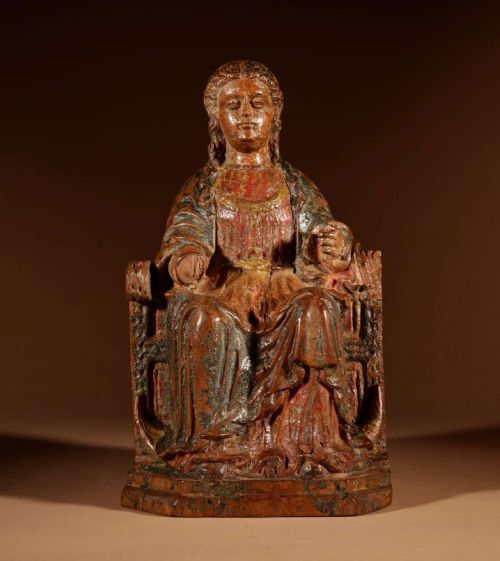
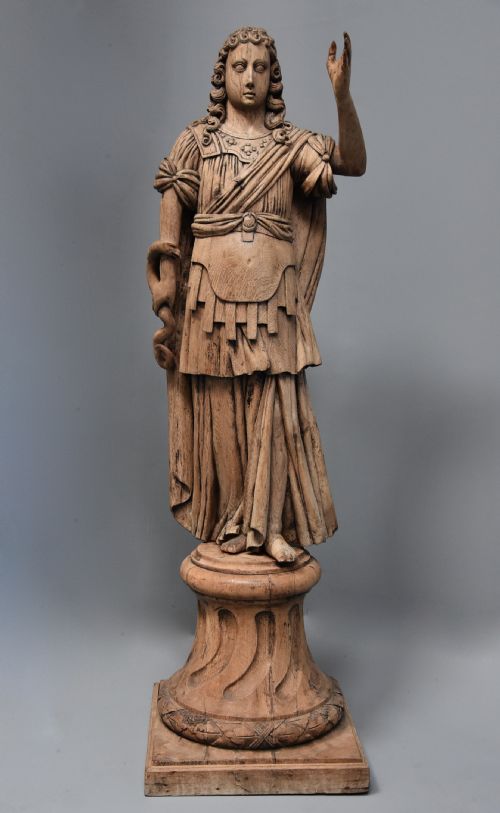
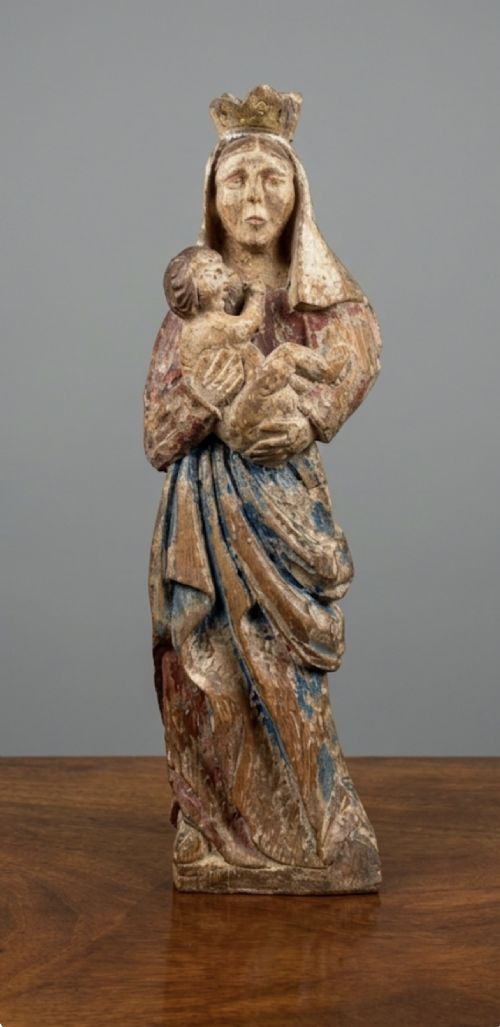
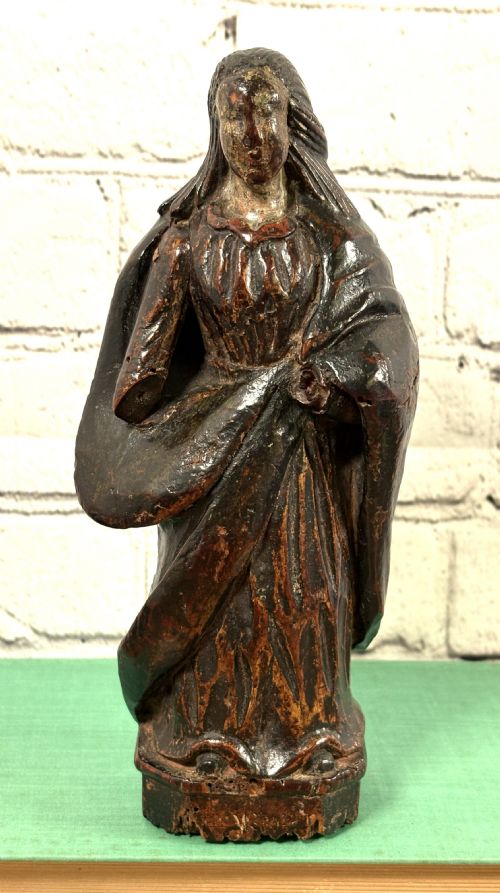
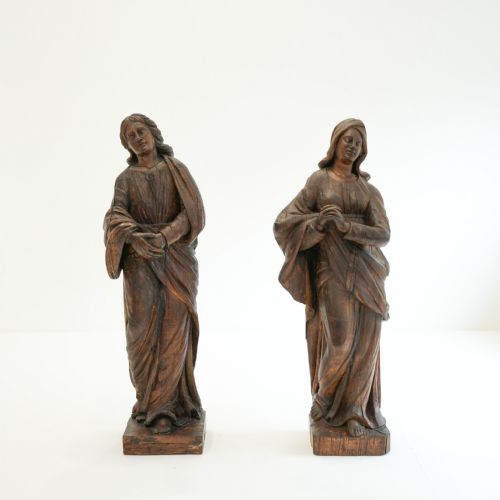
When you search for continental carved figures, you encounter centuries of wooden sculpture originating from European workshops, spanning the medieval period through the nineteenth century. Most pieces represent religious subjects such as saints, the Madonna and Child, and figures of Christ, carved from solid timber for altarpieces, churches, and domestic shrines.
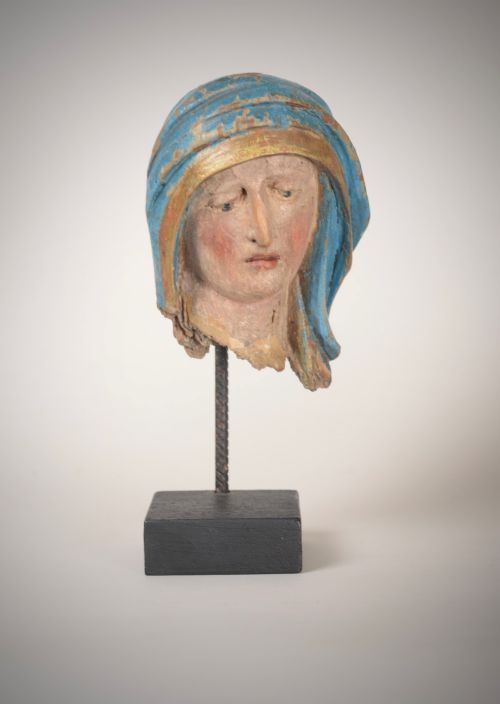
The selection ranges from life-size seventeenth-century figures in oak and limewood down to smaller fragments and devotional statuary. Alongside sacred representations, occasional secular works appear, including decorative carousel animals and table lamps repurposed from older carvings.
Geographic origins extend across Germany, Italy, and Croatia, showing stylistic shifts from Gothic austerity through Baroque movement and nineteenth-century revivals. Buyers look for these works to anchor a room with tangible history and the warmth of aged timber.
How they were made
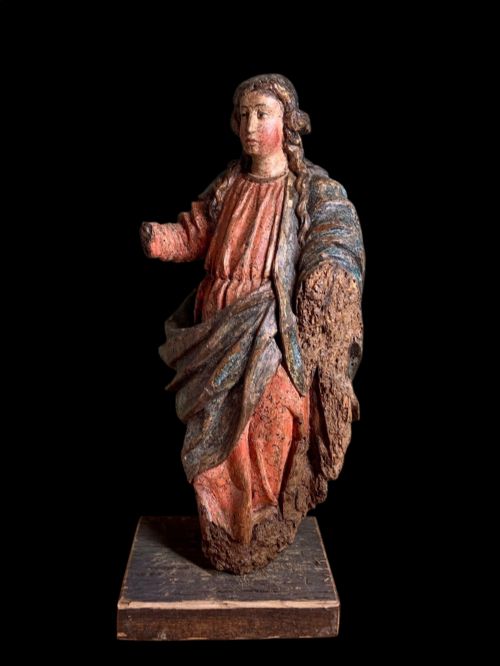
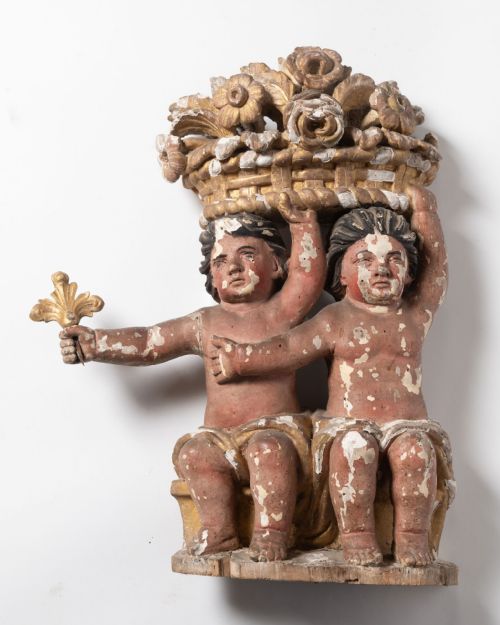
Surfaces were frequently finished with gesso as a ground layer for gold leaf, silvering, or polychrome paint. Pigments applied over gesso gave these sculptures their lifelike colour and devotional presence, traces of which often survive on older pieces.
Materials across these listings span oak, walnut, limewood, pine, applewood, gesso, gold leaf, and polychrome.
What varies in quality
The distinction between ordinary and exceptional works rests in the carving's anatomical precision and the sensitivity of the facial expression. Master carvers captured fluid movement in drapery and individual character in hands and faces, whereas provincial workshops produced stiffer, more formulaic forms.
The survival of original surface treatments also determines the standing of a piece. Carvings retaining authentic early polychrome or gilding hold greater visual integrity than those stripped to bare wood or heavily repainted in later centuries.
The Continental Carved Figures Glossary
- Polychrome
- Painted in several colours. This term describes wooden sculptures finished with applied pigments over a gesso ground.
- Gesso
- A plaster mixture used as a base for paint or gold leaf on wood. It created a smooth surface for detailed decoration.
- Limewood
- A fine-grained timber favoured by European carvers. It allowed for deep, crisp cuts without splitting along the grain.
- Socle
- A short plinth or pedestal supporting a sculpture. Many figures stand upon these fitted bases to raise them above a surface.
- Acolyte
- An assistant or altar server in religious services. Figures depicting acolytes often appear holding candlesticks or ceremonial objects.
Continental Carved Figures: Frequently Asked Questions
How do I date a carved wooden figure?
Dating relies on tool marks, timber choice, and stylistic cues such as the cut of the drapery or the posture of the subject. Earlier works often display adze or chisel marks hidden on the reverse.
Comparative analysis with documented church sculpture helps narrow the period, as does the presence of original gesso and pigment layers.
Were these figures originally painted?
Many continental carved figures were brightly painted and gilded to enhance their realism and visual impact in dimly lit churches. Pigments were bound in oil or tempera over a chalk ground.
Over the centuries, many surfaces were stripped by later owners who preferred exposed wood, leaving only traces of the original decoration in recessed folds.
How should I care for antique wood carvings?
Keep wooden sculptures away from direct heat sources and dramatic humidity fluctuations, which cause timber to split or warp. Maintain a stable indoor environment.
Dust gently with a soft, dry brush. Avoid applying modern polishes or oils, particularly to surfaces with historic polychrome or exposed gesso.
What timber was used most often?
Oak and walnut appear frequently in heavier architectural carvings from northern and western Europe. Softer timbers like limewood and applewood were chosen for finer, highly detailed statuary.
Regional preference heavily dictated the timber, with German and Italian workshops frequently utilising local softwoods for devotional altarpieces.