



Compact Tea Table
A compact tea table is a folding drop-leaf design built for serving tea in limited spaces, offering clever folding mechanics and polished timber surfaces.

Compact Tea Table
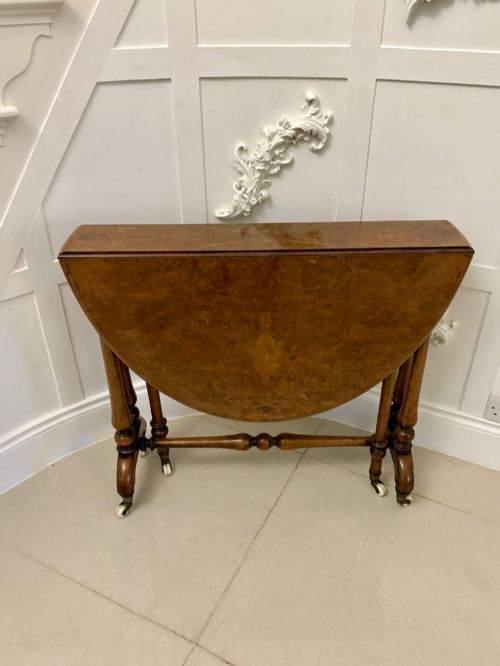
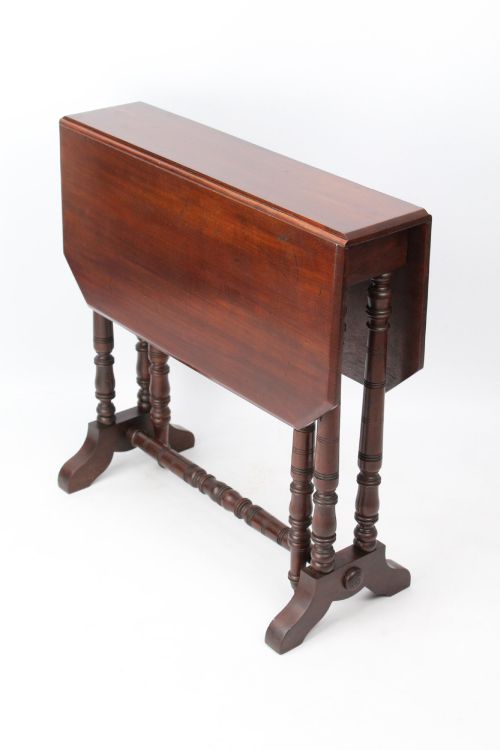
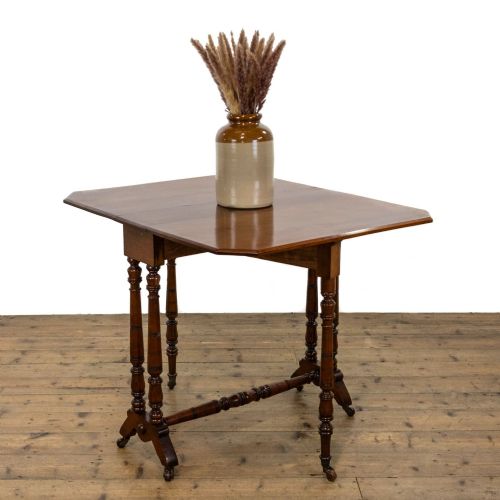
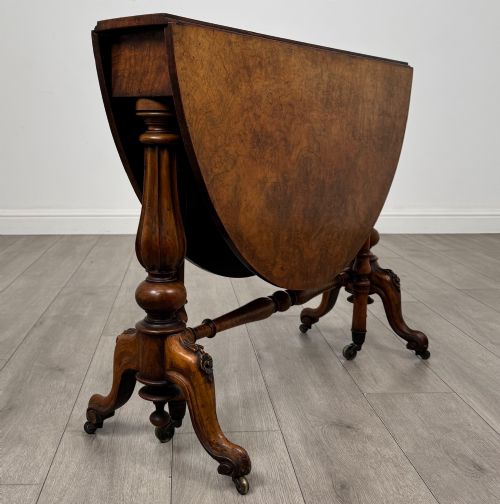
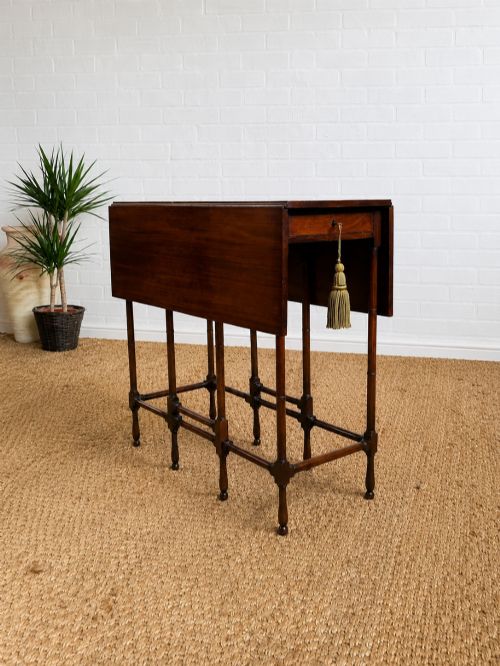
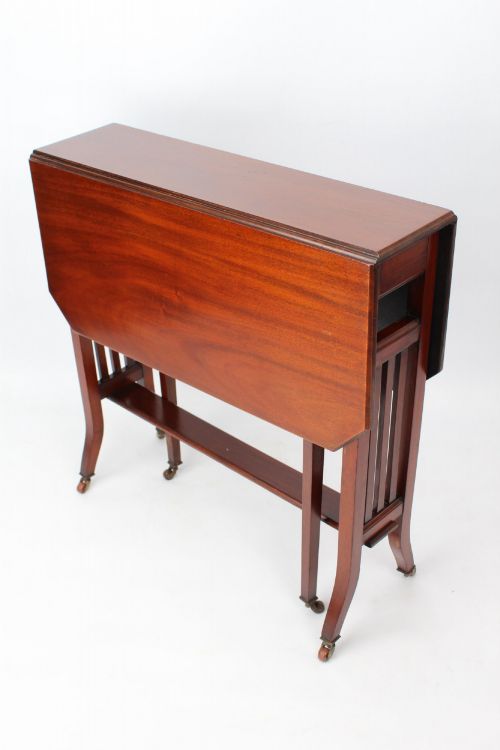
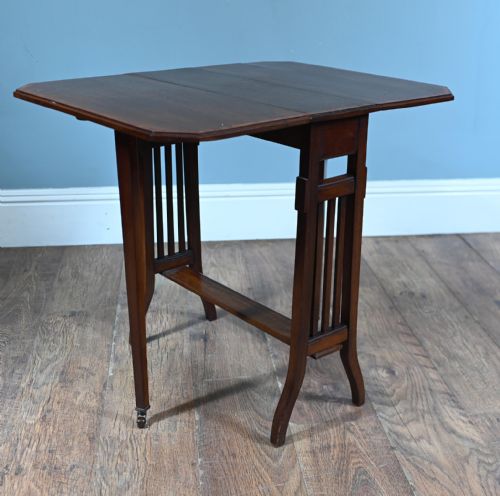
A compact tea table is primarily represented here by Sutherland tables, gateleg tables, and spider leg designs spanning from the eighteenth century through the Edwardian period. These pieces are intended for occasional use, featuring drop leaves supported by swinging legs that fold down against a narrow central frame when not in service.
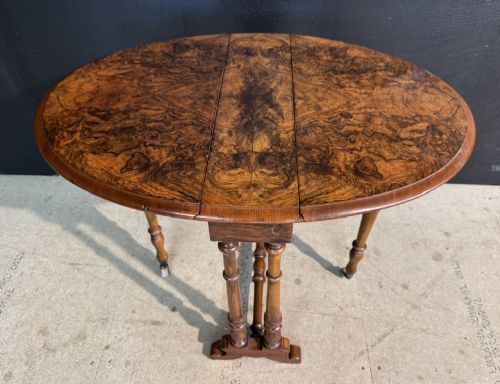
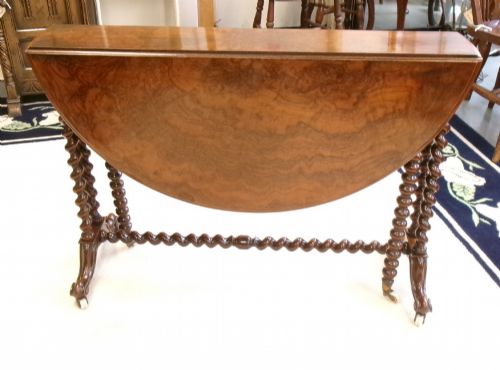
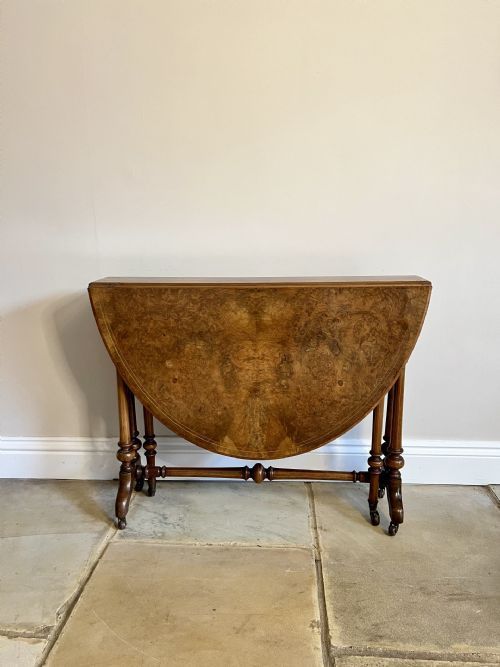
The most common version you encounter on this page is the Victorian or Edwardian Sutherland table constructed in mahogany, walnut, or burr walnut. These examples range from standard proportions down to miniature or baby sizes designed for smaller drawing rooms and parlours.
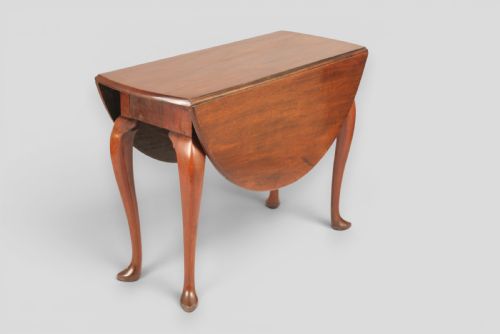
Earlier Georgian iterations also appear, notably mahogany spider leg and gateleg tables with remarkably slender framing. Such pieces combine folding functionality with light timber construction, providing a stable surface that disappears compactly against a wall.
Materials and construction methods
Makers utilised dense native and imported timbers, predominantly mahogany and walnut, alongside highly figured burr walnut veneers for top surfaces. Satinwood and marquetry inlay appear on refined Edwardian examples, while brass fittings and ceramic castors occasionally support the moving legs.
The defining mechanical feature is the gateleg or spider leg action, where hinged flaps are supported by pivoting gate supports designed to bear weight when extended. Joinery relies on tightly fitted pivots and hinges that allow the narrow leaves to drop almost vertically beside the central underframe.
Listings feature woods including mahogany, walnut, burr walnut, and satinwood across Victorian, Edwardian, and Georgian periods.
Distinctions in quality and execution
Quality rests heavily on the selection of timber veneers and the crispness of the turning on the legs. Burr walnut tops with balanced grain patterns and fine marquetry inlay separate standard workshop production from finer cabinet work.
The rigidity of the folding action when open indicates the precision of the original hinge placement and leg alignment. Tables that maintain a flat, stable surface across the centre board and drop leaves without excessive play demonstrate superior historical joinery.
Maple & Co
The Compact Tea Table Glossary
- Burr walnut
- A prized timber veneer taken from the knotted growths of walnut trees, displaying intricate, swirling grain patterns. It was frequently utilised on Victorian table tops.
- Spider leg table
- A small, light occasional table featuring extremely slender turned wooden legs and delicate framing. These designs date back to the eighteenth century.
- Gateleg table
- A table with hinged flaps supported by legs that swing outward like a gate. This mechanism provides sturdy support beneath the extended leaves.
- Satinwood
- A lustrous, hard timber with a yellowish sheen used for high-status cabinet making and decorative inlay. It appears predominantly on Edwardian pieces.
Compact Tea Table: Frequently Asked Questions
What is a compact tea table?
A compact tea table is a folding occasional table designed to hold tea service items while taking up minimal floor space when closed.
These pieces typically utilise drop leaves and pivoting legs to expand or contract according to the immediate needs of the room.
How do Sutherland tables work?
Sutherland tables operate via a narrow central framework and two hinged drop leaves supported by swinging gate legs. When the legs pivot outward, they lock the leaves into a horizontal surface.
When folded down, the leaves hang almost vertically against the slim base, allowing the entire table to sit neatly against a wall.
What woods were used for these tables?
Cabinet makers relied primarily on mahogany and walnut for structural stability and rich natural colour. Burr walnut veneers and satinwood inlay were frequently added to enhance the visual appeal of the top surfaces.
Ebonised finishes and brass or ceramic components also appear on specific period examples.
How do I tell Victorian from Edwardian pieces?
Victorian tables often feature rich burr walnut veneers, darker timbers, and heavier turned supports associated with mid to late nineteenth-century interiors. Edwardian versions frequently display lighter mahogany frames, satinwood inlay, and sometimes bamboo-turned legs.
Construction details and prevailing stylistic traits of each era help distinguish the exact period of manufacture.