



Compact Mahogany Side Table
A compact mahogany side table brings warm timber and practical surface space into smaller rooms without crowding the floor.
Compact Mahogany Side Table
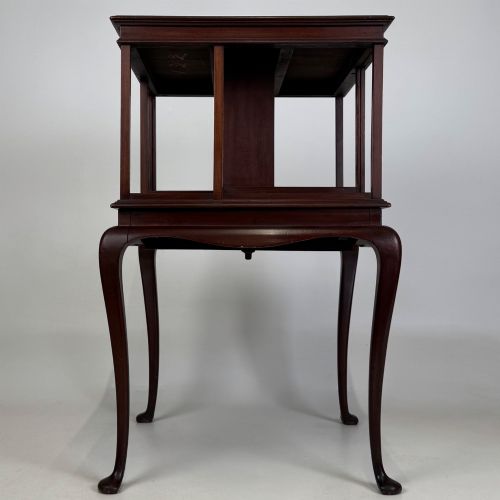
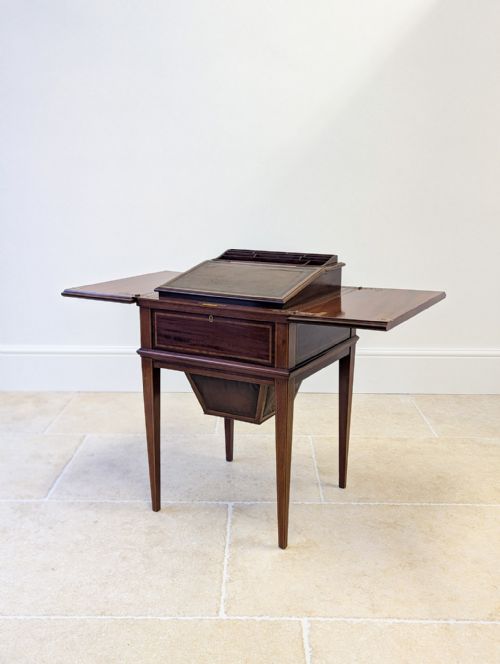
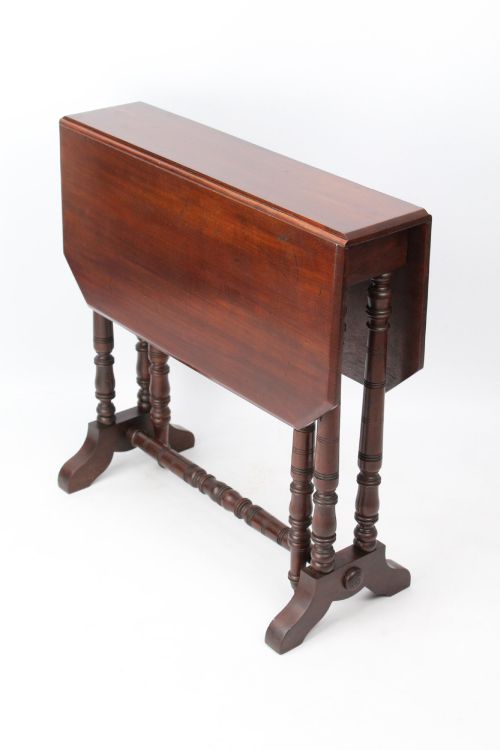
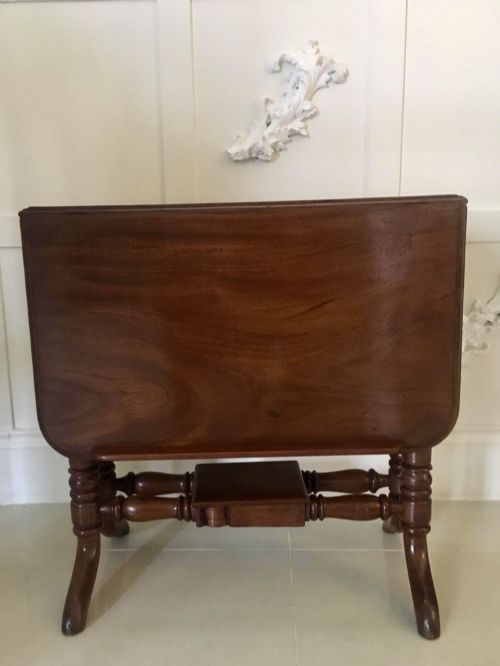
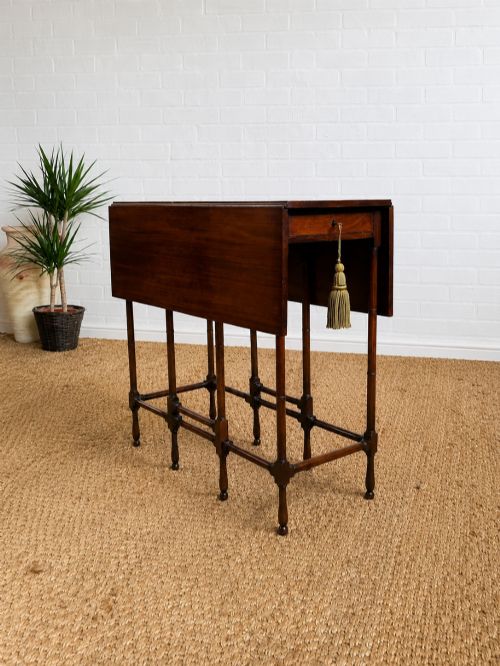
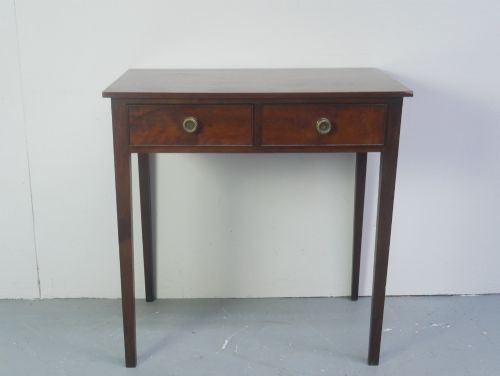
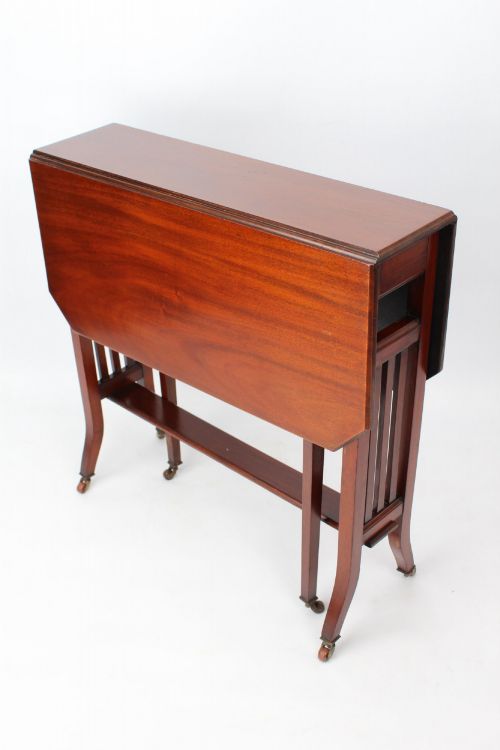
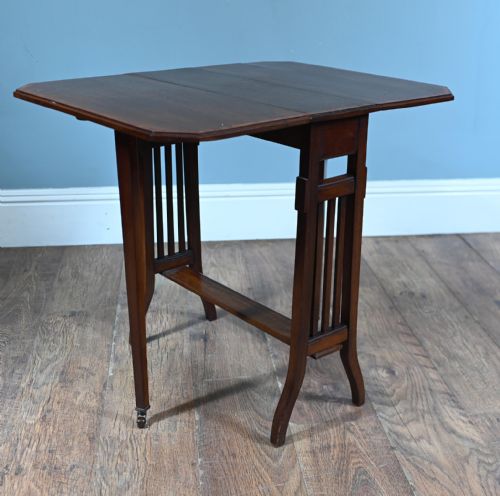
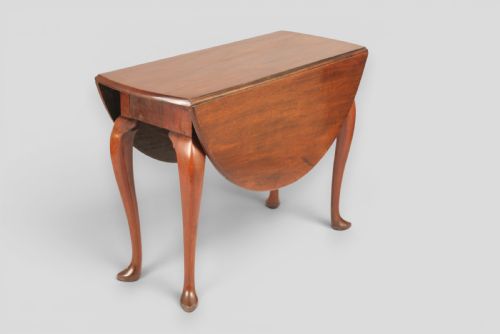
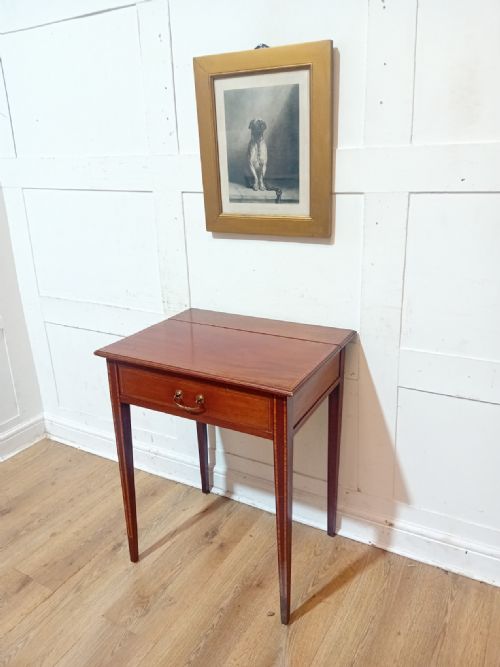
When you search for a compact mahogany side table, you encounter diverse domestic forms spanning the Georgian, Victorian, and Edwardian eras. These pieces range from narrow side tables and small library desks to folding Pembroke and Sutherland tables designed for flexible placement in principal rooms.
The Edwardian iterations dominate this selection, frequently appearing as slender gateleg or spider leg tables alongside writing desks and occasional pieces. Georgian and Victorian examples also feature prominently, offering smaller proportions, drop leaves, and occasional drawers suited to period and modern interiors alike.
How they were made
Cabinet makers utilised solid mahogany and mahogany veneers over secondary timbers, often selecting stock with deep grain figures and warm reddish-brown tones. Construction relied on traditional joinery techniques, including dovetails for small drawers and sturdy gateleg or drop-leaf hinges to support folding leaves.
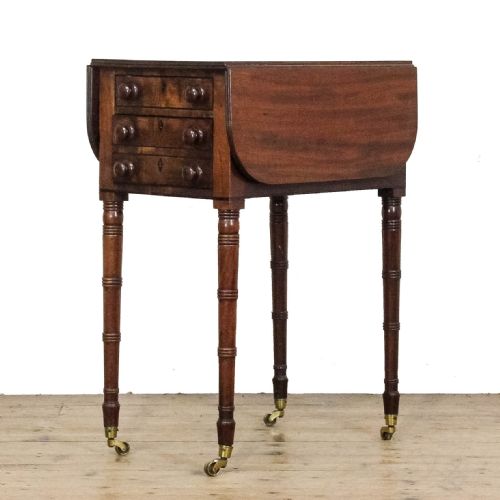
Many Edwardian and Georgian specimens incorporate contrasting details such as satinwood and boxwood inlay, alongside brass hardware, ceramic castors, and occasionally leather writing surfaces. Turning techniques yielded bamboo-turned legs, slender spider legs, and pillar supports that kept the overall footprint light.
Spider leg tables rely on an improbable tangle of impossibly thin timber supports that somehow hold a cup of tea without trembling.
What varies in quality
The distinction between standard domestic production and superior workshop output lies in the crispness of the timber selection, the subtlety of any inlay, and the refinement of the turned or tapered supports. Finer pieces demonstrate precise matching of mahogany veneers and careful integration of functional elements like smooth-running drawers and stable folding leaves.
Proportion and structural integrity dictate the standing of individual tables. Superior examples maintain balance and stability despite diminutive dimensions, whereas lesser items may exhibit heavier proportions or replacement hardware that disrupts the original harmony of the design.
Edwards and Roberts
The Compact Mahogany Side Table Glossary
- Sutherland table
- A narrow drop-leaf table with exceptionally slim legs and leaves that fold down nearly vertically. This form was widely produced in the Victorian and Edwardian periods for easy storage.
- Pembroke table
- A small occasional table featuring two hinged leaves on opposite sides and typically one or two small drawers. It was popular from the Georgian era onward for versatility in sitting rooms.
- Spider leg table
- A occasional table characterised by an intricate network of very thin turned legs connected by stretchers. These pieces provide a remarkably light visual footprint.
- Satinwood inlay
- Contrasting blonde wood used to create decorative banding or floral motifs within the mahogany surface. It is frequently seen on Edwardian and late Georgian pieces.
- Gateleg table
- A table with hinged legs that swing outward to support folding leaves when opened. This mechanism allows a compact surface to expand significantly.
Compact Mahogany Side Table: Frequently Asked Questions
Where should I place a compact side table?
These small tables fit easily beside a sofa, in a narrow hallway, or as a writing surface in a bedroom. Their modest proportions allow them to occupy awkward corners without dominating the room.
Because many examples feature drop leaves or folding actions, you can adjust their footprint depending on daily needs and available floor space.
How do I distinguish Victorian from Edwardian pieces?
Victorian furniture often displays heavier timber framing, deeper polish tones, and robust turning. Edwardian versions generally look lighter, frequently incorporating delicate satinwood inlay and slender proportions.
Examining the construction methods and secondary timbers inside drawers helps confirm the period of manufacture alongside stylistic cues.
Were these tables used for writing?
Many smaller forms, such as Pembroke tables and specific worktables, doubled as compact desks for correspondence. Fitted drawers often contain small compartments for ink and paper.
Dedicated writing tables and davenports from the nineteenth century are specifically scaled for sitting while reading or writing letters.
How do I care for antique mahogany timber?
Keep mahogany tables away from direct heat sources and strong sunlight to prevent the timber from drying out or fading. Regular dusting with a soft, dry cloth preserves the polished surface.
Occasional application of traditional beeswax helps nourish the wood and maintain its natural lustre over years of daily use.