


English Mahogany Drop Leaf
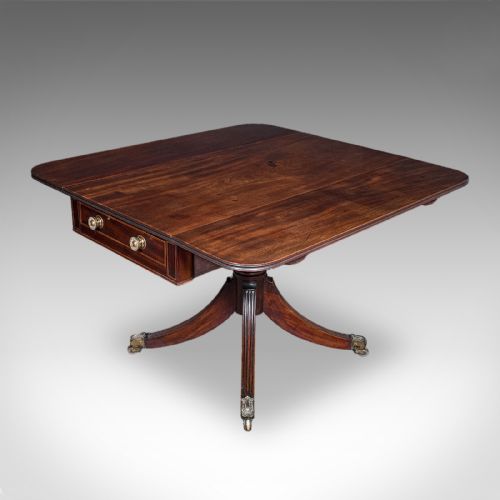
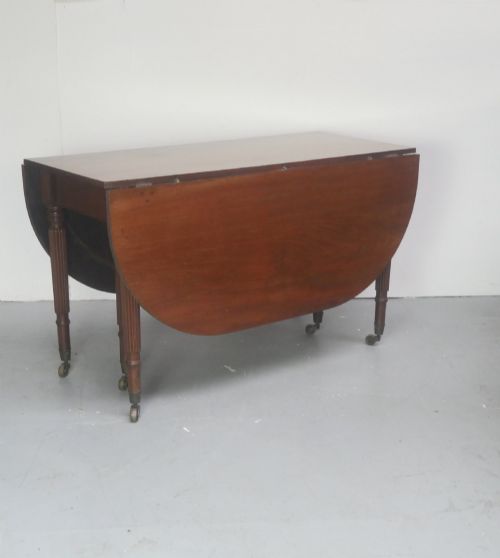
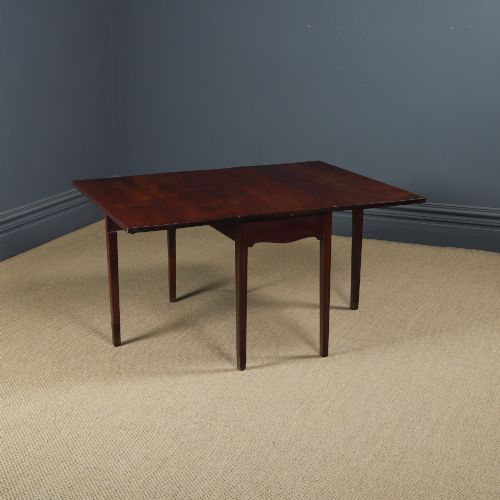
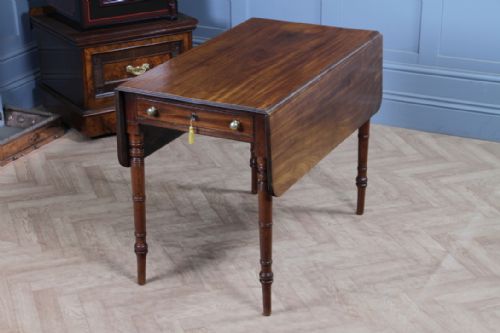
An English mahogany drop leaf table offers folding versatility and rich timber grain, moving easily from a compact wall console to a central dining surface.
English Mahogany Drop Leaf
When you search for english mahogany drop leaf, you encounter versatile folding furniture spanning the Georgian, Regency, and Victorian periods. These pieces include Pembroke tables, small tea tables, and larger dining formats designed to save floor space.
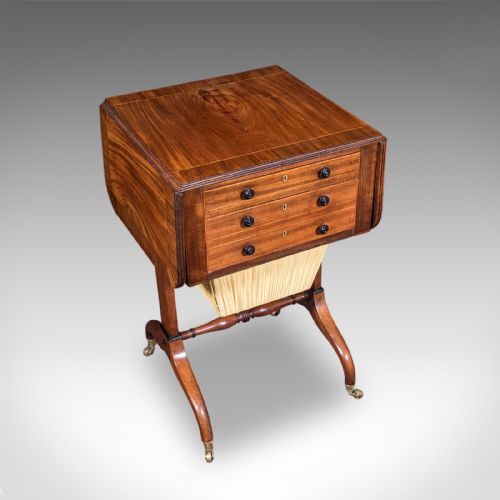
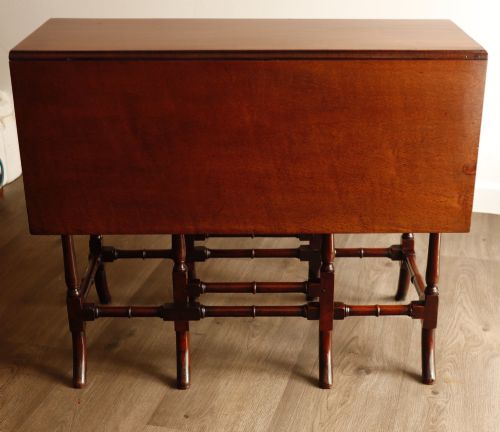
The domestic forms range from slender spider leg tea tables and work tables fitted with drawers to substantial gateleg supper tables. The surviving examples demonstrate how households adapted interior spaces for dining and needlework throughout the eighteenth and nineteenth centuries.
The selection on this page centres heavily upon Regency and Georgian craftsmanship, alongside Victorian interpretations. Buyers find both intimate four-seat breakfast tables and larger examples capable of seating several guests when fully extended.
Materials and Construction
Cabinet makers built these tables primarily using solid mahogany and figured veneers such as flame mahogany or Cuban mahogany, sometimes complemented by contrasting satinwood stringing. Brass castors, iron hinges, and ceramic fittings supported the folding leaf mechanisms and drawers.
The hinged flaps operate via pivoting wooden brackets, swing legs, or gateleg frames that fold flush against the fixed central top. Joinery techniques included precise rule joints that allowed the drop leaves to drop cleanly when lowered.
Some clever Regency reading tables include hidden writing ledges designed to hold open heavy volumes while you breakfast.
Timber Depth and Mechanism
Quality rests in the choice of timber figure, where richly grained flame mahogany elevates a piece above plain stock. The crispness of the turning on the legs and the tightness of the rule joint hinge line define the standard of the workshop.
Internal secondary timbers, original brass hardware, and the smooth operation of drop leaf supports distinguish superior examples from later alterations. Solid construction without excessive structural timber replacement preserves the integrity of the folding mechanism.
The English Mahogany Drop Leaf Glossary
- Pembroke table
- A small rectangular table featuring two hinged drop leaves on opposing sides, frequently fitted with a small drawer. This form emerged during the eighteenth century for occasional domestic use.
- Sutherland table
- A narrow drop leaf table characterised by particularly slender leaves that fold down almost vertically. They were popular in Victorian drawing rooms for saving space.
- Gateleg table
- A table with hinged legs that swing outward like a gate to support the dropped leaves. This design provides robust structural support for large dining surfaces.
- Rule joint
- A moulded knuckle joint connecting a drop leaf to the fixed tabletop. It conceals the hinge mechanism and prevents gaps when the leaf is raised.
- Sofa table
- A rectangular occasional table designed to stand in front of a sofa, featuring drop leaves at either end. They often incorporate double pedestal or trestle bases.
English Mahogany Drop Leaf: Frequently Asked Questions
What is an english mahogany drop leaf table used for?
These tables served multiple domestic purposes depending on their specific form, functioning as tea tables, writing desks, or expandable dining surfaces in period homes.
Today, they remain practical for modern interiors because their folding leaves allow them to function as side consoles before expanding to accommodate guests for dinner.
How do I identify a Georgian drop leaf table?
Georgian examples, typically dating from the eighteenth century, display restrained classical proportions, Cuban mahogany timber, and often feature delicate rule joints alongside hand-cut dovetails in the drawers.
They rely on sturdy gateleg actions or Pembroke configurations rather than the heavier pillar bases seen in later nineteenth-century furniture.
Can I use an antique drop leaf table every day?
Yes, solid mahogany construction makes these tables durable for daily dining or occasional workspace needs if treated with sensible care regarding moisture and heat.
Checking the stability of the swing brackets and gateleg hinges ensures the leaves remain fully supported during regular use.
How do Regency drop leaves differ from Victorian ones?
Regency tables, produced in the early nineteenth century, favour classical brass paw castors, crisp reeded legs, and elegant pedestal bases inspired by ancient designs.
Victorian versions tend to be heavier in timber weight, incorporating Sutherland mechanisms or broader, robust turning suited to larger parlour spaces.