







Georgian Mahogany Spider Table
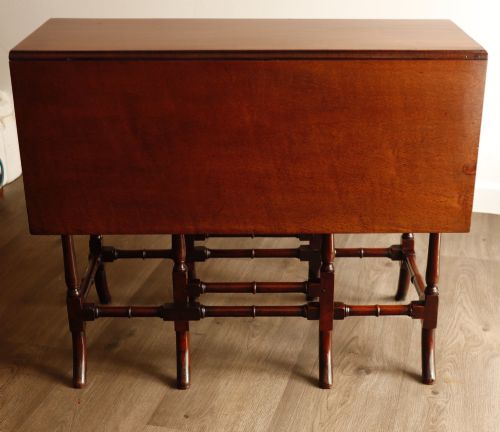
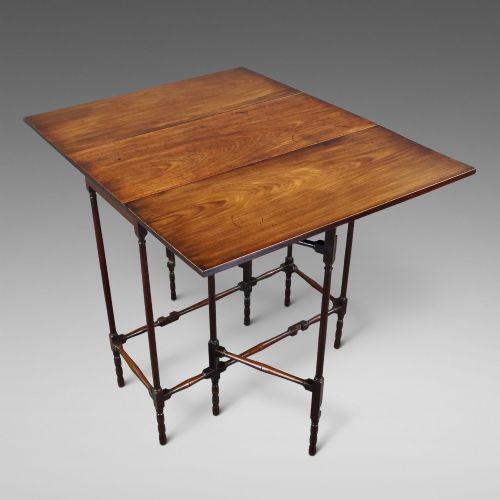
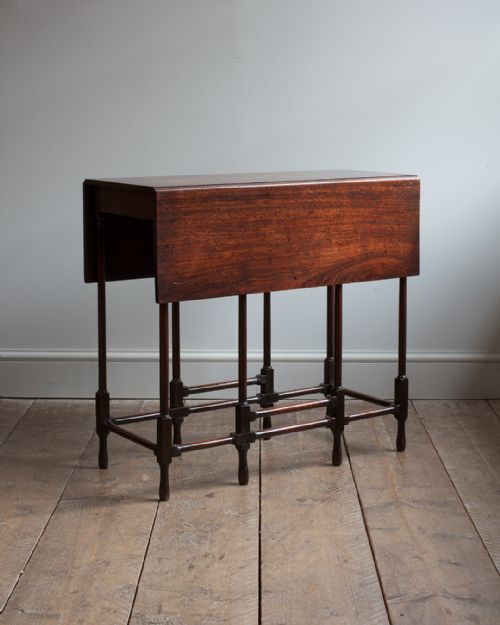
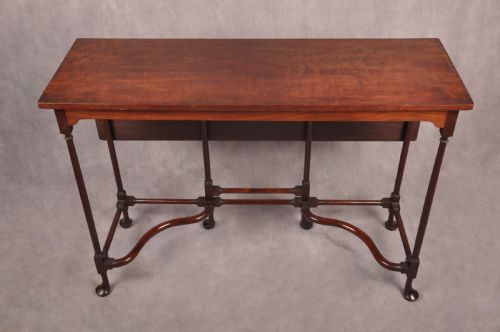
A georgian mahogany spider table brings delicate proportions and slender turned supports into any room.
Georgian Mahogany Spider Table
A georgian mahogany spider table is a slender piece of furniture defined by exceptionally thin turned legs and delicate stretchers. Most examples encountered here belong to the eighteenth century or the Georgian period, often taking the form of occasional tables or drop leaf tables.
Makers designed these items for light use as tea tables, lamp tables, or small side tables rather than heavy domestic labour. The listings show a strong presence of George III and Chippendale period designs alongside later Edwardian and Victorian interpretations.
Buyers will find that drop leaf versions dominate the selection, offering folding flaps supported by swinging gate legs. The combination of mahogany timber and remarkably slender underframes creates a distinctive silhouette that sets these occasional tables apart from sturdier gateleg forms.
How they were made
Cabinet makers constructed these tables primarily using dense mahogany, selected for its strength which allowed the turned legs to remain remarkably thin without snapping under moderate weight. Metal components such as brass hinges and iron fastenings were occasionally employed on drop flap mechanisms to secure the folding leaves.
Joinery techniques relied heavily on precise turning for the spider legs and delicate stretchers that braced the underframe. Workshops shaped the drop leaves to fold smoothly against the central fixed top, supported by pivoting gate legs that required careful alignment.
The selection spans from eighteenth century Georgian origins through to Edwardian and Victorian revivals.
What varies in quality
The degree of refinement in the turned legs and stretchers separates standard examples from superior pieces. Finer tables exhibit crisper turnings and tighter joints that maintain stability despite the inherent fragility of such slender supports.
The choice of mahogany timber dictates much of the visual appeal, with richer grain patterns and deeper natural patination indicating better material selection by the original maker. The smoothness of the drop leaf action and the discretion of any repairs also influence the overall standing of an individual table.
Gillows
The Georgian Mahogany Spider Table Glossary
- Spider leg
- A term describing the exceptionally slender, delicate turned legs characteristic of these tables. They are braced by equally thin stretchers to provide lateral stability.
- Drop leaf table
- A table featuring fixed central panels with hinged flaps on either side that fold down. These flaps are supported when raised by pivoted legs or gate actions.
- Gateleg table
- A table with legs hinged to swing outwards like a gate in order to support a folding leaf. This mechanism allows the surface area to expand or contract as needed.
- Pembroke table
- A small rectangular table with two hinged drop leaves on opposing sides. They often include a single small drawer and slender legs.
- George III period
- The era spanning from seventeen sixty to eighteen twenty, noted for refined cabinet making and classical proportions. Many pieces in this style date from this time.
Georgian Mahogany Spider Table: Frequently Asked Questions
What is a spider table used for?
A spider table served historically as a light tea table or occasional surface for holding small decorative items. Their delicate construction meant they were kept in parlours rather than dining rooms.
Today they function well as bedside tables, lamp stands, or small display surfaces in sitting rooms where heavy furniture would overwhelm the space.
How do I spot an eighteenth century table?
Eighteenth century pieces typically display hand-turned timber components with subtle irregularities absent in later machine-made reproductions. The construction methods visible underneath reveal older joinery practices.
Examining the underside and the wear patterns on the feet helps distinguish genuine period items from Edwardian or Victorian revivals.
Are spider tables sturdy enough to use?
Despite their fragile appearance, well-made spider tables support normal everyday items such as lamps, books, or cups without difficulty. The networked stretchers provide surprising rigidity to the thin legs.
Owners should avoid placing heavy objects on them or leaning significant weight onto the drop leaves when extended.
How do drop leaves work on these tables?
Drop leaves operate using hinged flaps attached to a fixed central top, supported underneath by swinging gate legs. Lifting the leaf allows the supporting leg to pivot outward into position.
Dropping the leaves back down reduces the footprint of the table significantly, making them versatile for smaller rooms.