

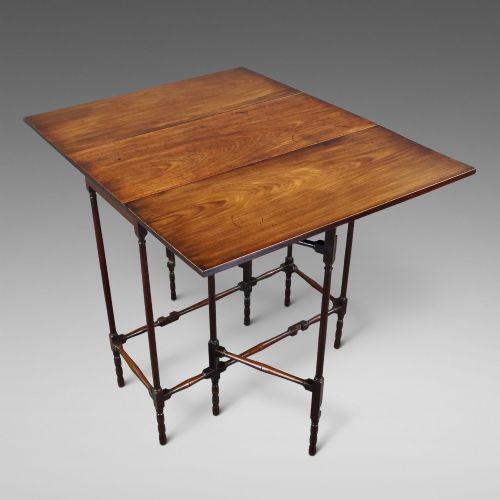


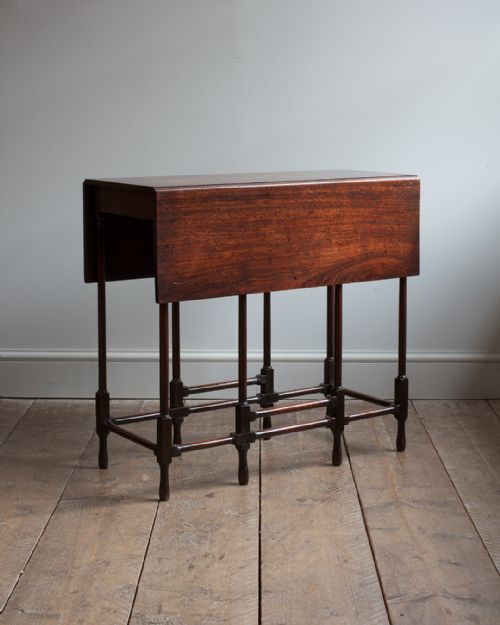

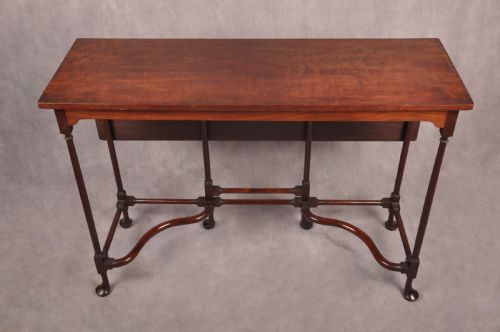


18th Century Spider Leg Table
An 18th century spider leg table offers slender elegance and clever folding versatility, making it a prized piece for compact modern spaces.
18th Century Spider Leg Table
An 18th century spider leg table is a delicate folding form designed for versatility in Georgian parlours and drawing rooms. These pieces typically function as occasional tables, side tables, or drop leaf tables that easily tuck away when not in use.
The versions most commonly met on this page date from the Georgian and George III periods, originating from English workshops. They combine slender turned supports with drop flaps to create a functional surface with minimal visual weight.
Makers of the Chippendale period often shaped these tables in mahogany, balancing structural lightness with practical utility. The characteristic narrow legs give the form its distinctive name while providing steady support for light domestic tasks.
How they were made
Makers built these tables primarily using mahogany, selected for its strength and ability to be turned into remarkably slender components. Timber framing was joined with traditional methods to support the hinged drop leaves without adding excessive bulk.
Brass fittings occasionally appear in the hardware and hinges, whilst iron components provide concealed internal reinforcement. Selected examples also feature painted finishes over basic timber frameworks.
Listings for an 18th century spider leg table predominantly feature mahogany timber, with occasional examples incorporating brass fittings and painted finishes.
What varies in quality
The refinement of the turning on the slender legs separates standard examples from superior pieces. Crisp detailing in the woodwork shows the hand of a skilled cabinetmaker who understood how to pare down timber without losing structural integrity.
The proportion between the narrow leg supports and the drop leaf top dictates the visual balance of the table. Better examples maintain a graceful harmony when open, whereas lesser pieces can appear ungainly or overly fragile.
The 18th Century Spider Leg Table Glossary
- Spider leg table
- A small folding table characterised by exceptionally slender turned legs. This form emerged during the Georgian era to provide a light, movable surface.
- Drop leaf table
- A table with hinged flaps on either side that fold down to save space. These leaves are supported by swing legs when raised.
- Gateleg table
- A table with legs that swing out like a gate to support the drop leaves. The spider leg version is a refined, delicate evolution of this earlier form.
- Occasional table
- A small, movable table intended for specific, temporary use in a room. They are easily repositioned as daily needs require.
18th Century Spider Leg Table: Frequently Asked Questions
What is an 18th century spider leg table?
An 18th century spider leg table is a compact, lightweight occasional table featuring exceptionally slender turned legs and folding drop leaves. These tables were designed for versatility in Georgian rooms where furniture needed to be moved or stored easily.
Today, they serve well as accent pieces in smaller spaces, offering a combination of historical character and practical surface area.
How were these tables used originally?
Originally, these tables functioned as movable stands for tea, writing, or needlework in fashionable drawing rooms. Their folding leaves allowed them to be placed flat against a wall when not in active use.
Owners could quickly unfold the leaves and swing out the supporting legs whenever an extra surface was required for guests.
How do I care for a mahogany spider leg table?
Keep the table away from direct sunlight and sudden temperature changes to protect the timber and joints. Regular dusting with a soft, dry cloth maintains the finish without needing heavy polishes.
Because the legs are exceptionally slender, avoid placing heavy objects on the drop leaves to prevent strain on the hinges and framing.
How can I tell a Georgian period table apart?
Georgian and George III tables display specific timber patination, hand-turned leg profiles, and traditional joinery methods. Examining the construction underneath often reveals period hand-tool marks and older hinge types.
Comparing the proportions and wood species against documented examples helps confirm the period of origin.