
Colonial Occasional Table
A colonial occasional table brings dense timbers and intricate carving into a room, serving as a versatile stand for daily use.
Colonial Occasional Table
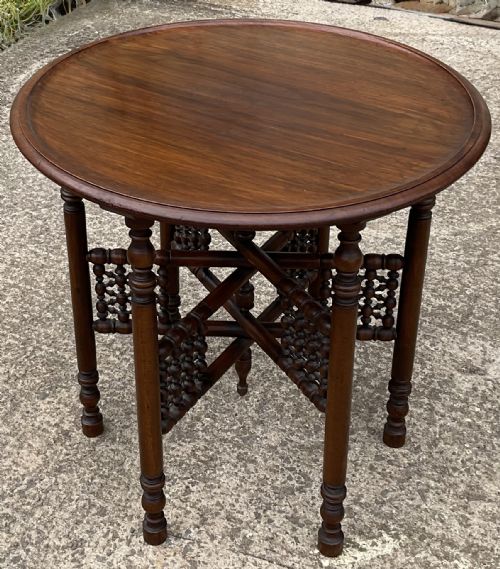
A colonial occasional table encompasses portable surfaces made outside Europe during periods of imperial rule, often shaped as octagonal, circular or folding stands. These pieces function as side tables, coffee tables, games tables and plant stands within domestic spaces.
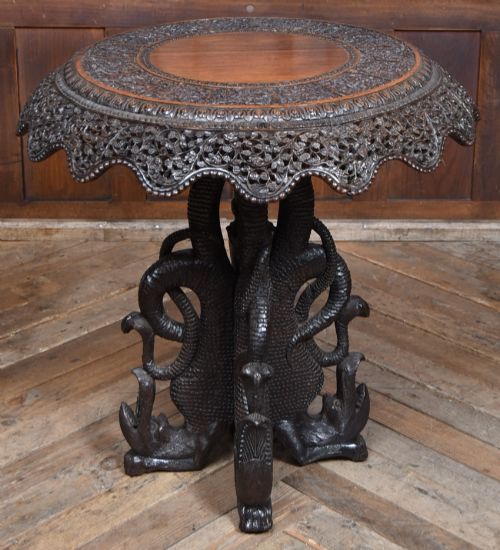
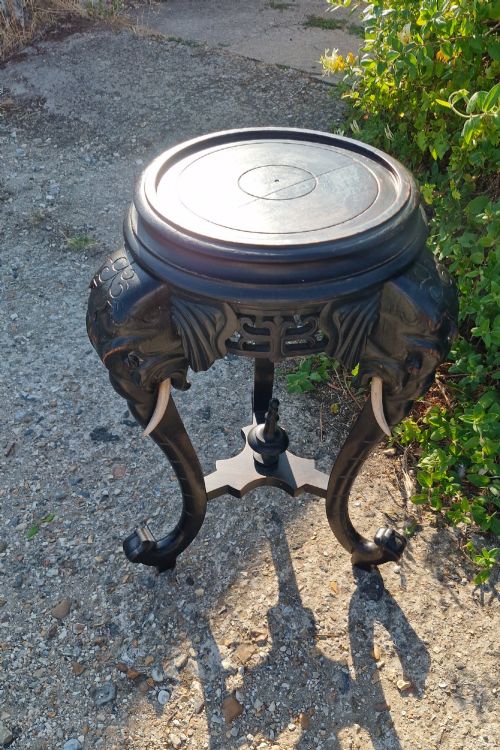
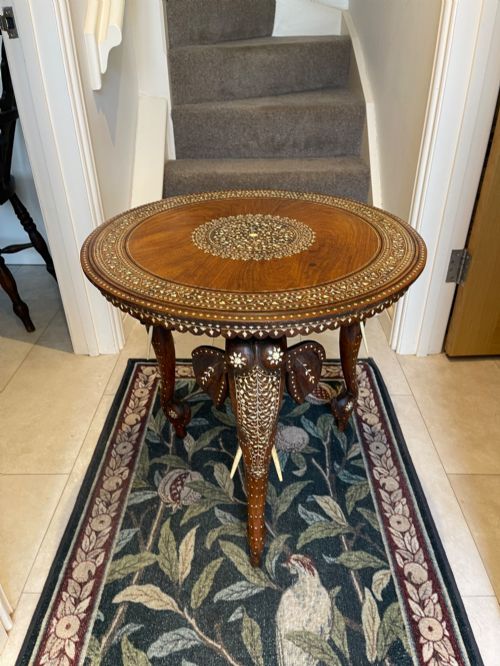
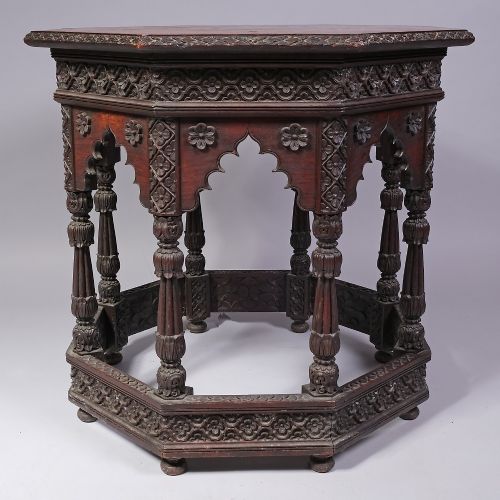
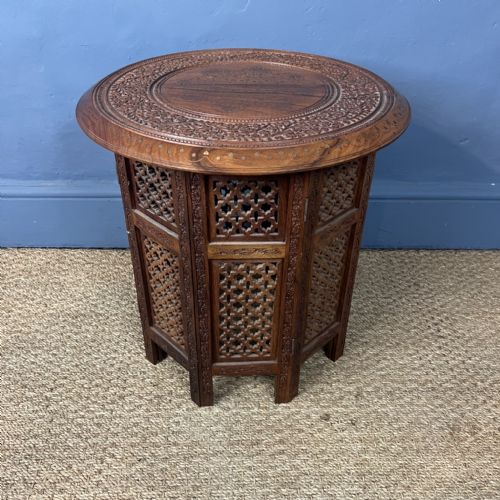
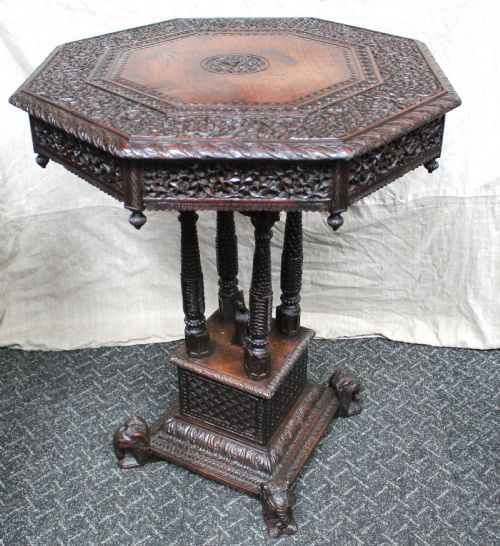
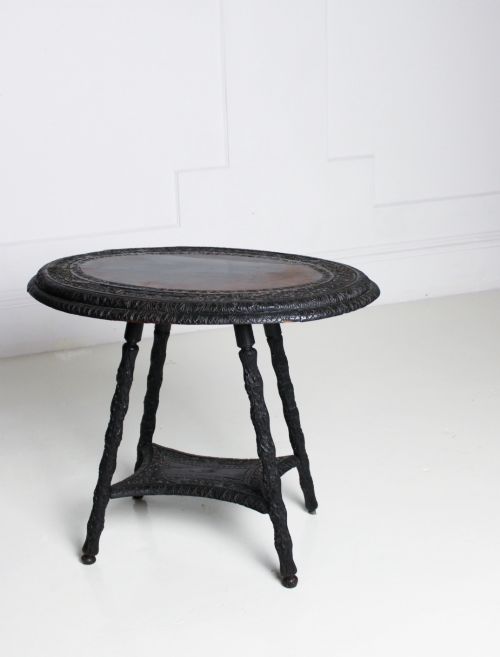
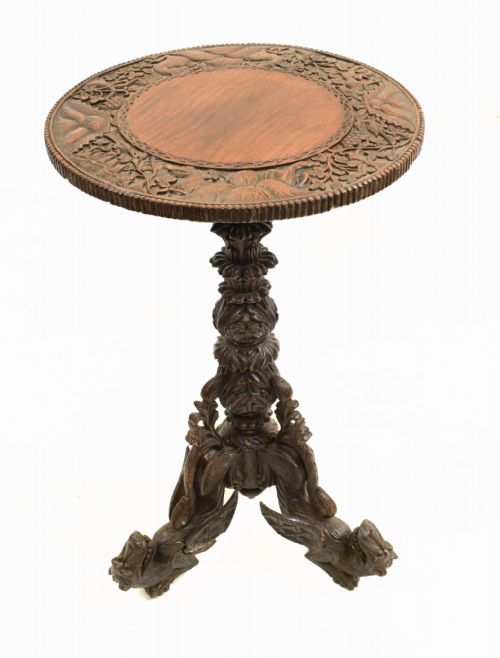
The version most commonly met on this page is the Anglo-Indian carved hardwood table, often featuring floral motifs, elephant supports or inlaid details. Alongside these, specimens from Burma, Ceylon, New Zealand and the West Indies appear regularly in the listings.
How they were made
Carpenters utilised dense tropical timbers such as teak, padouk, rosewood and ebony, which provided a stable base for deep relief carving and turning. These woods resisted local insects and humidity while offering a fine grain suitable for intricate joinery.
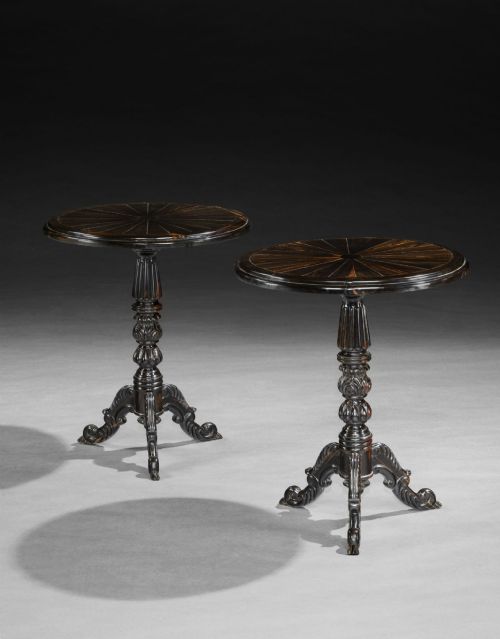
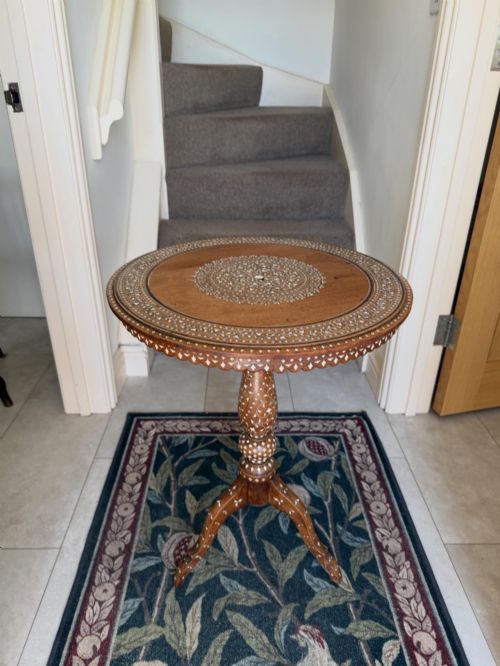
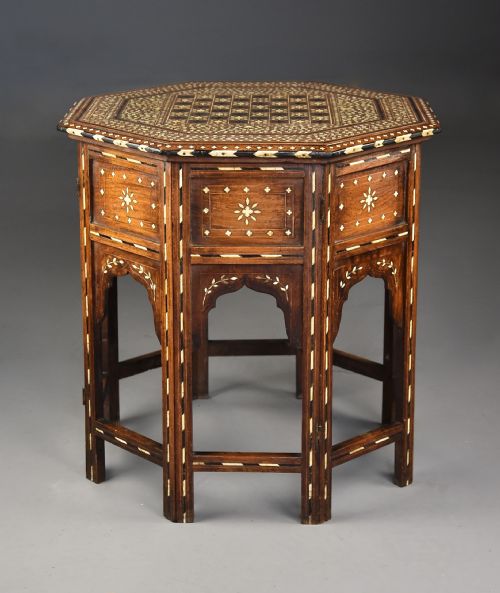
Artisans applied surface decoration through contrasting materials, embedding bone, brass wire, mother-of-pearl or varied specimen woods into geometric and floral recesses. Folding mechanisms and tilt-top designs also required precise hinges and pivot points to allow portability.
Listings feature teak, rosewood, padouk, and ebony alongside bone and brass inlay.
What varies in quality
Quality rests in the depth and crispness of the hand-carving, where superior examples display sharp undercut foliage and expressive animal motifs rather than shallow, mechanical scoring. The stability of the frame and the snugness of the folding joints further distinguish master workshops from standard production.
The precision of the inlay work marks the tier of a piece, with tight, flush placement of bone, brass or contrasting woods indicating careful handiwork. Timber selection also plays a role, with dense, evenly figured padouk or ebony elevating the overall standard above simpler mixed-wood constructions.
Anton Seuffert
The Colonial Occasional Table Glossary
- Anglo-Indian
- Descriptive term for furniture made in India during British rule, combining European furniture forms with local carving traditions. These items often feature dense foliage and animal figures.
- Hoshiarpur
- A style of woodwork originating from Punjab, characterised by intricate inlaid patterns of brass and bone set into carved wood. Geometric and floral motifs cover every available surface.
- Specimen wood
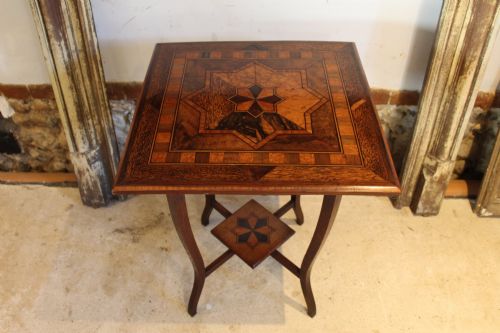
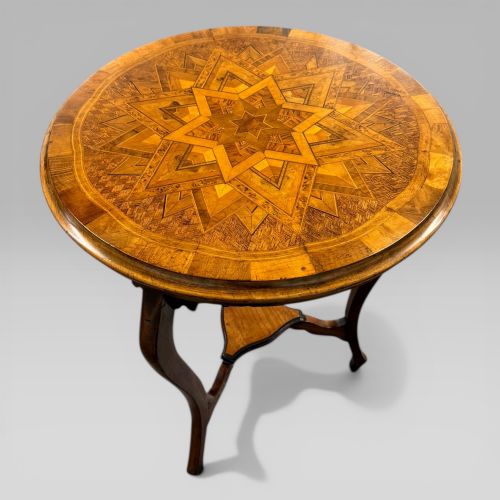
- Furniture constructed from a multitude of different native timbers arranged to display natural variations in colour and grain. These pieces often form geometric or pictorial marquetry panels.
- Teapoy
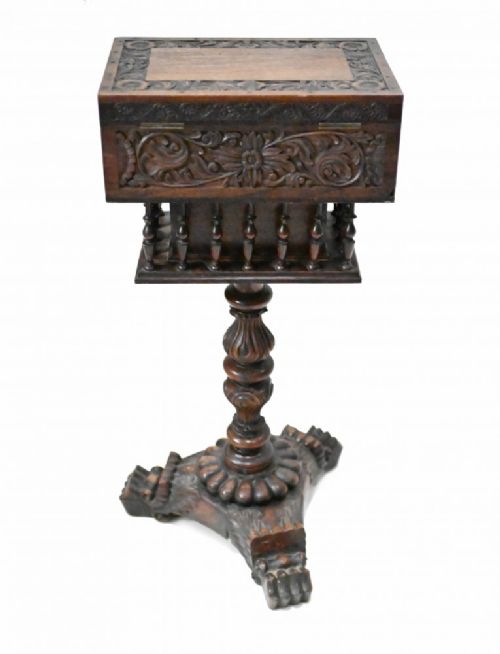
- A small table traditionally used for holding tea canisters and equipment, later evolving into general occasional furniture. Many examples include internal compartments or folding structures.
- Tilt-top
- A tabletop hinged to a central pillar, allowing the surface to fold vertically for storage against a wall. This mechanism requires sturdy pivot blocks and a reliable release catch.
Colonial Occasional Table: Frequently Asked Questions
How were these tables used?
These tables served flexible domestic roles in drawing rooms and verandahs, functioning as tea tables, plant stands or surfaces for reading materials. Folding and tilt-top variants allowed servants to clear them away easily.
In modern spaces, they function as bedside tables, lamp stands or compact coffee tables that introduce rich texture to a room.
How do I identify an Anglo-Indian table?
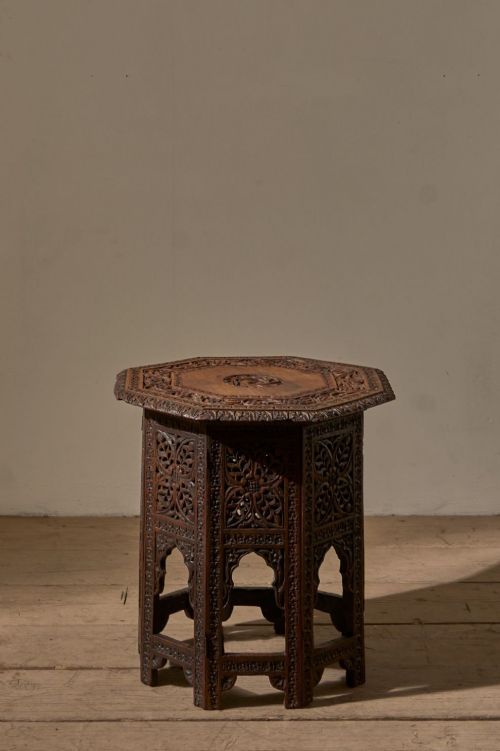
Anglo-Indian tables are marked by dense, all-over hand-carving featuring floral scrolls, foliage, and sometimes figures such as elephants or peacocks. They frequently utilise local hardwoods like padouk or rosewood.
Many examples employ octagonal tops and folding bases constructed without nails, relying instead on interlocking wooden hinges and pegged joints.
What woods were used for colonial tables?
Cabinetmakers utilised heavy, durable tropical timbers including teak, padouk, ebony, rosewood and general exotic hardwoods. These woods supported intricate carving without splintering.
Some regional pieces incorporate multi-wood marquetry or contrasting light bone and brass inlay to highlight the darker primary timber.