


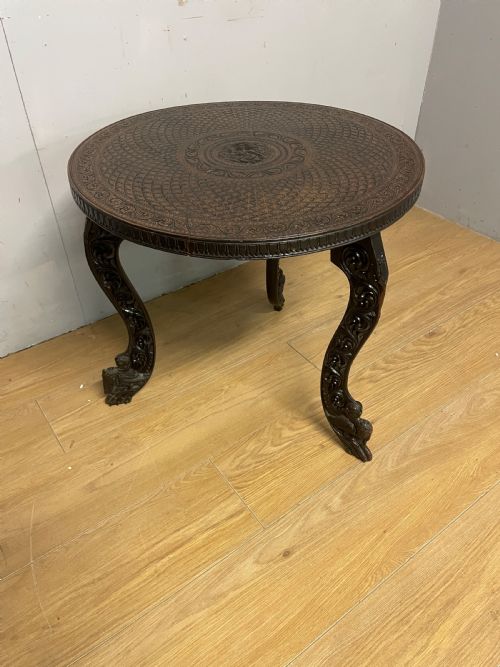


Carved Padouk Wood Furniture
Carved padouk wood furniture brings dense tropical timber and intricate ornamentation together, offering robust construction and striking decorative presence for traditional interiors.
Carved Padouk Wood Furniture
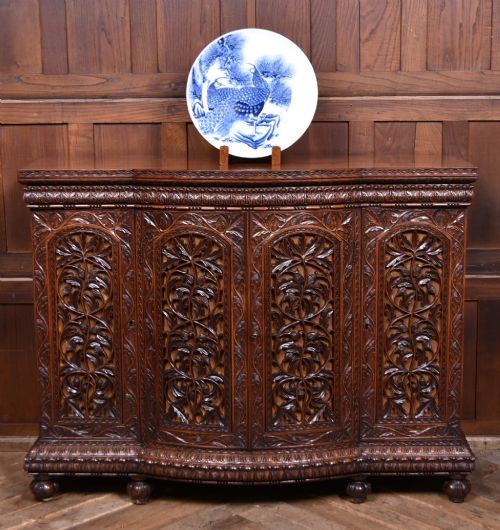
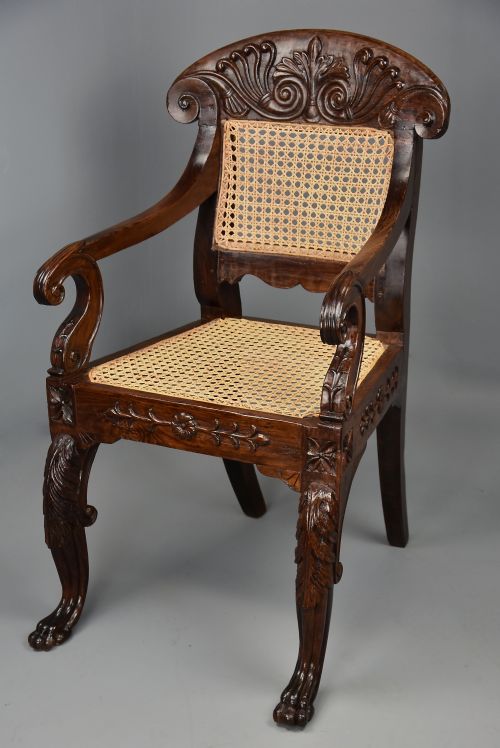
Carved padouk wood furniture encompasses a diverse selection of seating, tables, and storage pieces originating primarily from nineteenth-century colonial workshops. Buyers searching for carved padouk wood furniture encounter distinct regional interpretations spanning Anglo-Indian, Burmese, and Chinese traditions from periods such as the Regency and Victorian eras.
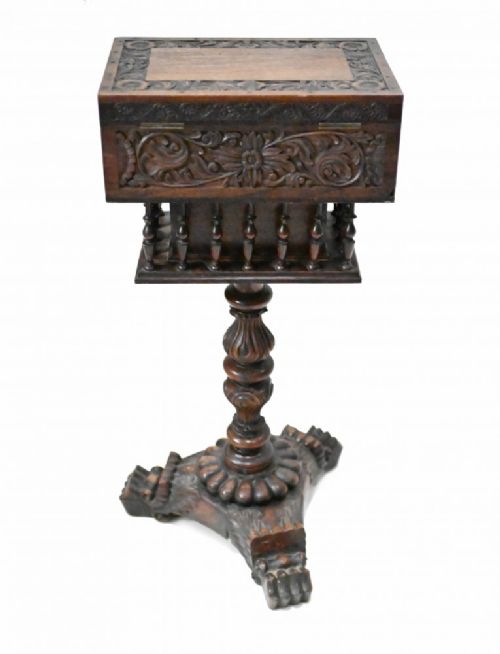
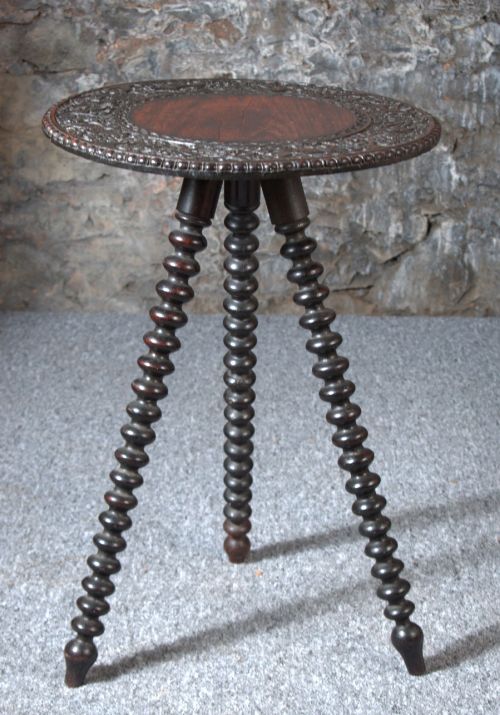
The assortment on this page concentrates heavily on domestic forms including sideboards, side tables, armchairs, and plant stands. These items reflect international trade and cross-cultural design influences, uniting dense timber with deep relief carving.
Makers frequently combined regional motifs with European furniture forms, resulting in sideboards, library tables, and dressing mirrors that served British households at home and abroad. Surviving examples demonstrate the heavy reliance on padouk timber alongside secondary materials like brass, cane, and marble.
How they were made
Workshops utilised padouk, a heavy and dense hardwood renowned for its deep reddish-brown colour and durability, which readily accepted intricate chisel work. Craftsmen carved deep relief patterns directly into the solid timber, executing dense foliage, scrolling designs, and figurative elements.
Construction methods incorporated traditional joinery adapted to withstand tropical climates, occasionally pairing the primary hardwood with secondary components of teak or brass hardware. Certain seating and table forms integrated cane panels or marble inserts to diversify the tactile surface texture.
Materials appearing across the inventory include solid padouk, teak, marble, cane, and brass fittings.
What varies in quality
The distinction between standard and superior pieces rests upon the crispness and depth of the wood carving. Master carvers achieved remarkable dimension and undercut details in the padouk, whereas lesser examples display flat or hurried ornamentation.
Structural integrity and the preservation of the original timber finish dictate overall excellence. Pieces retaining a deep, natural patina without extensive timber replacement command greater appreciation among collectors of colonial cabinetmaking.
The Carved Padouk Wood Furniture Glossary
- Padouk
- A heavy, durable tropical hardwood with a distinctive reddish-brown colour that darkens with exposure to light. It provides a stable base for deep relief carving.
- Anglo-Indian
- A descriptive term for furniture made in India during the British colonial period, combining local craftsmanship with European forms such as sideboards and library tables.
- Teapoy
- A small occasional table, originally designed in India and East Asia to hold tea caddies or serve as a general-purpose stand.
- Patina
- The surface sheen and coloration developed by hardwood over decades of handling, polishing, and natural oxidation.
- Whatnot
- A piece of open-shelved furniture designed for displaying ornaments, books, or small objects, popular throughout the nineteenth century.
Carved Padouk Wood Furniture: Frequently Asked Questions
What is padouk wood?
Padouk is a dense tropical hardwood originating from regions including Asia and Africa, valued for its exceptional strength and deep reddish hue. Artisans favoured it for colonial furniture due to its resistance to wood-boring insects and its ability to hold crisp, intricate carving.
Over time, exposure to light deepens the natural colour of padouk from a vibrant red to a rich, dark brown. This ageing process contributes significantly to the desirable surface appearance found on nineteenth-century pieces.
Where was Anglo-Indian furniture made?
Anglo-Indian furniture was produced in various workshops across the Indian subcontinent during British rule, specifically tailored for export to Britain or for use by expatriate households. Major manufacturing centres included cities like Bombay, Madras, and Calcutta, where local artisans mastered European furniture designs.
These craftsmen merged British Regency and Victorian structural frameworks with traditional Indian carving motifs, creating distinct hybrids. The resulting pieces showcase exceptional woodworking skill rooted in local materials.
How do I date carved padouk pieces?
Dating carved padouk furniture requires examining the construction techniques, hardware, and stylistic influences present in the design. Pieces reflecting Regency or early Victorian proportions often feature hand-cut joinery and specific regional carving styles associated with mid-nineteenth-century trade.
Comparative analysis of secondary woods, such as teak or mahogany, and the presence of original brass fixtures assist in narrowing the production era. Subtle shifts in decorative motifs from floral scrolls to denser Gothic or Qing influences also indicate specific decades.