



Carved Wooden Caddy Table
These carved wooden caddy table pieces combine tea storage and display, offering collectors functional nineteenth-century furniture with detailed craftsmanship.
Carved Wooden Caddy Table
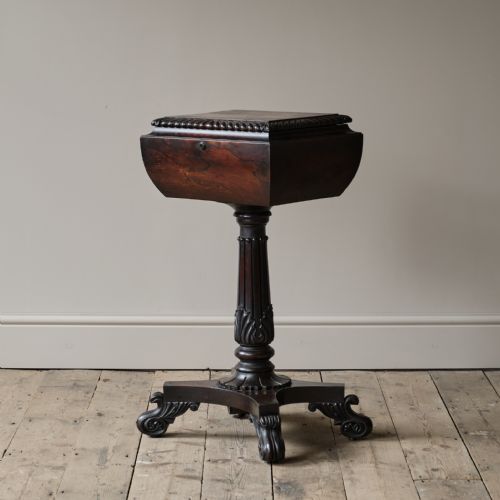
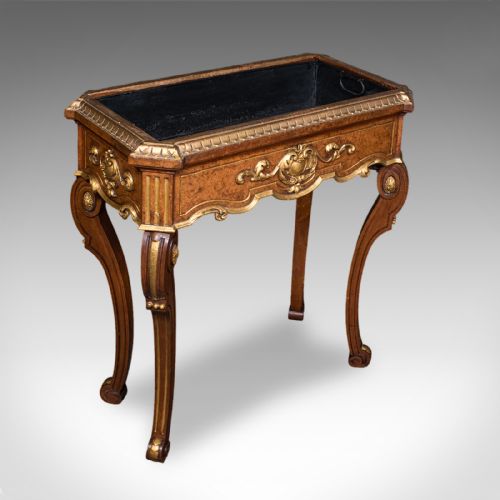
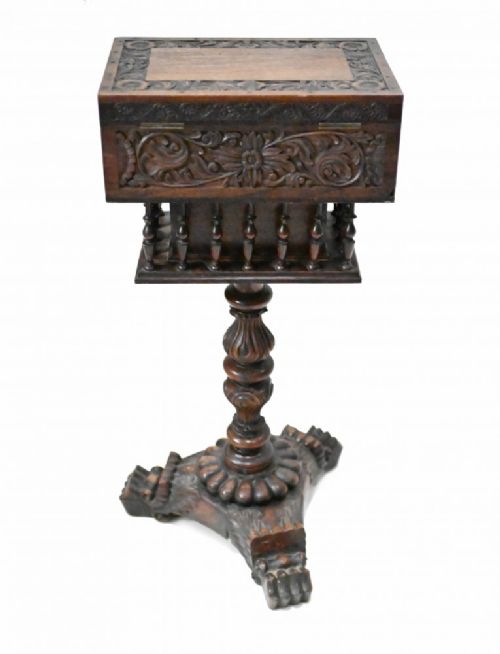
When searching for a carved wooden caddy table, buyers examine items primarily recorded as teapoys, tea poys, or occasional tables across the nineteenth century. These pieces combine a lidded box for storing tea with a supporting stand, functioning as distinct items of living room furniture.
The most common examples on this page date from the Regency and Victorian periods, executed in woods such as mahogany, walnut, and burr walnut. Many feature sarcophagus-shaped boxes or carved decorative feet, reflecting the domestic habits of earlier centuries.
How they were made
Cabinetmakers utilised solid timbers and veneers like flame mahogany and burr walnut, applying hand-carving to the stands and supports. Joinery methods relied on traditional cabinet construction to support heavy lidded boxes and internal compartments.
Selected pieces incorporate brass hardware, ormolu, or silver plate accents alongside glass elements, integrating metalwork with timber structures.
Tea was once so valuable that locking the teapoy lid was a serious household duty.
What varies in quality
The standard of carving on the wooden supports and feet distinguishes workshop output, ranging from simple turned legs to deeply carved pillars. Timber selection also dictates grade, with figured grains like flame mahogany and burr walnut setting apart finer examples.
Attribution to documented workshops elevates certain pieces, whilst the presence of original internal fittings and matching stands completes the construction integrity.
Gillows·Lenzkirch
The Carved Wooden Caddy Table Glossary
- Teapoy
- A small stand or table fitted with a lidded box, originally designed for storing loose tea leaves. These pieces often feature internal compartments for different varieties of tea.
- Sarcophagus
- A box shape featuring a convex-sloping lid and flared base, reminiscent of classical stone coffins. This silhouette frequently appears on early nineteenth-century tea containers.
- Burr walnut
- Timber taken from a walnut tree growth, showing highly figured, swirling grain patterns. Cabinetmakers valued this material for decorative veneering on high-status furniture.
- Ormolu
- Gilt bronze ornamentation applied to furniture and decorative objects. This technique involves coating metal with a gold amalgam.
- Regency
- A British design style spanning the early nineteenth century, characterised by classical revival motifs and refined proportions. Furniture from this era often draws inspiration from ancient Roman and Greek forms.
Carved Wooden Caddy Table: Frequently Asked Questions
What is a teapoy used for?
Teapoys were designed for storing dry tea leaves in secure, lidded compartments within the drawing room. Wealthy households used them to protect expensive tea from moisture and pilfering.
Today, buyers utilise these lidded tables as decorative occasional furniture or display surfaces in living spaces.
How do I identify a Regency teapoy?
Regency teapoys typically date from the early nineteenth century and display classical architectural influences, balanced proportions, and dark timbers like mahogany. They often feature sarcophagus-shaped boxes resting on pillar-and-base supports.
Later Victorian versions tend towards heavier ornamentation, more varied wood selections like burr walnut, and elaborate carved feet.
Are the interiors usually intact?
Many surviving examples retain some or all of their original internal wooden caddies, foil-lined compartments, or glass mixing bowls. However, the delicate nature of these small fittings means some have been lost or altered over time.
Examining the interior reveals whether the piece retains its original layout or has been adapted for general storage.
How do I care for burr walnut veneer?
Burr walnut furniture requires protection from direct sunlight and dramatic humidity changes to prevent the decorative veneer from lifting or cracking. Regular dusting with a soft, dry cloth maintains the polished timber surface.
Avoid placing damp items directly onto the wood to preserve the historic finish.