


Dark Wood Tea Caddy Table
A dark wood tea caddy table is a lidded container on a stand, designed to hold tea safely under lock and key.
Dark Wood Tea Caddy Table
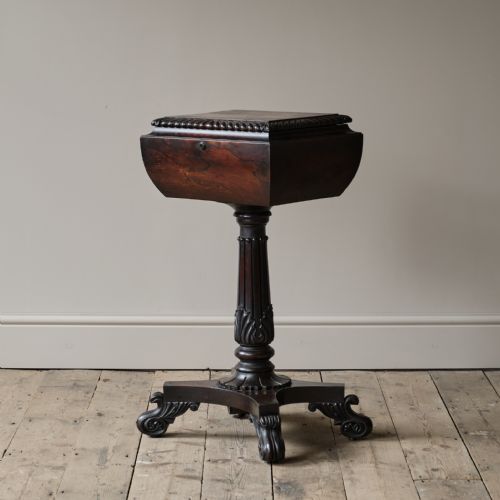
A dark wood tea caddy table, commonly known as a teapoy, combines a lidded storage box with a sturdy supporting stand. When you search for a dark wood tea caddy table, you find pieces designed to hold precious tea leaves securely in the nineteenth century.
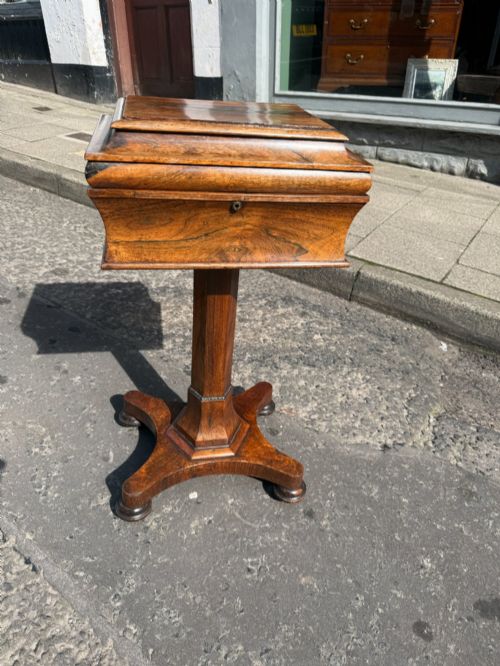
The versions you meet on this page most often date from the Regency and Victorian periods. They take forms such as sarcophagus-shaped boxes, work tables with caddy tops, and carved colonial furniture.
Makers shaped these tables from dark timbers including rosewood, mahogany, padouk, oak, and walnut. They serve as elegant occasional tables or side tables in a traditional interior.
How they were made
Cabinet makers constructed these tea caddy tables using dense tropical hardwoods like rosewood and mahogany. They frequently embellished the surfaces with brass inlay and marquetry inlay.
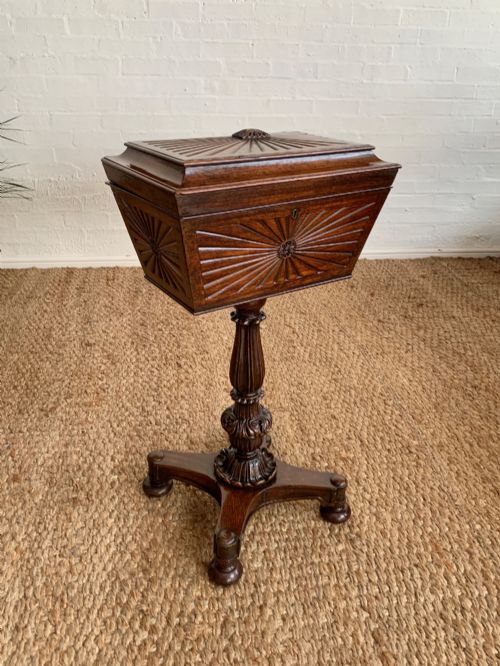
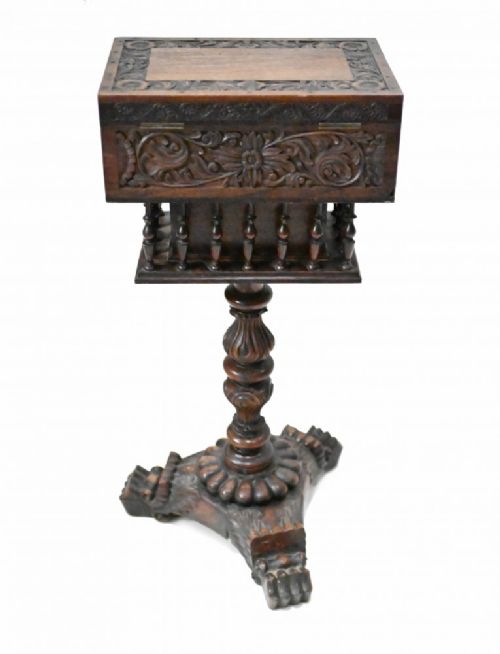
Some examples feature detailed carving, such as the sunburst carving seen on William IV work tables or the intricate woodwork of Anglo-Indian colonial pieces. The boxes sit securely upon pedestals or four-legged stands.
Tea was so dear that servants kept the key on a ribbon around their neck.
What varies in quality
The standard of timber selection and cabinet work separates one piece from another. Richly figured rosewood and precise brass inlay demonstrate superior craftsmanship.
The refinement of the carving on the stand and the execution of internal fittings influence the standing of a teapoy. Maker attribution also plays a role when a workshop stamp is present.
Gillows
The Dark Wood Tea Caddy Table Glossary
- Teapoy
- A small table with a box on top for holding tea. The term derives from an Eastern word for a three-footed table.
- Sarcophagus
- A box shape with a sloping lid resembling an ancient stone coffin. Makers used this prestigious profile for grand Regency tea caddies.
- Padouk
- A heavy tropical hardwood valued for its reddish-brown colour and durability. Colonial makers utilised this timber for carved tables.
- Marquetry
- Decorative veneer work arranged in pictorial or geometric patterns. Craftsmen applied contrasting woods to the surfaces of the box.
- Work table
- A piece of furniture containing compartments or a fabric bag for sewing materials. Some models incorporate tea caddy tops.
Dark Wood Tea Caddy Table: Frequently Asked Questions
What is a teapoy?
A teapoy is a lidded box on a stand, originally used for storing loose tea leaves in the drawing room.
Because tea was an expensive commodity, the container usually featured a lock to protect the contents.
How were they used?
The host used the table to prepare and dispense tea before the beverage became cheaper and more common.
Inside the box, small canisters held different varieties of tea leaf.
Where should I place one?
These pieces function well as side tables or occasional tables in a sitting room or hallway.
The lidded top provides convenient enclosed storage for small household items.
How do I identify the period?
Regency and Georgian examples often display brass inlay and sarcophagus shapes, while Victorian pieces lean towards oak or simpler mahogany.
Construction methods and timber choices help indicate the decade of manufacture.