
Hardwood Accent Table
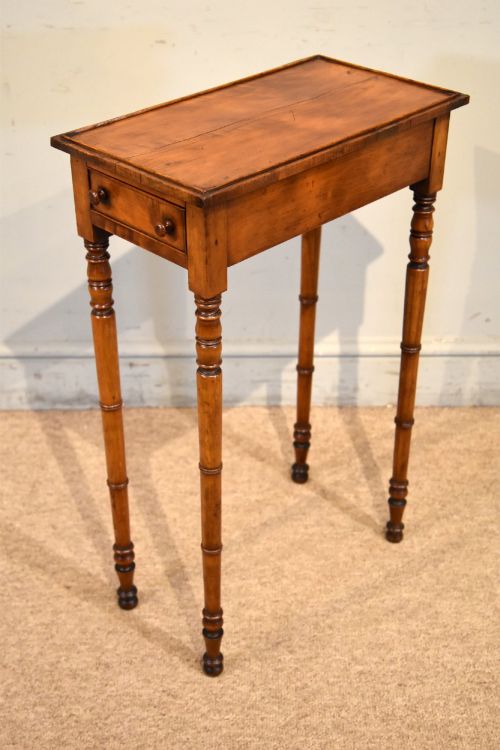
A hardwood accent table brings dense timber and intricate regional carving into a room, serving as a versatile perch for lamps or plants.
Hardwood Accent Table
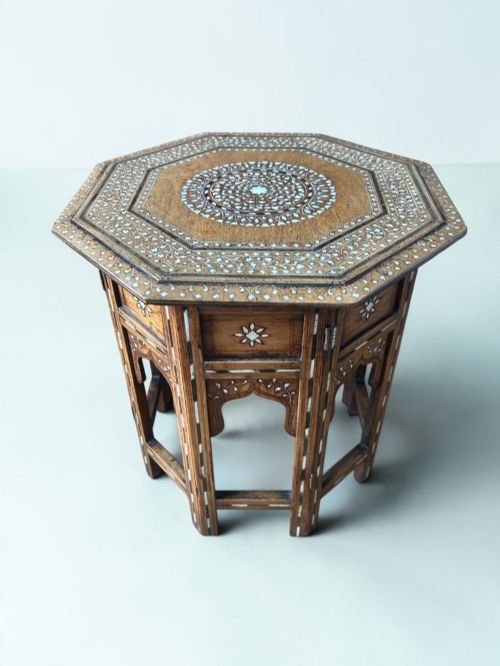
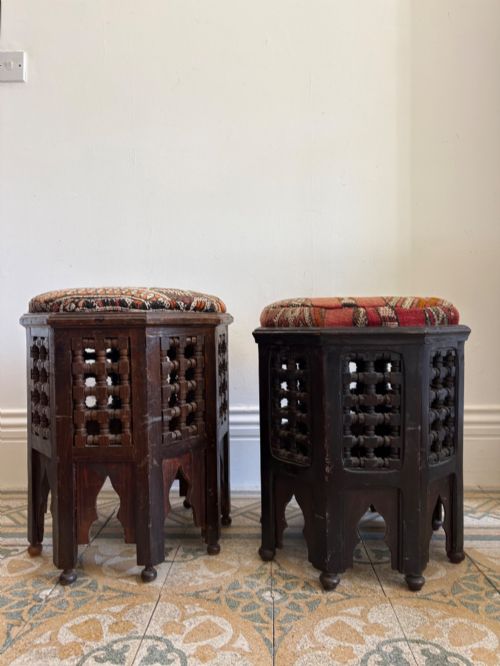
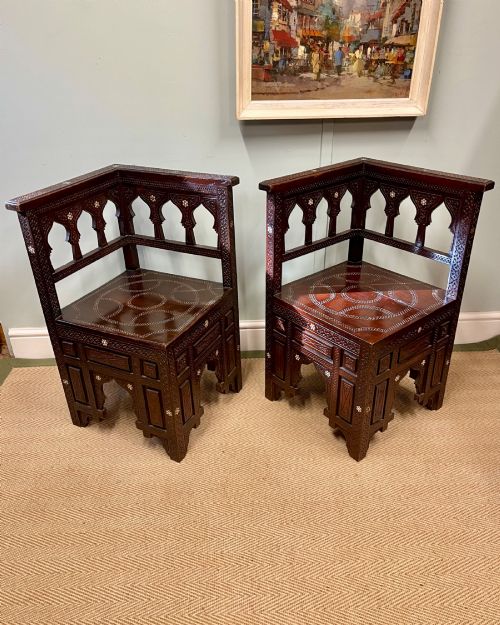
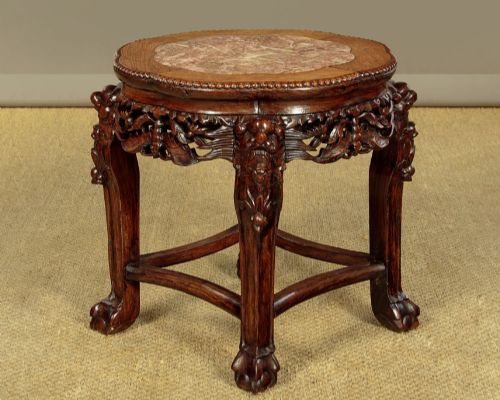
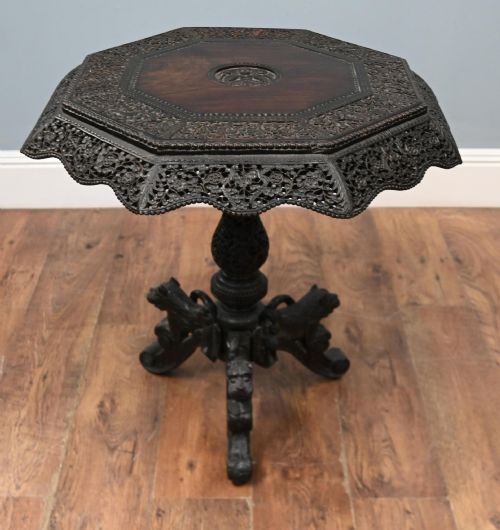
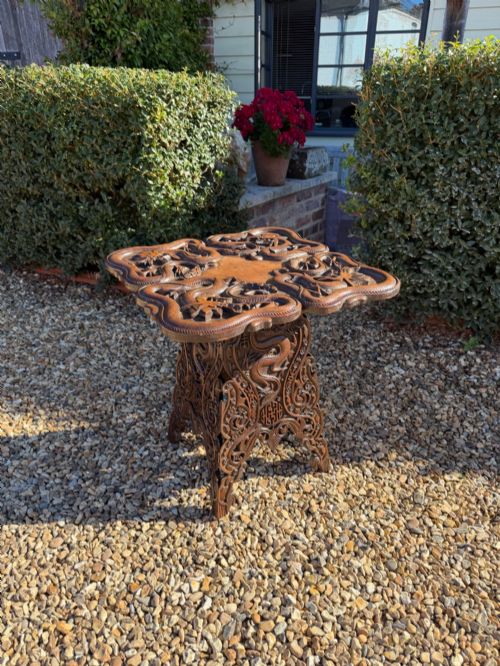
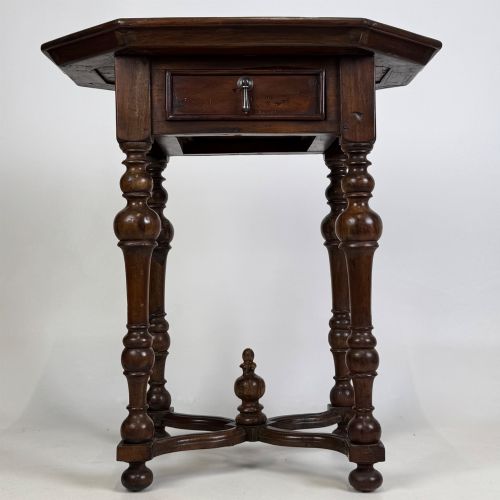
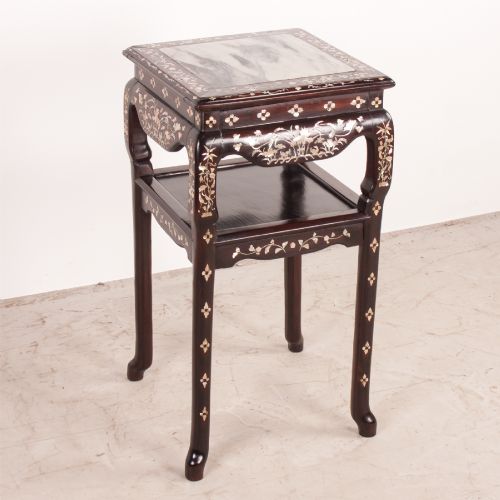
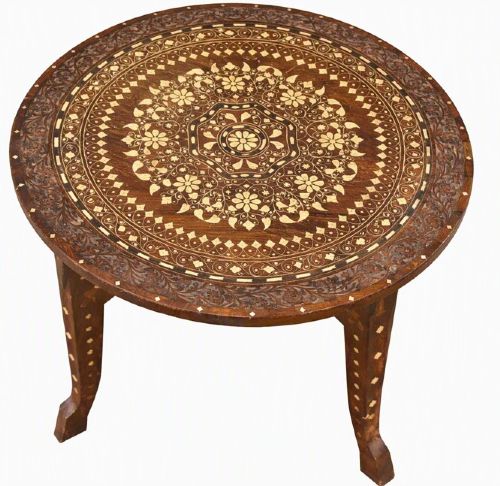
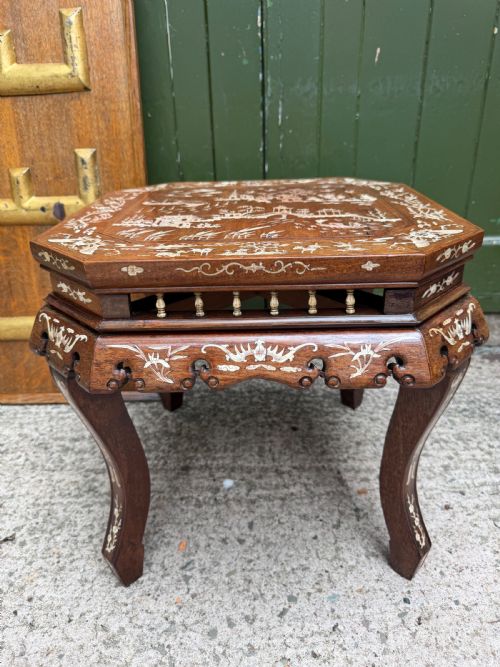
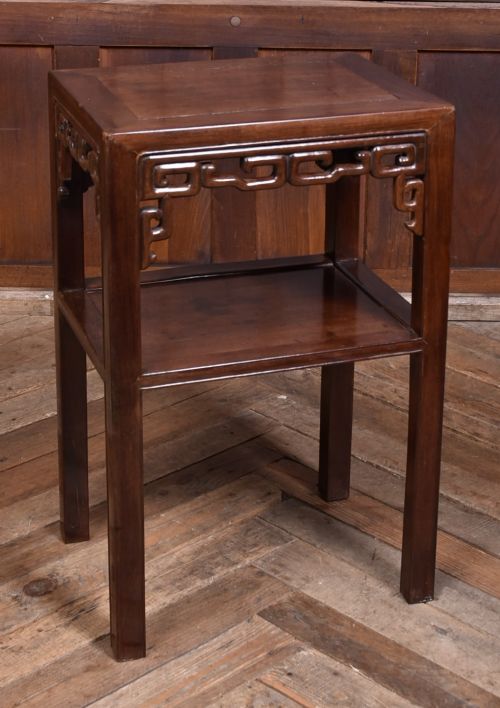
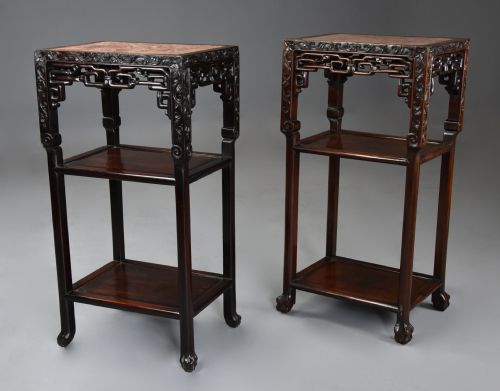
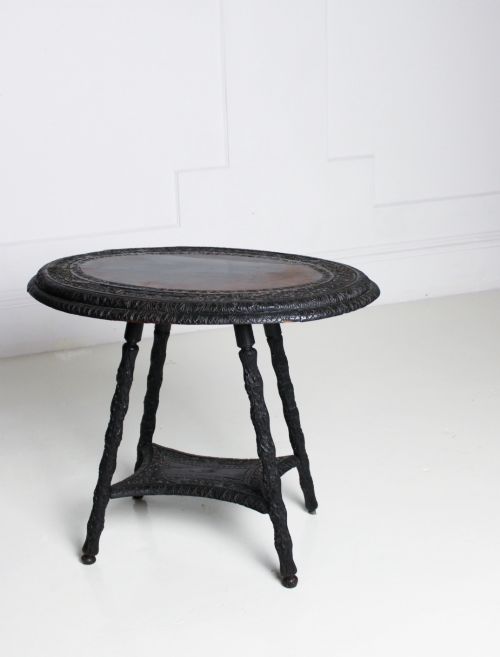
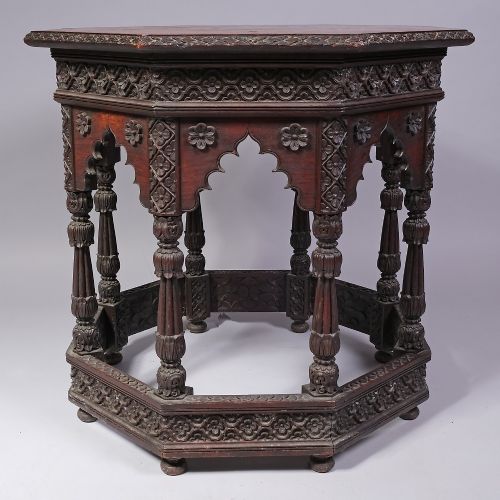
When you search for a hardwood accent table, you encounter a diverse group of occasional furniture spanning the nineteenth and early twentieth centuries, originating from workshops across China, India, Burma, and the wider East. These pieces take many structural forms, including octagonal tables, low side tables, plant stands, nesting sets, and stools.
The most common variants on this page combine dense tropical timbers with heavy carving or detailed inlay work. You will frequently find pieces linked to Anglo-Indian, Moorish Revival, and Chinese export traditions, reflecting global trade and aesthetic exchanges of the Victorian and Edwardian eras.
Materials and construction methods
Cabinetmakers utilised heavy, resilient timbers such as rosewood, padauk, hongmu, and walnut, selecting them for their natural strength and deep grain. These dense woods allowed artisans to carve high-relief foliage, animal figures, and geometric patterns without risking structural failure.
Many surfaces feature contrasting embellishments set directly into the timber, including bone, mother of pearl, and marble inserts. Joinery methods varied by region, combining traditional pegged frames with intricate pierced fretwork and surface relief.
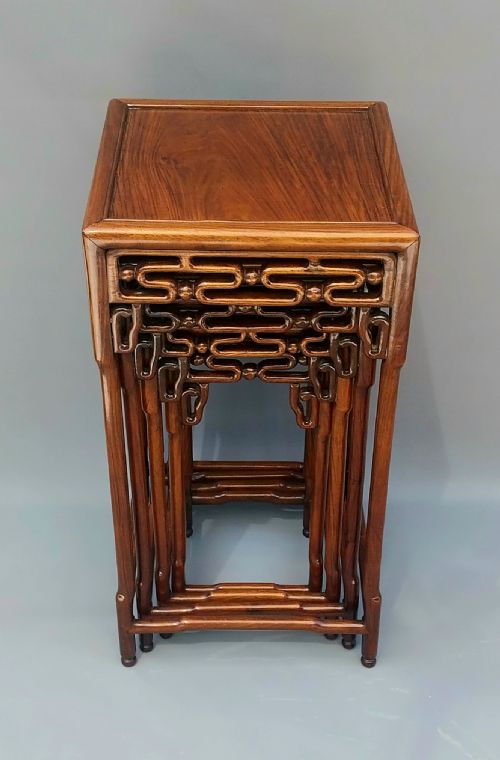
The furniture forms on this page include octagonal tables, nesting sets, plant stands, and low coffee tables.
Distinctions in quality
The distinction between standard examples and superior work lies in the crispness of the carving and the precision of the inlay. Master carvers achieved deep, three-dimensional depth with clean undercutting, whereas lesser pieces display shallow, mechanical incision.
Material selection also dictates standing, with heavier indigenous hardwoods and uniform marble inserts commanding greater attention than softer secondary timbers or replacement elements. The integration of delicate bone or mother of pearl work without missing fragments separates well-preserved specimens from heavily restored ones.
Liberty & Co·Gabriel Viardot
The Hardwood Accent Table Glossary
- Hongmu
- A traditional Chinese term denoting dense, dark hardwoods, frequently translated as red wood. It encompasses several heavy species used in fine nineteenth-century furniture.
- Jardiniere stand
- A tall pedestal or small table specifically designed to support a plant pot or flower bowl. These pieces usually feature a sturdy top and slender supporting legs.
- Anglo-Indian
- A descriptive term for furniture made in India during the British colonial period, often combining British furniture forms with local carving techniques.
- Fretwork
- An ornamental design created by piercing wood with a scroll saw or chisel to form openwork patterns. It appears frequently on the aprons of Chinese and oriental tables.
- Nest of tables
- A set of graduated tables designed to slide neatly beneath one another when not in use. They became particularly popular in multi-tiered sets of four during the nineteenth century.
Hardwood Accent Table: Frequently Asked Questions
How do I identify an Anglo-Indian table?
Anglo-Indian tables typically feature dense rosewood or teak carved with deep foliate motifs, animal figures, or geometric patterns. Many examples incorporate octagonal tops or folding bases.
These pieces reflect nineteenth-century colonial trade and combine traditional British furniture forms with intricate regional Indian craftsmanship.
What is a Chinese hongmu stand used for?
Hongmu stands served primarily as pedestals for porcelain vases, jardiniere bowls, or decorative objects rather than general surface use. Their sturdy construction supported heavy stone and ceramic items.
Today, buyers utilise them as plant stands or compact side tables in contemporary interiors.
How are mother of pearl inlaid tables constructed?
Artisans cut thin sections of mother of pearl and bone, pressing them into hand-chiseled recesses within the hardwood surface. Dark resin or wax often filled the surrounding gaps to secure the pieces.
This technique produced striking contrast against dark rosewood and walnut backgrounds, particularly on circular and square occasional tables.
How do I date a nineteenth-century hardwood table?
Dating relies on examining construction marks, timber density, and regional stylistic markers such as Victorian aesthetic movement influences or Qing dynasty motifs. Tool marks on the underside and the method of joint assembly offer further clues.
Comparing the carving depth and inlay materials with documented examples from the same period helps narrow the timeframe.