





Colonial Carved Hardwood Table
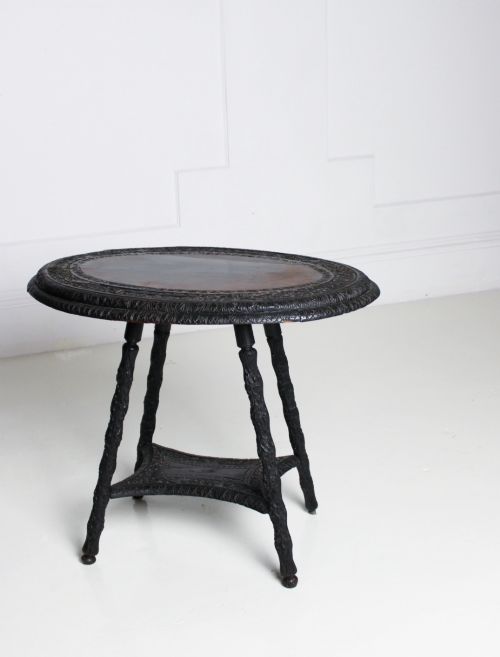
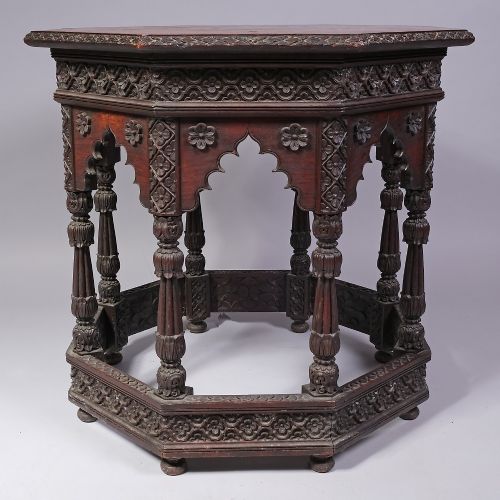
A colonial carved hardwood table brings intricate craftsmanship into a room, offering dense surface carving and rich timber tones rooted in nineteenth-century production.
Colonial Carved Hardwood Table
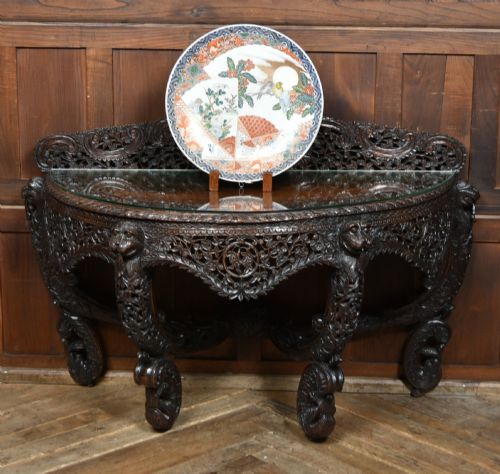
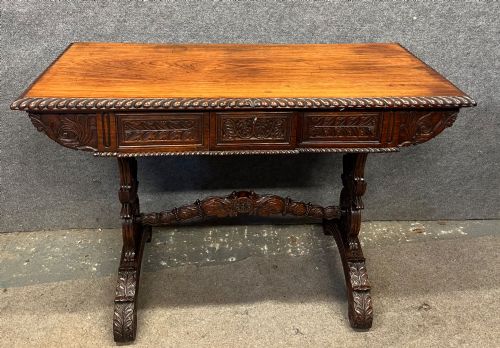
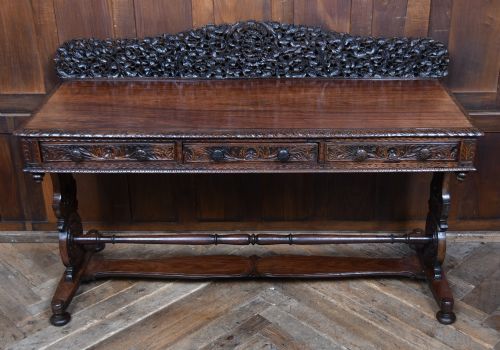
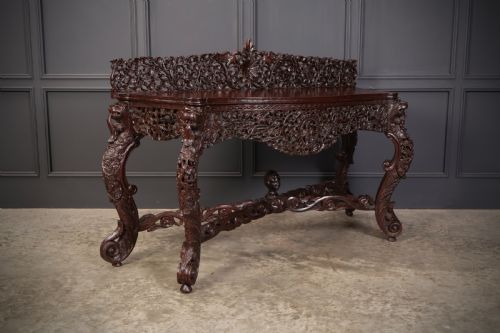
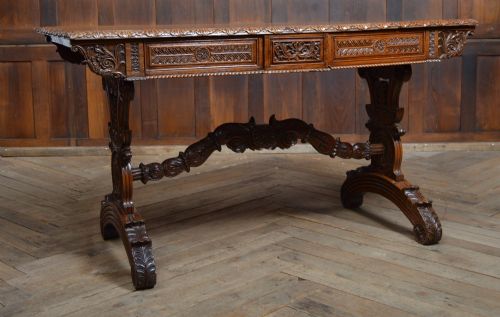
A colonial carved hardwood table encompasses forms originating from nineteenth-century workshops in regions such as India and Burma, produced for both local use and export. These items span a variety of domestic formats, including small occasional pieces, side tables, console tables, and larger library desks.
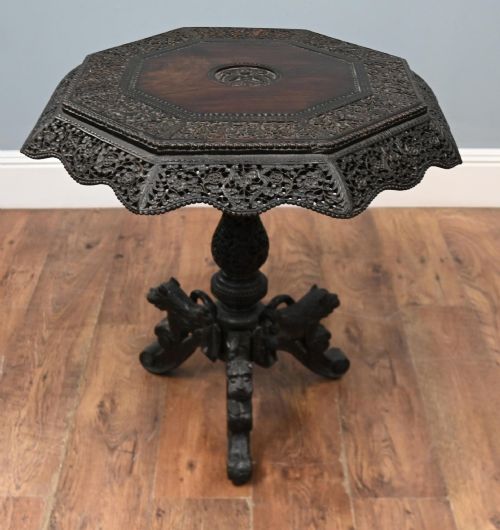
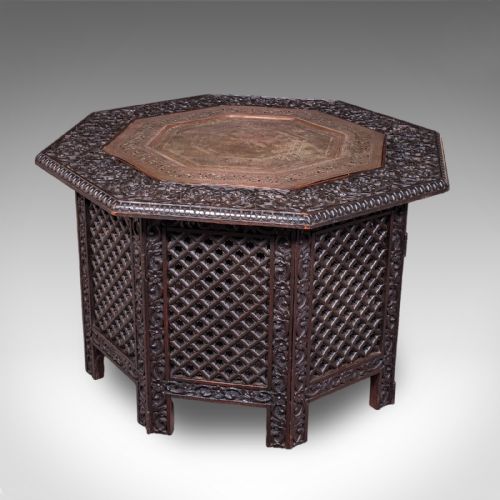
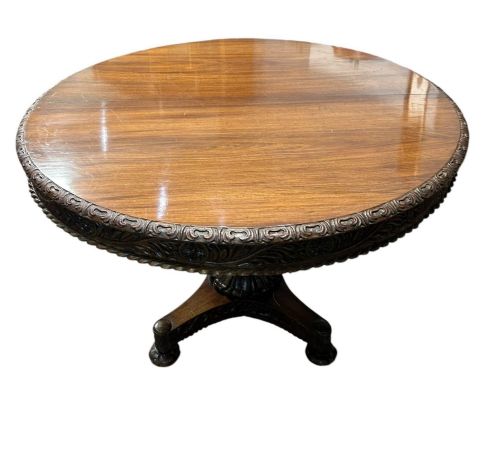
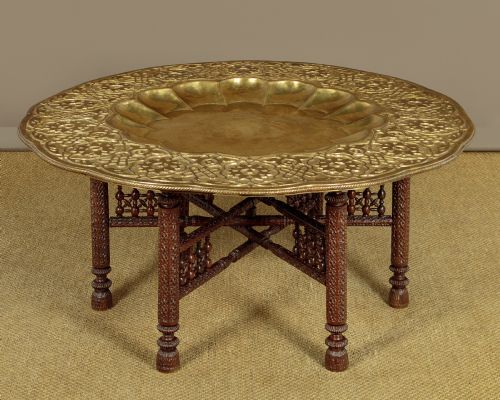
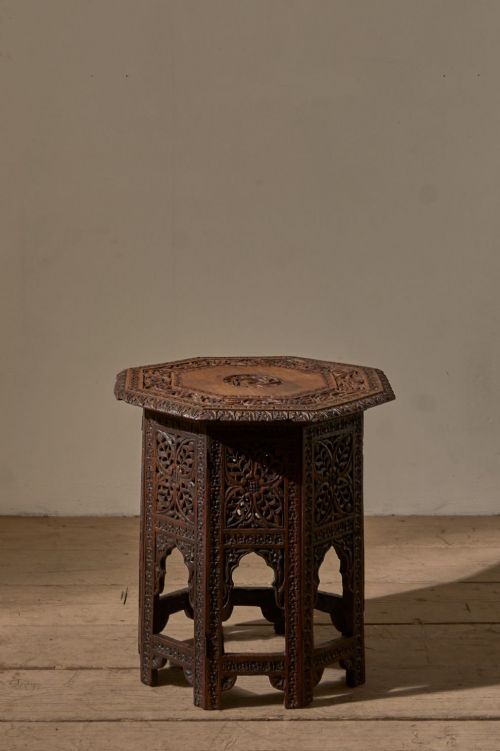
The most common examples on this page are occasional and side tables featuring low profiles, octagonal surfaces, or circular tops. These frequently display regional motifs such as elephants, dragons, or dense foliage, reflecting Anglo-Indian and Anglo-Burmese design influences.
How they were made
Carpenters utilised dense tropical timbers including padauk, teak, and rosewood, which provided the solid foundation necessary for deep relief carving. These dark woods were seasoned and worked by hand to support elaborate sculptural details on legs, aprons, and table edges.
Many surfaces incorporate contrasting materials such as inlaid brass, copper, or bone, set directly into the timber or arranged in geometric patterns. The ornamentation relies entirely on manual chisel work and inlay techniques passed down through local artisan traditions.
Colonial Carved Hardwood Table Retail Price Guide 2026
Typical asking prices for colonial carved hardwood table among the pieces listed under this phrase on Sellingantiques today, from the lower quarter to the upper quarter. They describe what is for sale here now, not the wider market.
Listings feature various table forms from the nineteenth century, including console tables, desks, and tea tables made from teak, rosewood, and padauk.
What varies in quality
The depth and crispness of the chisel work dictate the visual success of the piece, separating standard production from superior examples. Sharp, well-defined undercut foliage and cleanly rendered animal figures indicate a high level of artisan skill.
Selection of timber and the integrity of the joinery also distinguish the range, as heavier tropical hardwoods hold intricate carving without splintering. Original inset metalwork and stable structural construction complete the measures of superior execution.
The Colonial Carved Hardwood Table Glossary
- Anglo-Indian
- A descriptive term for furniture made in India during the British colonial period, often combining European forms with local carving styles. These pieces frequently utilise native hardwoods and regional ornamentation.
- Padauk
- A heavy, durable tropical hardwood with a reddish-brown hue that darkens with age. It serves as a primary timber for heavily carved nineteenth-century tables.
- Hoshiarpur
- A northern Indian centre known for intricate woodwork and inlay. Tables from this tradition often feature geometric bone or metal work set into dark timber.
- Occasional table
- A small, movable table designed for versatile placement within a room. On this page, these items frequently feature folding bases or octagonal tops.
Colonial Carved Hardwood Table: Frequently Asked Questions
How do I date a colonial carved hardwood table?
Dating relies on examining the timber species, construction methods, and stylistic cues recorded in nineteenth-century examples. Many pieces date from the Victorian era when export trade from India and Burma expanded.
Secondary indicators include the wear of the wood, the type of joinery used beneath the top, and the specific regional motifs present in the carving.
Where were these tables made?
These tables originated in workshops across the Indian subcontinent and Burma during the colonial period. Specific production centres included regions like the Bombay presidency and Hoshiarpur.
Craftsmen adapted traditional local techniques to suit the tastes of British residents and the export market.
How do I care for a carved hardwood surface?
Maintenance requires dusting regularly with a soft cloth to prevent particulate accumulation in the deep recesses of the carving. Avoid harsh chemical polishes that can build up within the carved details.
Keep the timber away from direct heat sources and strong sunlight to prevent the hardwood from drying out or splitting.
What are elephant tables?
Elephant tables are occasional or side tables featuring carved figural supports shaped as elephants, often incorporating tusks or decorative caparisons. They reflect the popular nineteenth-century British taste for exotic ornamentation.
These forms appear frequently in Anglo-Indian furniture collections from the late Victorian period.