
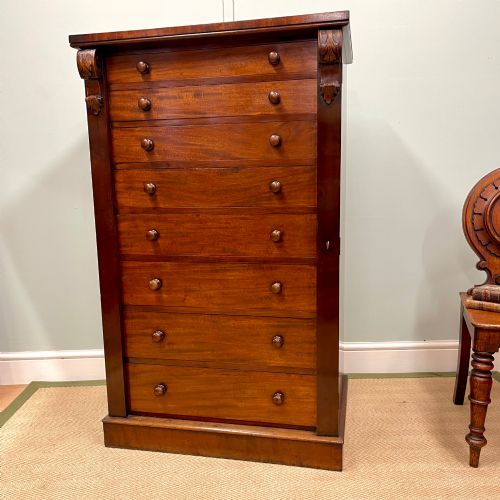


Collectors Locking Cabinet
These collectors locking cabinet pieces are secure tall chests and cabinets designed to keep valuable specimens safe, offering both display and locking function.
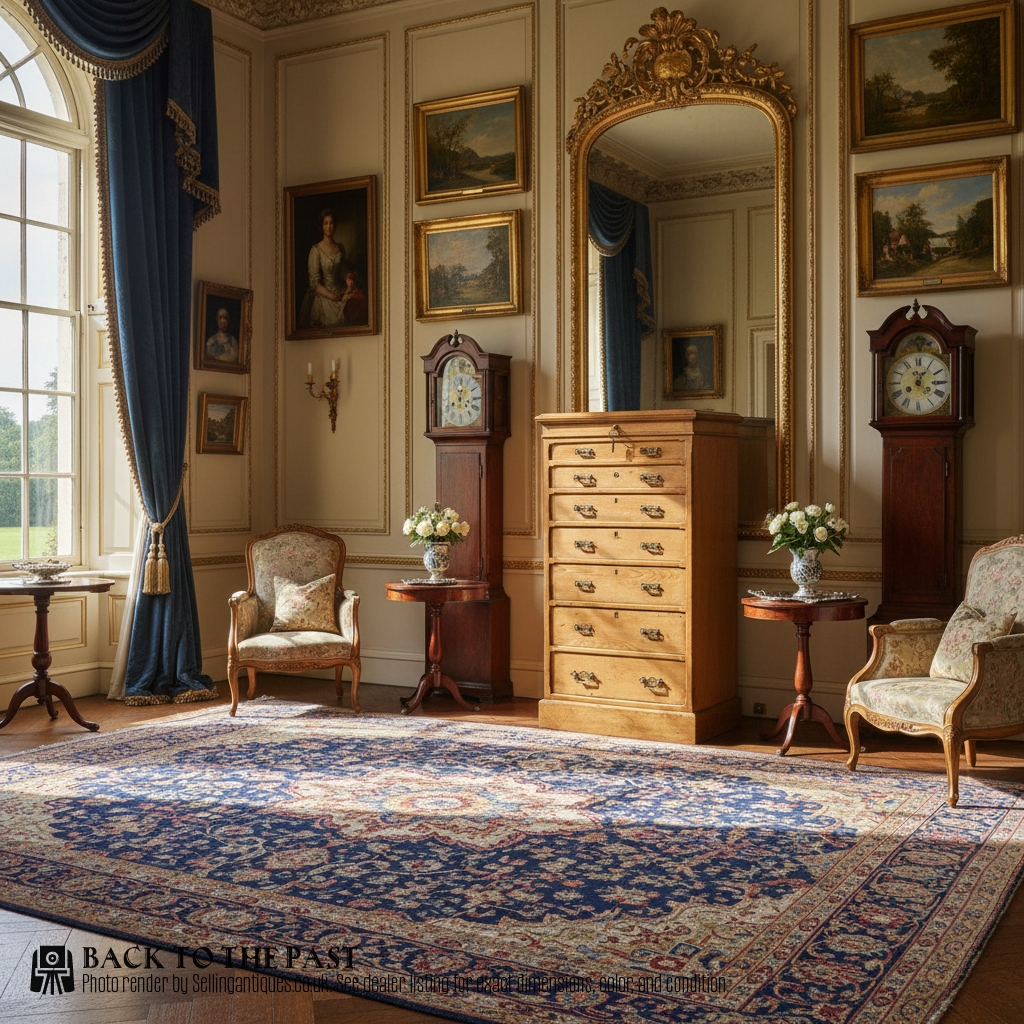
Collectors Locking Cabinet
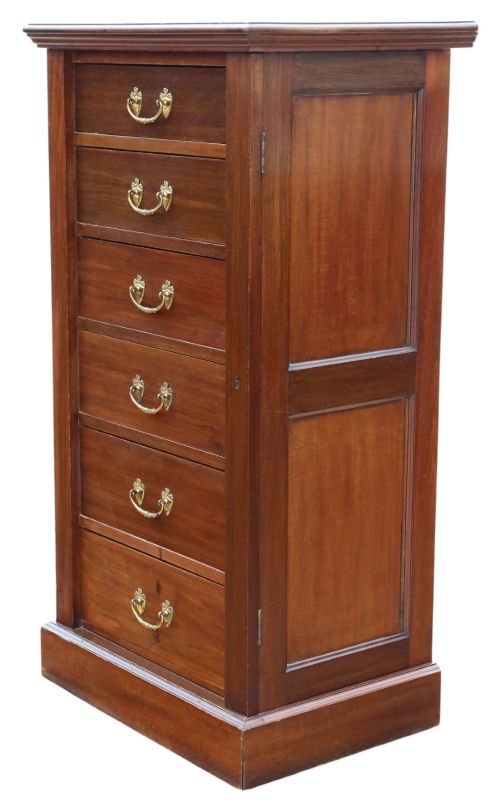
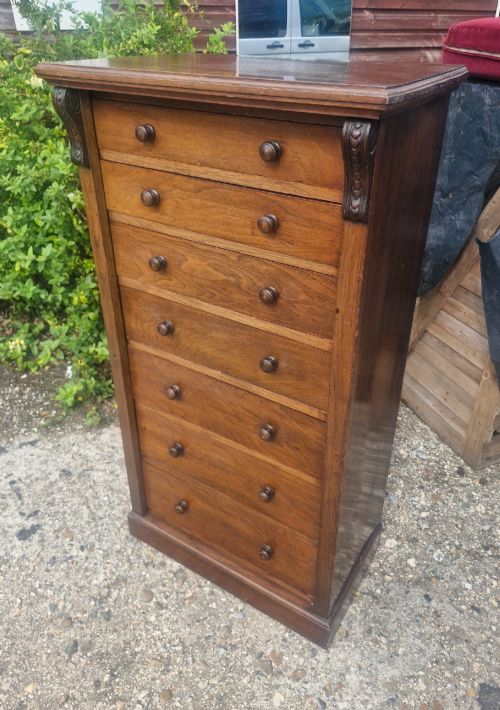
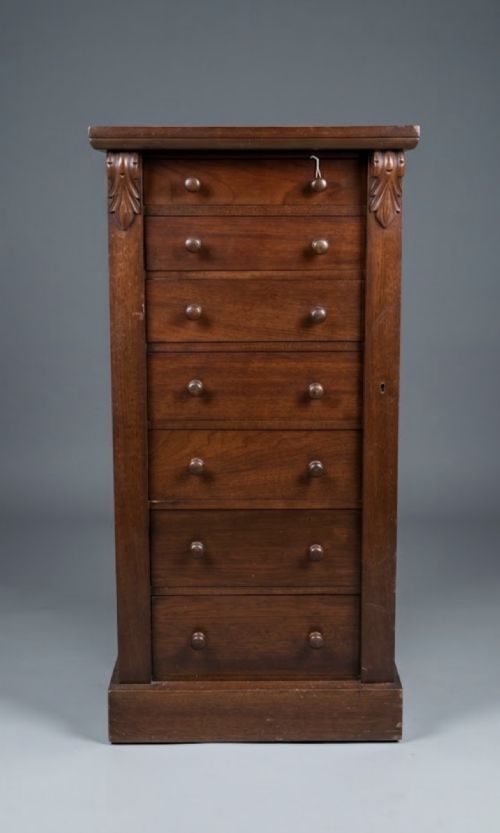
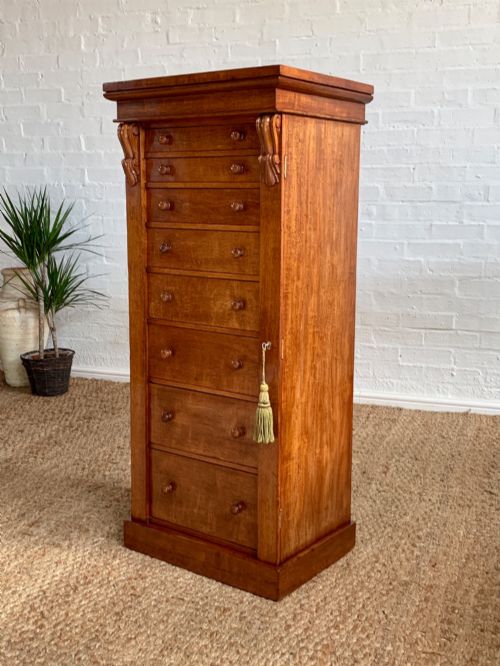
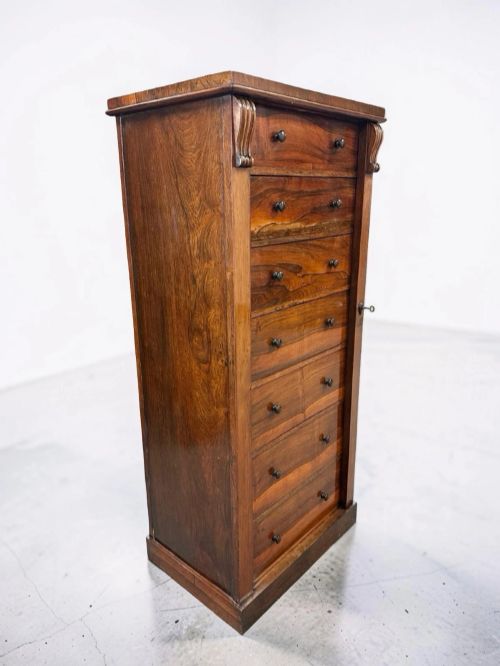
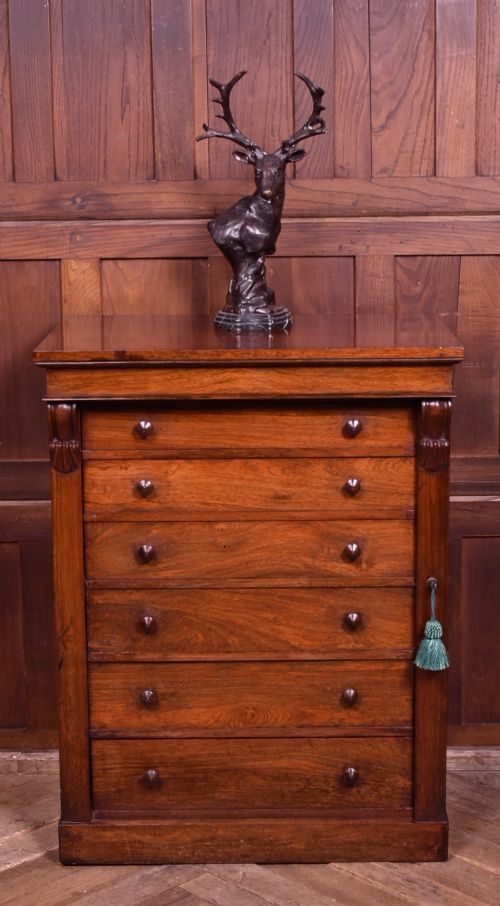
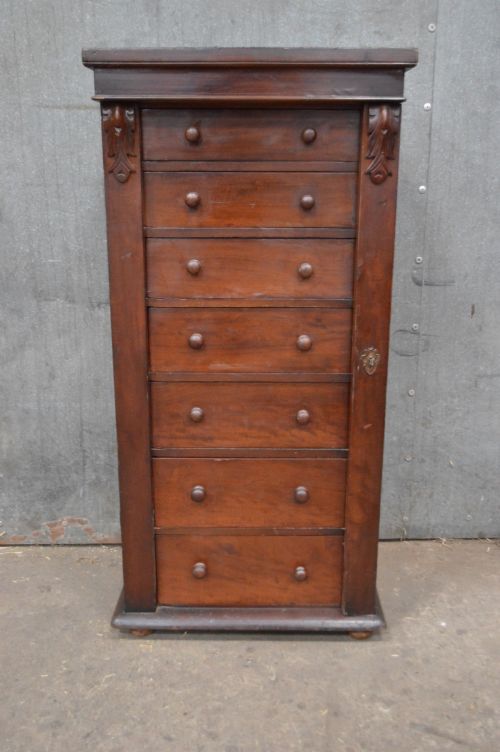
A collectors locking cabinet is typically represented on this page by the tall, narrow form of the Wellington chest alongside specialised specimen and display cabinets. These pieces generally feature a locking side stile or cabinet door that secures multiple internal drawers simultaneously. Dating predominantly from the Victorian and Edwardian eras, alongside Regency and 19th-century examples, they provide compact vertical storage for small objects.
The materials span mahogany, walnut, burr walnut, rosewood, oak, and pitch pine, reflecting the cabinetmaker's choice of dense hardwoods suitable for fine joinery. Forms range from miniature chests of drawers and child's chests to double Wellington chests and tall filing chests with numerous internal drawers. Buyers encounter variations including secretaire adaptations and glass-fronted display versions equipped with working keys.
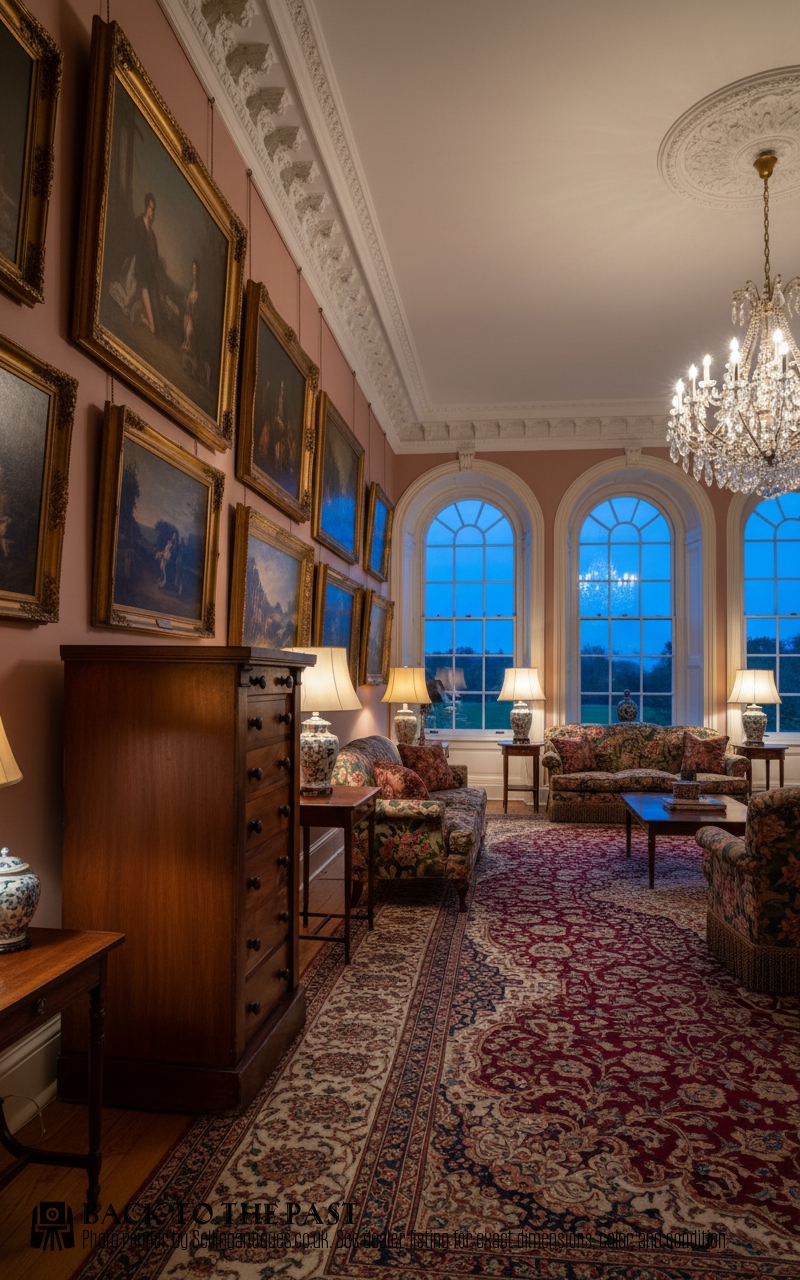
Materials and construction
Cabinetmakers utilised sturdy hardwoods such as mahogany, walnut, rosewood, and oak for the primary carcase and drawer construction, frequently applying flame mahogany veneer, burr walnut, or satinwood to visible exterior surfaces. These dense timbers provided the structural stability required for tall, narrow forms containing multiple shallow drawers.
The defining mechanical feature involves a hinged locking stile on the vertical edge of the cabinet frame that secures the bank of drawers when locked in place with a key. Drawers were traditionally constructed with precise dovetail joints and fitted with turned wooden knobs or brass hardware, while specific examples incorporate specialised interior divisions for specimens.
Listings feature pieces spanning the Regency, Victorian, and Edwardian periods, utilising brass, mahogany, oak, walnut, burr walnut, rosewood, and satinwood.
Distinctions in quality
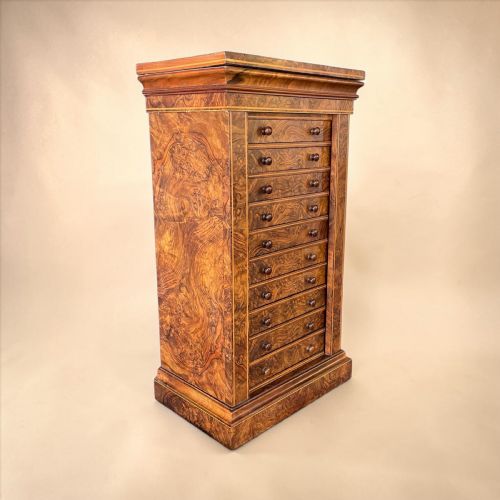
The standard of timber selection and veneer matching defines the upper tier of these pieces, particularly where highly figured mahogany, burr walnut, or fiddleback mahogany displays strong natural grain patterns across the front. Finer examples exhibit meticulous craftsmanship in the operation of the locking stile mechanism and the precision of the internal drawer dovetails.
Quality also rests in the retention of original elements, such as matching turned knobs, functioning locks with keys, and uncompromised secondary timbers within the drawer linings. Pieces bearing documented maker attributions or unusual proportions, such as double chests or miniature formats, represent higher levels of cabinetmaking ambition.
Gillows of Lancaster·Maple and Co·Druce and Co
The Collectors Locking Cabinet Glossary
- Wellington chest
- A tall, narrow chest of drawers featuring a hinged locking stile on one side that secures all drawers when locked. This form originated in the 19th century and is frequently associated with the pieces on this page.
- Specimen drawer
- A shallow internal drawer specifically constructed to hold small collections, such as coins, minerals, or natural history items. These are often lined with baize or velvet.
- Secretaire
- A cabinet incorporating a fitted writing drawer that folds down to reveal a writing surface and small pigeonholes. Some Wellington chests integrate this feature into the upper drawer tier.
- Flame mahogany veneer
- A decorative wood slicing applied to drawer fronts and carcases to create a flamed, fiery pattern. It demonstrates skilled veneering practices common in 19th-century cabinetmaking.
- Fiddleback mahogany
- A highly figured variety of mahogany exhibiting undulating grain patterns resembling the back of a violin. This material is prized for its optical depth under polished finishes.
Collectors Locking Cabinet: Frequently Asked Questions
How does the locking mechanism work?
The locking mechanism relies on a hinged vertical wooden bar, known as a locking stile, positioned down one side of the drawer opening. When the cabinet door or side stile is closed and locked with a key, a rebate or tongue catches the edge of every drawer simultaneously.
This single-point security system allowed Victorian owners to protect multiple shallow drawers of specimens or valuables using one key. The stile typically swings clear only when the lock is disengaged.
What were these cabinets originally used for?
These cabinets were primarily used by collectors to house delicate specimens, including coins, medals, shells, fossils, and botanical samples. The numerous shallow drawers provided organised storage while protecting sensitive items from dust and light.
Over time, owners also utilised them for jewellery, documents, and general personal storage. Their tall, narrow footprint made them practical for domestic spaces requiring high drawer capacity.
How do I date a Victorian Wellington chest?
Dating relies on observing construction characteristics, timber choices, and hardware styles across the piece. Earlier examples from the early Victorian period often feature solid flame mahogany and hand-cut dovetails, while later 19th-century pieces may incorporate distinct plinth designs or factory-produced brass locks.
Makers' stamps, where present, provide direct evidence of manufacture dates and firm activity periods. Secondary woods inside the drawer frames also help establish the chronological context.
Are keys usually included with these cabinets?
Working keys are frequently included with surviving examples, though replacement keys are sometimes fitted by later locksmiths. Because the locking stile relies entirely on the key to release the drawers, finding a piece with its original operating key is advantageous.
Buyers should confirm whether the lock mechanism is currently operational with a key. Functional locks ensure proper access to the stacked internal drawers.