


Vintage Narrow Drawers
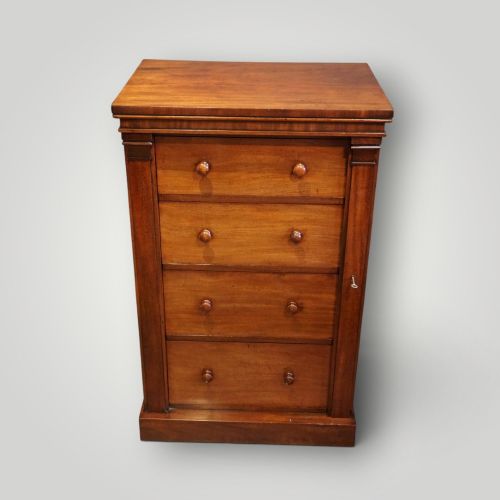
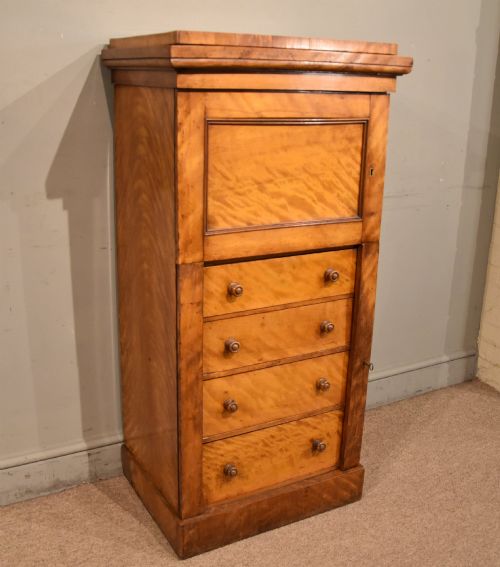
Vintage narrow drawers offer practical storage with compact footprints, spanning tallboys, Wellington chests and bedside cabinets in mahogany, oak and walnut.
Vintage Narrow Drawers
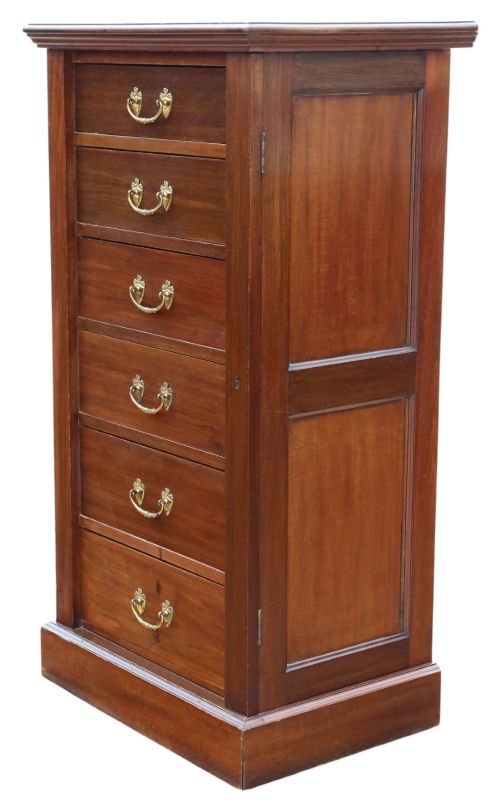
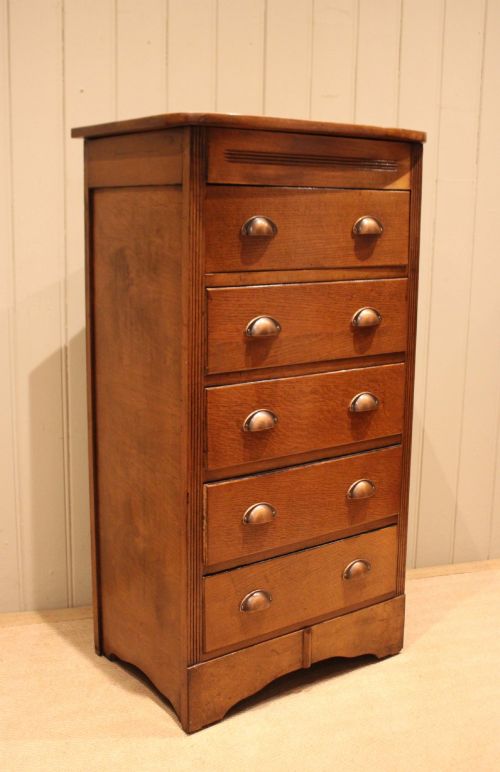
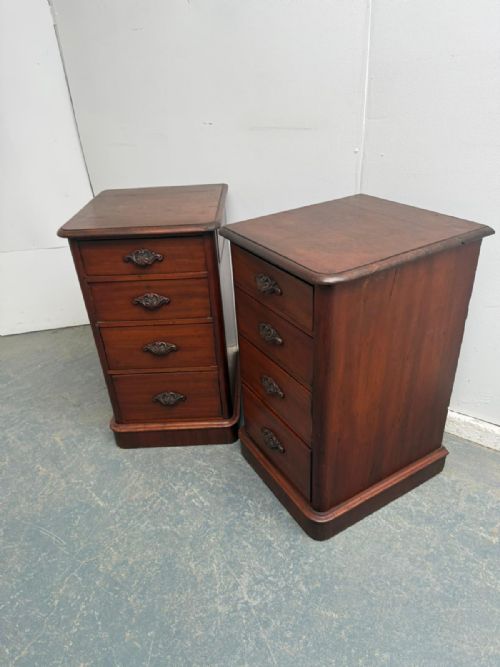
Vintage narrow drawers solve tight space problems by stacking storage vertically rather than spreading horizontally across a room. These pieces appear most frequently as tallboys, Wellington chests, and bedside cabinets built to modest widths.
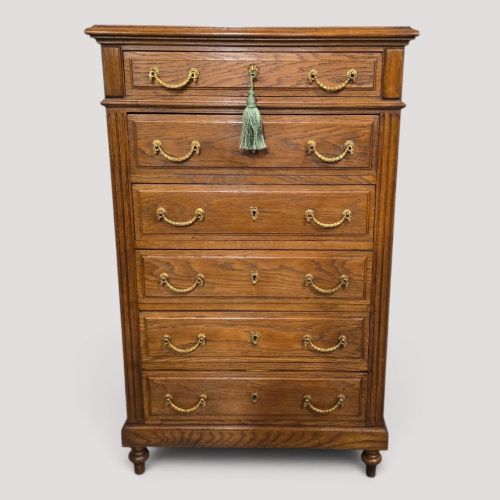
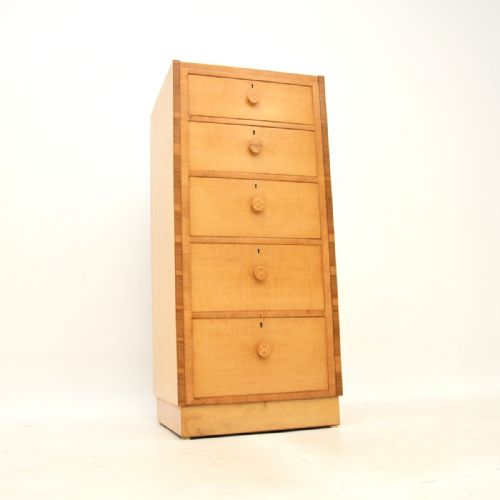
The pieces on this page span the Victorian and Edwardian eras through to the 1920s and 1930s, encompassing styles from Georgian revival and French provincial to Art Deco. Forms range from six-drawer tall chests to compact side tables and bedside chests.
Makers and workshops produced these narrow units to fit smaller chambers, alcoves and landings where standard furniture overwhelmed the floor plan. Buyers encounter both utilitarian pieces in oak and polished showpieces in figured walnut, mahogany or satinwood.
How they were made
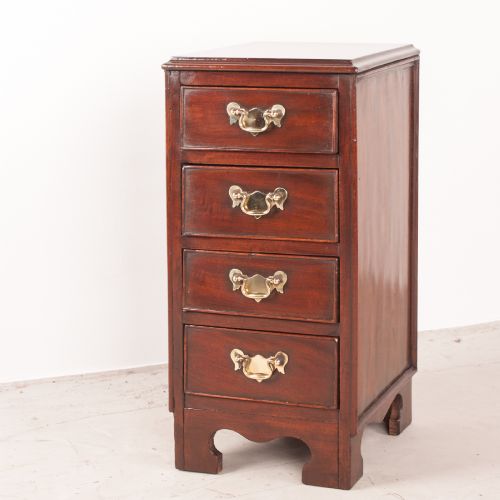
Cabinet makers relied primarily on timbers such as mahogany, oak, walnut and satinwood, often selecting figured veneers for fronts and top surfaces. Construction frequently incorporated brass hardware, dovetail joints on the drawer boxes, and occasionally marble tops or brass inlays.
Finishes range from traditional wax polishes that highlight the grain to limed oak and bleached treatments seen on French examples. Structural integrity depends on solid timber framing, secure backboards, and smooth-running drawer channels.
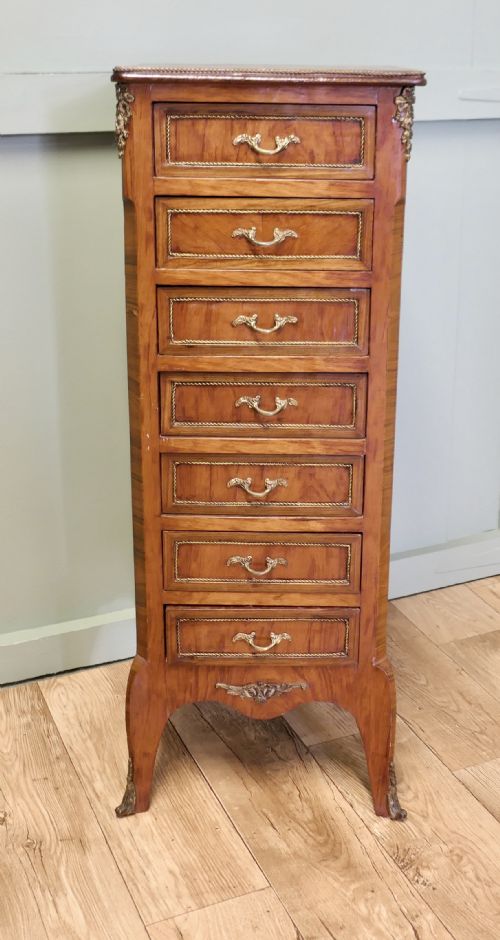
Seven-drawer semainieres allow owners to allocate one drawer strictly to each day of the week.
What varies in quality
The distinction between standard examples and the finest pieces rests on timber selection, decorative detail and original hardware. High-end items display matched veneer grains, crisp carving, inlaid banding and robust locking mechanisms such as the side-locking stile on a Wellington chest.
Proportion and execution define the upper tier, where narrow dimensions demand precise joinery to maintain stability without appearing clumsy. Condition of the timber surface and retention of period brasses further separate everyday utility items from superior collector pieces.
Hille
The Vintage Narrow Drawers Glossary
- Wellington chest
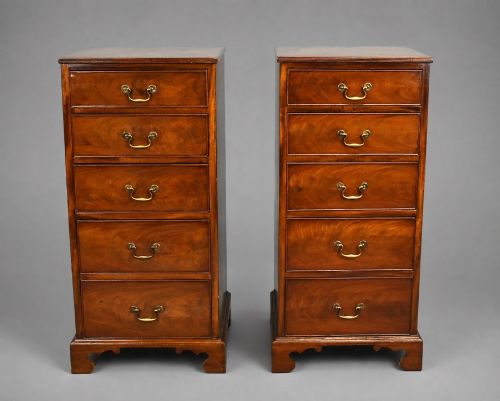
- A tall, narrow chest of drawers featuring a hinged locking flap on one side that secures all the drawers simultaneously. This form typically contains six or seven drawers and originated in the nineteenth century.
- Tallboy
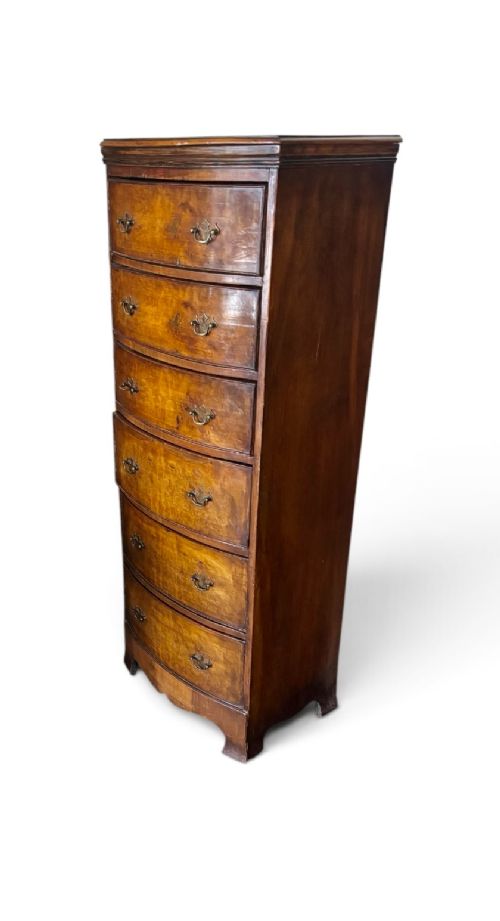
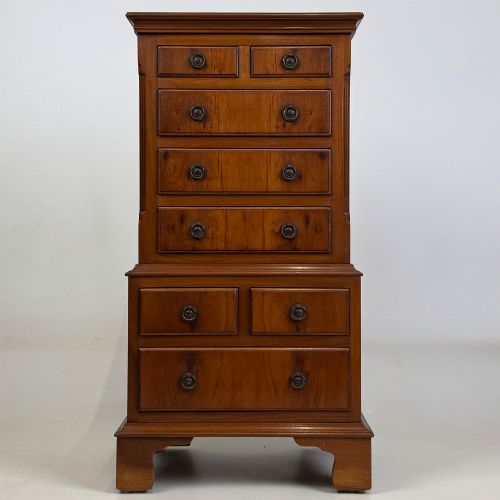
- A tall chest of drawers, often constructed in two separate stacked sections to facilitate transport. The form elevates storage capacity while maintaining a restricted footprint.
- Semainiere
- A traditional French seven-drawer chest designed with one drawer for each day of the week. These cabinets are notably tall and narrow.
- Bow front
- A convex curved drawer front that projects outward in a smooth arc. This treatment softens the profile of narrow case pieces.
- Dovetail
- An interlocking joint formed by interlocking wedge-shaped fingers, used to join drawer sides to drawer fronts and backs. Hand-cut dovetails indicate traditional craftsmanship.
Vintage Narrow Drawers: Frequently Asked Questions
What is a Wellington chest?
A Wellington chest is a tall, narrow set of drawers distinguished by a hinged vertical locking bar down one side. This bar fastens with a key to secure every drawer at once.
Cabinet makers originally designed these pieces for gentlemen's dressing rooms and studies where secure storage for small valuables was required.
How do I choose the right size?
Measure your available floor space and wall clearance carefully, noting that narrow chests often range from thirty to fifty centimetres in width. Consider the swing of bedroom doors and clearance beside a bed before selecting a tallboy or bedside cabinet.
Height also varies significantly, with some pieces reaching shoulder height while others align with standard mattress levels.
Are these pieces suitable for modern homes?
These compact chests integrate smoothly into contemporary hallways, small bedrooms and alcoves where standard furniture proves too bulky. Their vertical storage design maximises capacity without dominating the room.
They function effectively as bedside tables, auxiliary storage in dressing rooms, or compact hallway chests for keys and post.
How do I date a piece?
Dating relies on observing construction techniques, timber choices, and stylistic traits associated with specific decades. Victorian and Edwardian pieces often display distinct hardware styles and traditional polishing methods that differ from 1920s Art Deco or 1930s revival furniture.
Examining drawer linings, backboards and internal secondary woods provides further clues to a piece's age of manufacture.