


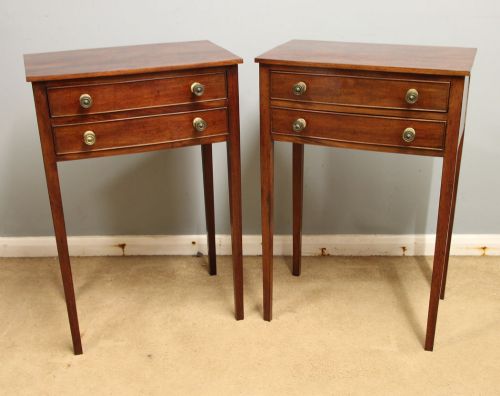
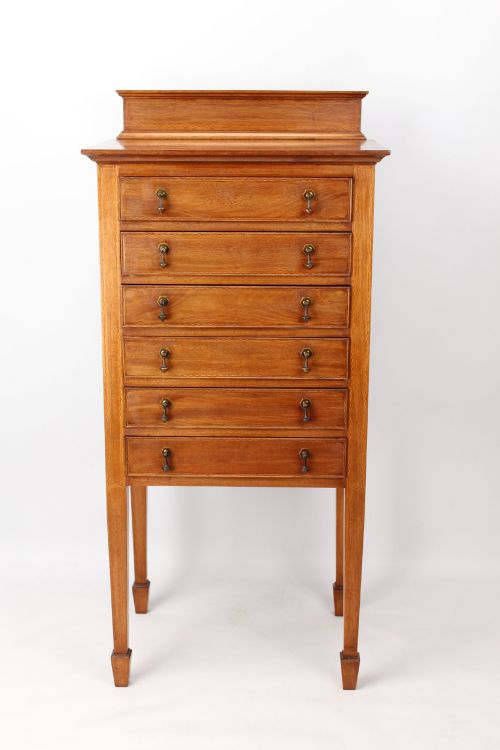
Vintage Tall Wooden Drawers
These vintage tall wooden drawers bring vertical proportion and rich mahogany or oak grain to rooms that need serious storage without losing floor space.
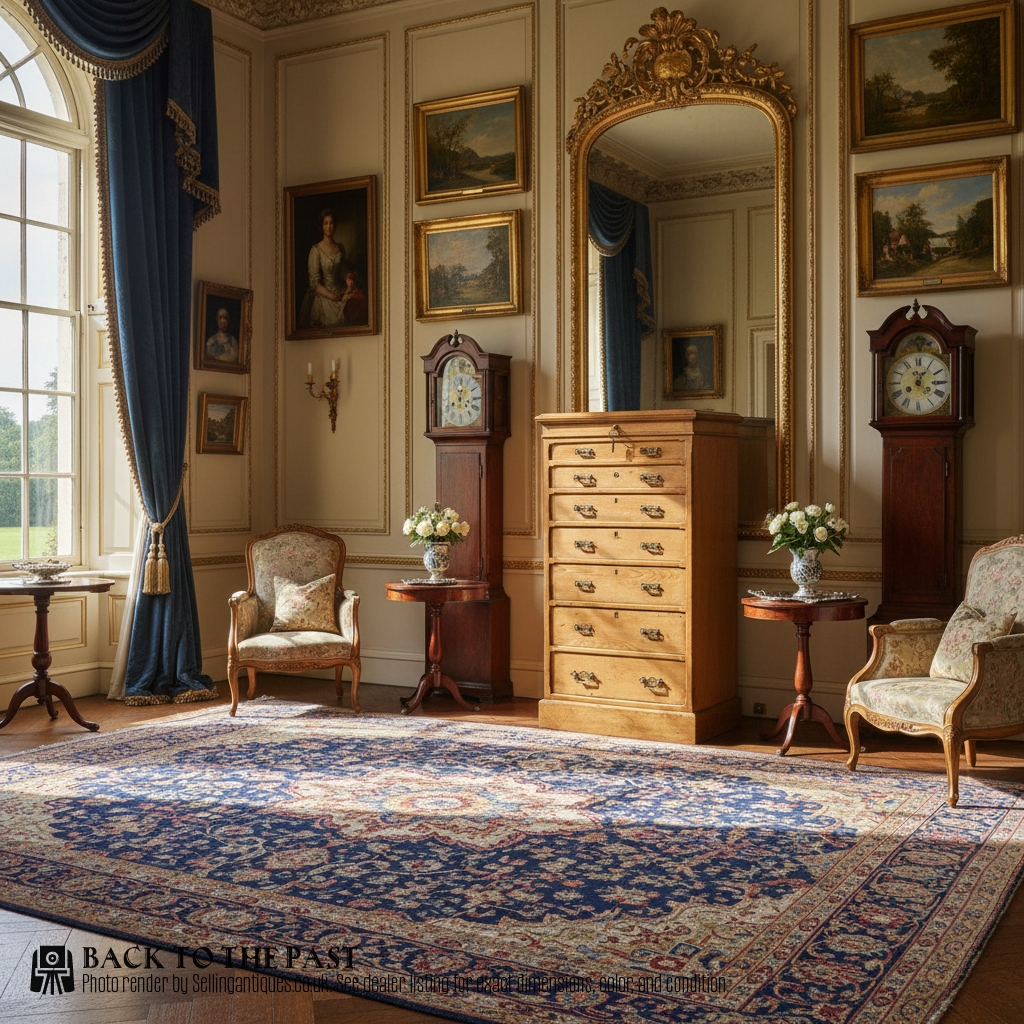
Vintage Tall Wooden Drawers
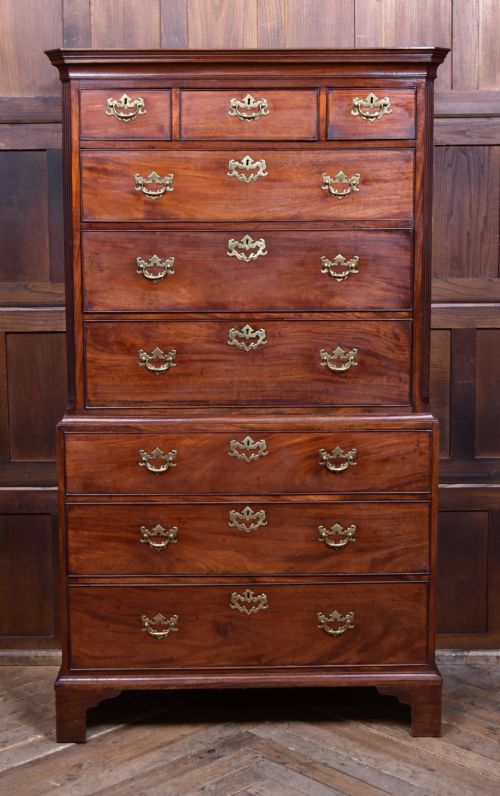
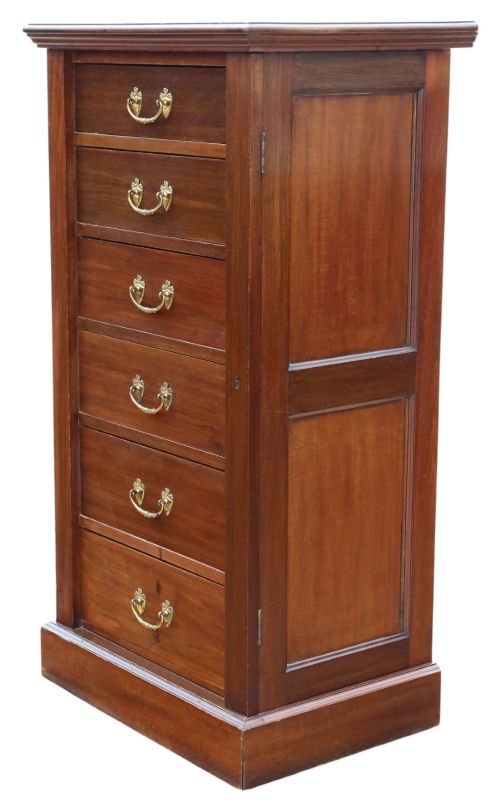
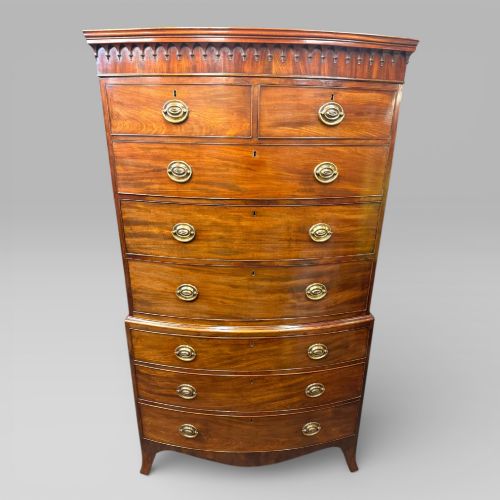
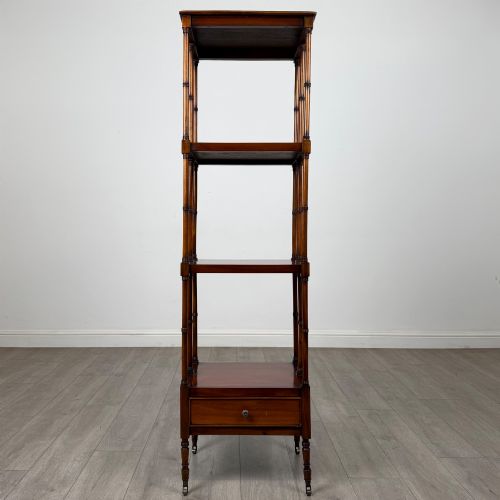
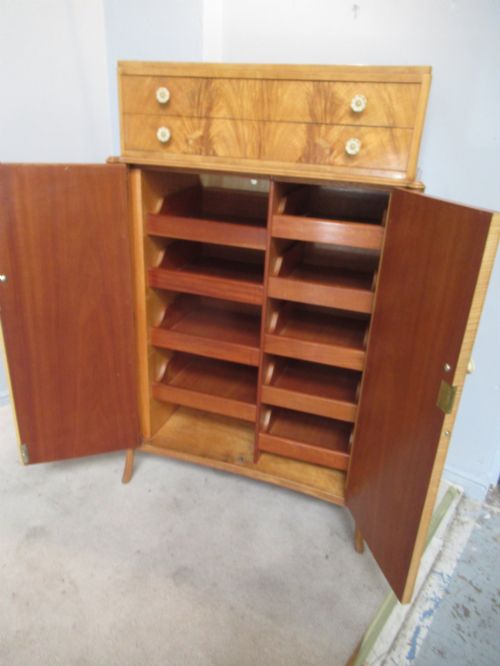
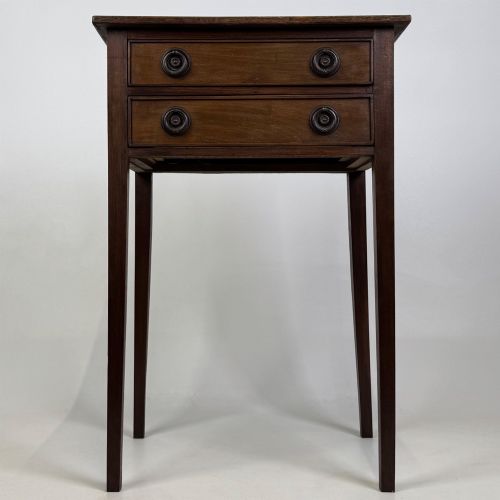
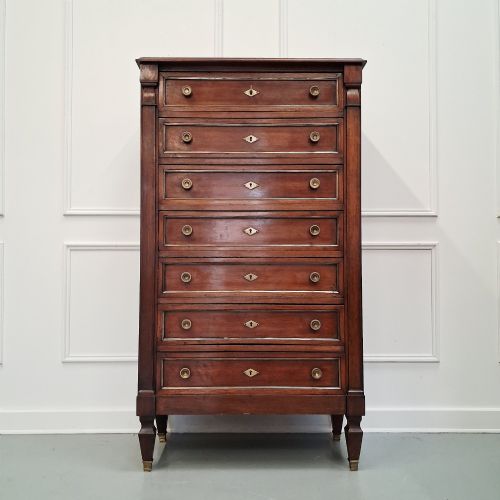
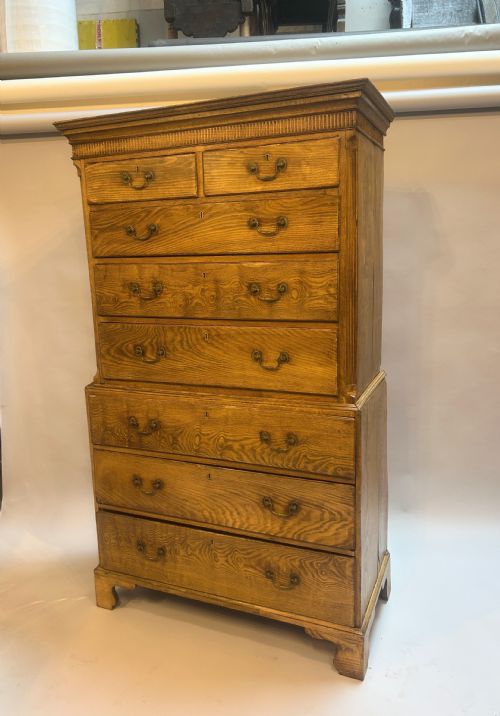
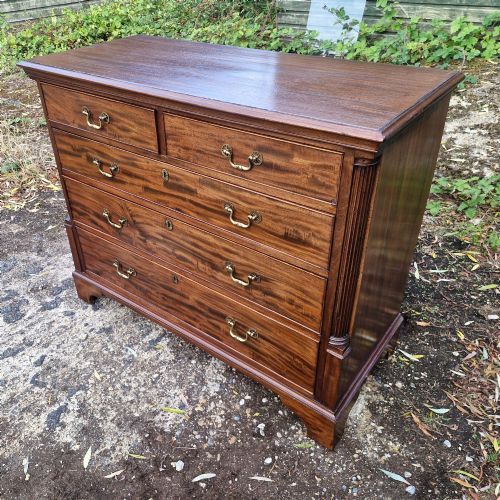
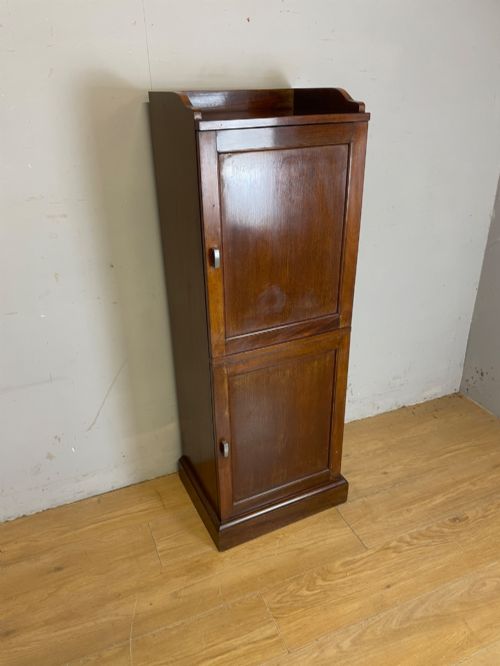
Vintage tall wooden drawers span several traditional forms, including chest on chest structures, tallboys, semainiers, and narrow multi-drawer filing units. Buyers searching for vintage tall wooden drawers typically encounter pieces from the Georgian, Victorian, Edwardian, and Art Deco periods, constructed with upright proportions designed to maximise vertical wall space.
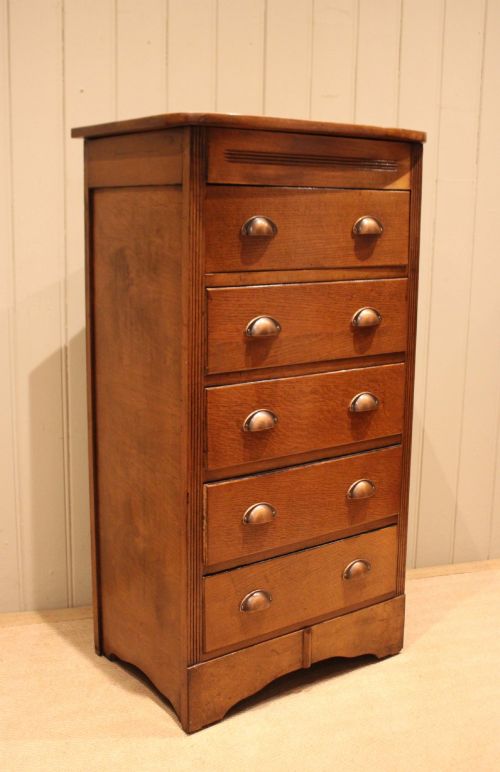
The selections available range from substantial George III mahogany chests on chest to early twentieth century oak filing cabinets and limed oak tall chests. Most examples favour mahogany, oak, or walnut timber, built as single tall carcasses or stacked sections that separate for transport.
Materials and construction methods
Cabinetmakers built these tall chests using solid hardwoods like mahogany and oak, frequently applying finely figured mahogany veneers to drawer fronts and drawer linings of secondary timbers. Brass hardware, including drop handles, ring pulls, and locking mechanisms, appears regularly across nineteenth and twentieth century examples.
Joinery techniques prioritised durability, employing dovetailed drawer construction and panelled backs to support the heavy loads demanded by tall storage furniture. Surface finishes relied on traditional hand-polished wax or shellac to protect the grain and deepen the natural tone of the wood.
One signed Chinoiserie chest on chest arrives ready to bring an unexpected splash of playful painted storytelling to the bedroom.
Factors determining quality
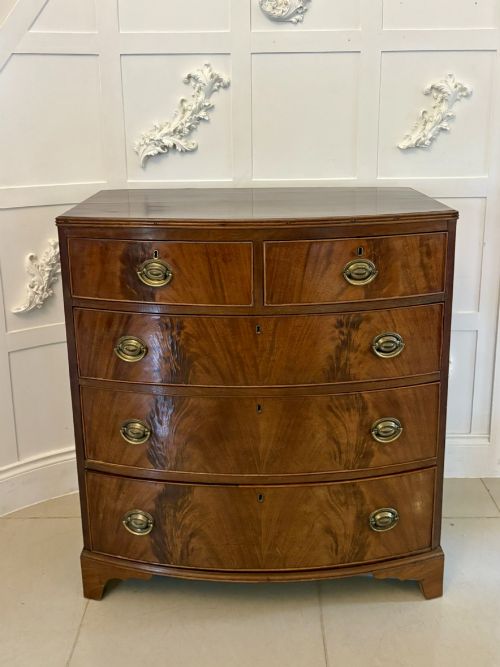
Quality rests primarily in the selection of timber figures, such as book-matched mahogany veneers or tightly grained quarter-sawn oak, which elevate a standard storage piece into a decorative focal point. The crispness of hand-cut dovetails and the smooth operation of deep drawers also distinguish superior cabinetmaking from utilitarian workshop production.
Originality of brass handles, locks, and feet carries significant weight, alongside the retention of a rich, patinated surface finish developed through decades of domestic use.
The Vintage Tall Wooden Drawers Glossary
- Tallboy
- A tall chest of drawers, often constructed as a chest on chest where a smaller upper section sits upon a larger base.
- Semainier
- A slender seven-drawer chest originating in France, traditionally intended to hold one week of clothing.
- Wellington chest
- A tall, narrow Victorian locking chest featuring a hinged side stile that secures all the internal drawers with a single padlock.
- Dovetail
- An interlocking joint formed by wedge-shaped tenons and mortises, used to secure drawer corners with high tensile strength.
- Figured mahogany
- Timber cut from sections of the mahogany tree exhibiting dynamic grain patterns like flame or curl, highly prized for decorative surfaces.
Vintage Tall Wooden Drawers: Frequently Asked Questions
How do I style a tall chest in a small bedroom?
A tall chest of drawers commands very little floor area while offering deep vertical storage, making it ideal for compact rooms where wider furniture would overwhelm the layout. Position it against a blank wall to draw the eye upward and create an illusion of higher ceilings.
Pair the top surface with a simple mirror or a single framed piece of art to balance the substantial wooden mass below without cluttering the room.
How do I care for antique wood drawers?
Maintain the finish by dusting regularly with a soft, dry cloth and applying a traditional beeswax polish sparingly once or twice a year to nourish the timber. Avoid placing tall wooden furniture near direct heat sources or in areas with fluctuating humidity to prevent the wood from splitting.
Ensure drawers are pulled evenly from the centre rather than one side to prevent the runners from binding or wearing unevenly over time.
Can I use a vintage tall chest in a modern interior?
Richly grained mahogany and clean-lined oak pieces add warmth and textural contrast when placed against minimalist white walls or contemporary furniture schemes. Their strong vertical lines and classic proportions anchor modern spaces with a sense of historical craftsmanship.
Mixing eras prevents a room from feeling flat, allowing a functional storage piece to serve as a sculptural anchor.