
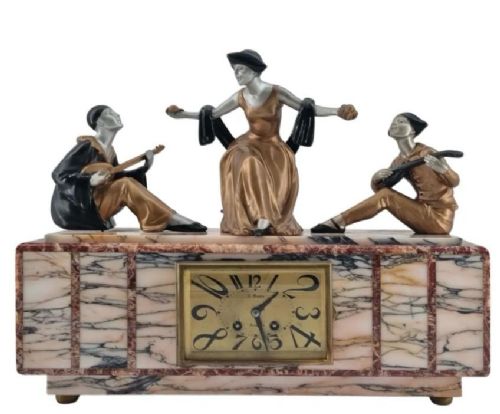
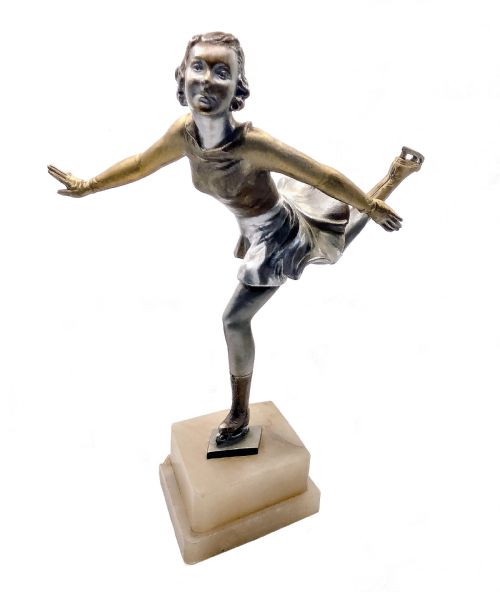
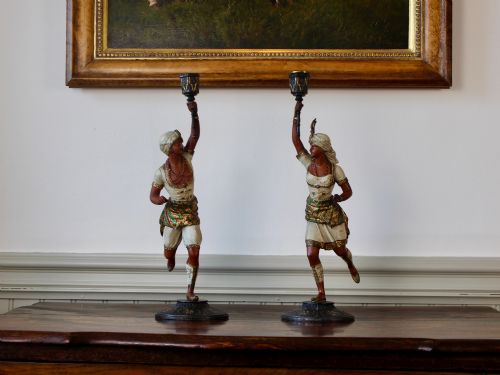


Cold Painted Spelter Figure
A cold painted spelter figure brings the decorative flair of the past straight onto a mantelpiece.
Cold Painted Spelter Figure
A cold painted spelter figure combines a cast metal alloy body with applied surface colour, spanning several decades of domestic ornament. When searching for a cold painted spelter figure, buyers encounter items ranging from Victorian domestic subjects to Continental Orientalist themes and sleek Art Deco designs.
Many of these sculptures incorporate integrated bases of marble or onyx to anchor the lighter metal work. They serve as decorative focal points rather than large-scale monumental art.
How they were made
Spelter, essentially a zinc alloy, is cast into moulds to create the desired form before receiving its surface finish. Because spelter is softer than bronze, casting requires careful attention to detail, particularly in the delicate drapery and facial expressions seen in figures by makers like Sega or Josef Lorenzl.
The cold painted technique involves applying paint to the cured metal without subsequent kiln firing, meaning the pigment rests on the surface rather than fusing into a glaze. These painted surfaces are frequently paired with contrasting materials such as brass, glass, marble, and onyx.
The listings show materials including spelter, onyx, marble, cold paint, brass, glass, and zinc alloy.
What varies in quality
The longevity of the surface pigment dictates much of the visual appeal, as cold paint sits on the metal rather than burning in. Higher quality pieces retain crisp brushwork and original polychrome details without heavy flaking.
The integration of the base plays a role in the overall construction. Pieces mounted on substantial marble or onyx plinths demonstrate superior weight and stability compared to unsupported figures.
Josef Lorenzl·Geo Maxim·Sega
The Cold Painted Spelter Figure Glossary
- Spelter
- A zinc alloy commonly utilised as a less expensive alternative to bronze in decorative sculpture. It accepts casting details readily and takes paint well.
- Cold paint
- A method of decorating metal objects where paint is applied directly to the unheated surface. It lacks the durability of fired enamel.
- Onyx
- A banded variety of chalcedony used frequently for the bases of figures and clocks. It provides a heavy, polished foundation.
- Orientalist
- An artistic style drawing inspiration from Middle Eastern and North African cultures. It appears frequently in Victorian and early twentieth-century metalwork.
Cold Painted Spelter Figure: Frequently Asked Questions
What is a cold painted spelter figure?
It is a decorative sculpture cast from a zinc alloy and finished with hand-applied surface paint that is not heat-fired. These objects range from nineteenth-century Victorian figures to streamlined Art Deco dancers.
They often double as functional items like mantel clocks, candlesticks, or match strikers rather than standing purely as fine art.
Are these figures made of bronze?
No, they are cast from spelter, which is a softer zinc-based alloy. Spelter was chosen for its affordability and ease of casting during the manufacturing process.
It feels lighter than bronze and requires a painted finish to imitate the appearance of patinated metal or polychrome decoration.
Why are some figures mounted on marble?
Marble and onyx bases provide necessary weight and stability for the softer spelter metal above. They also frame the sculpture visually, adding a contrasting texture and colour.
This pairing is especially common in Art Deco pieces from the nineteen-thirties.