






Cobalt Porcelain Display Plate
A cobalt porcelain display plate brings rich blue depth to a room, offering both decorative presence and historical ceramic artistry.
Cobalt Porcelain Display Plate
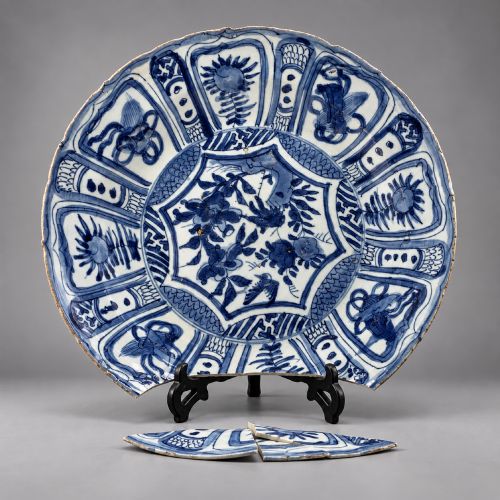
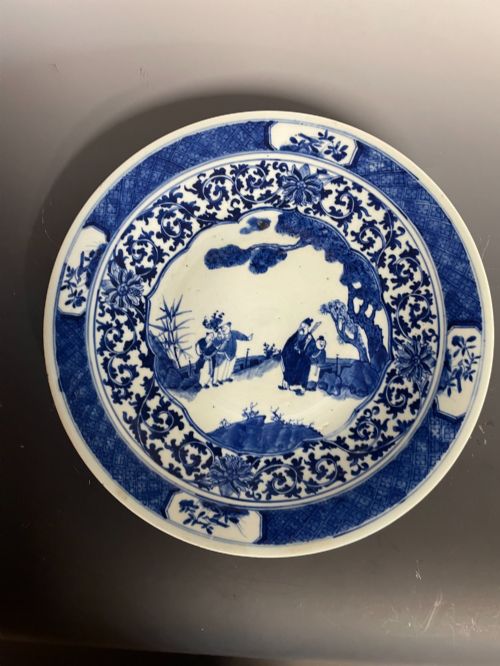
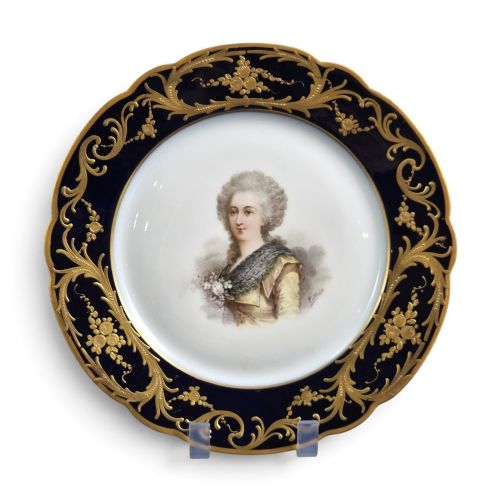
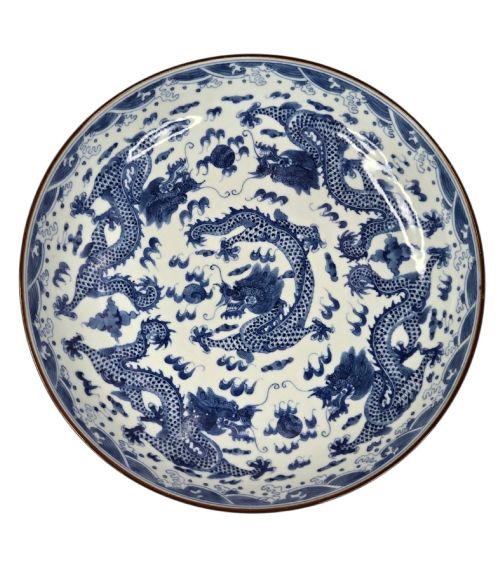
When searching for a cobalt porcelain display plate, collectors encounter a diverse array of decorative plates, chargers, cabinet plates, and dessert services spanning several centuries. The selection ranges from 18th-century Delft chargers and Chinese Qing Dynasty dragon chargers to 19th-century French Sèvres-style portrait plates and English bone china services.
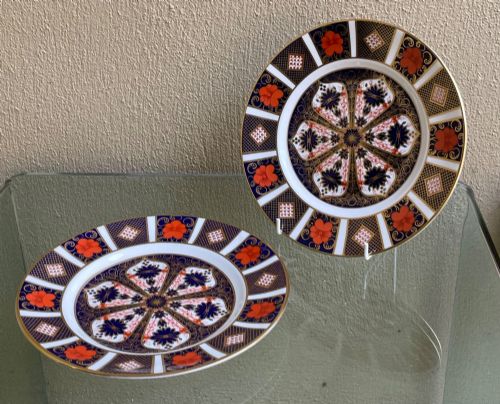
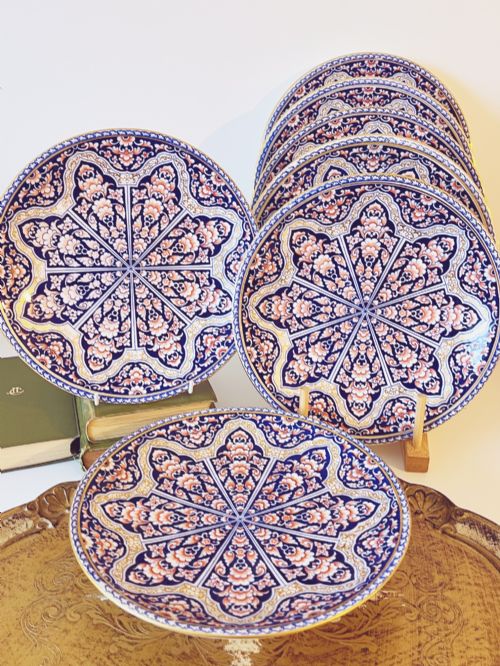
Japanese Imari and Arita wares from the Meiji period appear frequently among the listings, known for their distinct cobalt underglaze combined with rich iron red and gold details. English factories such as Royal Worcester, Royal Crown Derby, Aynsley, and Copeland also produced notable cabinet and fruit plates decorated with cobalt accents.
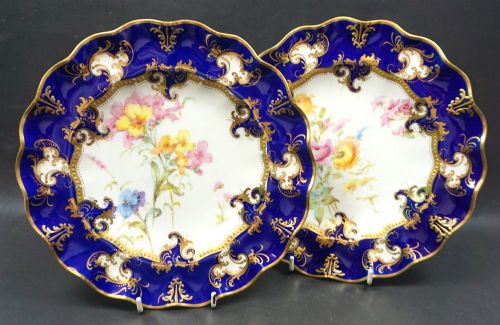
Forms vary from large chargers and wall plates to square, hexagonal, scalloped, and circular dessert dishes intended for prominent display rather than daily dining. These pieces capture centuries of global ceramic exchange, bridging traditional Asian designs with European decorative tastes.
How they were made
Makers utilised porcelain, bone china, ironstone, and earthenware as bodies, applying cobalt underglaze beneath clear transparent glazes to achieve deep blue tones before high-temperature firing. Enamel colours and gold leaf or gilding were frequently added in subsequent low-temperature enamel firings to create layered surface patterns.
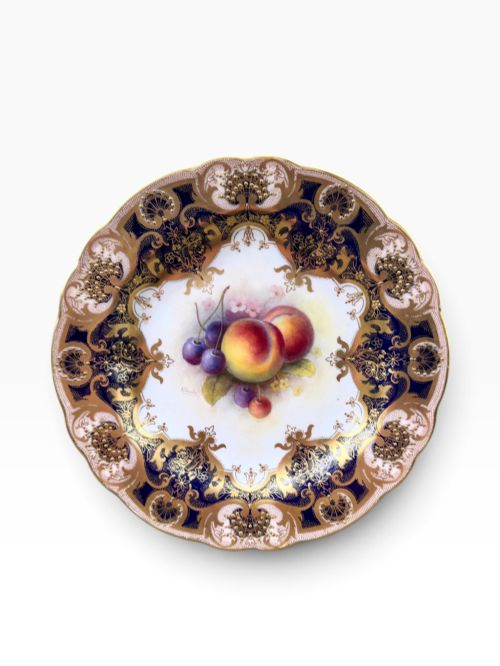
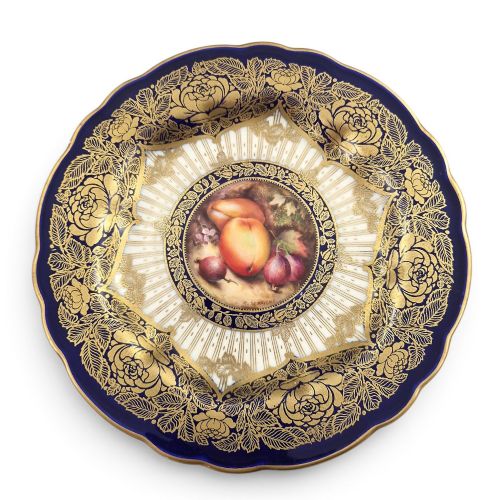
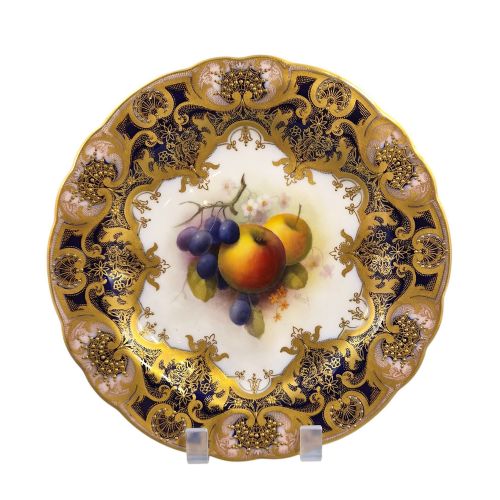
Hand-painting techniques defined the decoration, seen in detailed botanical fruit studies by artists like Richard Sebright and Albert Shuck, intricate armorial crests, and traditional Japanese Imari motifs. Gilding was applied by hand using gold leaf, often burnished to catch the light against the cobalt blue ground.
Several plates capture detailed hand-painted peaches and pears signed by meticulous artists who clearly spent hours studying orchard fruit.
What varies in quality
Quality rests in the crispness of the cobalt underglaze painting, the precision of the hand-applied enamel and gilding, and the artistic pedigree of the ceramic painter. Pieces bearing signed artwork by recognised porcelain painters display superior hand-rendered detail compared to standard transfer-printed wares.
The sophistication of the porcelain body, the complexity of moulded edge shapes like scalloped or hexagonal forms, and the preservation of delicate gold leaf over decades determine the standing of an individual display plate within its period.
Royal Worcester·Royal Crown Derby·Aynsley·Copeland
The Cobalt Porcelain Display Plate Glossary
- Cobalt Underglaze
- A blue pigment applied to the raw ceramic body before glazing and firing, allowing the colour to fuse permanently beneath the glassy surface.
- Cabinet Plate
- A decorative plate made for display in a glass-fronted cabinet rather than for table service, often featuring elaborate hand-painted scenes.
- Charger
- A large ornamental plate traditionally positioned beneath other courses or hung on walls for visual impact.
- Imari Palette
- A decorative style originating in Japan, utilising cobalt blue, iron red, and gold as primary colours in complex geometric and floral arrangements.
- Gilding
- The application of gold leaf or powdered gold to ceramic surfaces, used to highlight rims, borders, and central motifs.
Cobalt Porcelain Display Plate: Frequently Asked Questions
What is a cobalt porcelain display plate?
A cobalt porcelain display plate is an ornamental ceramic dish decorated primarily with deep blue underglaze cobalt, created for visual appreciation rather than functional dining use.
These pieces encompass Japanese Imari chargers, English cabinet plates, and continental European wares produced across the eighteenth, nineteenth, and twentieth centuries.
How were these decorative plates used historically?
Historically, decorative plates and chargers were displayed on sideboards, mounted on walls, or housed within glass cabinets to demonstrate the wealth and refined taste of the owner.
Some examples formed part of larger dessert services or armorial sets reserved for special occasions and formal dining displays.
How do I care for antique porcelain display plates?
Antique porcelain and bone china require gentle handling, avoiding harsh modern detergents or abrasive cleaning materials that might damage delicate hand-applied gilding and enamel decoration.
Display plates should be securely mounted using padded hangers or stable stands to prevent accidental slips and surface scratching.
How can I tell the age of a porcelain plate?
Dating relies on factory backstamps, impressed maker marks, painter signatures, and stylistic indicators such as the palette and moulding techniques typical of specific periods.
Comparing the glaze characteristics and wear patterns against documented examples from makers like Royal Worcester or Meiji period Japan helps narrow the production era.