


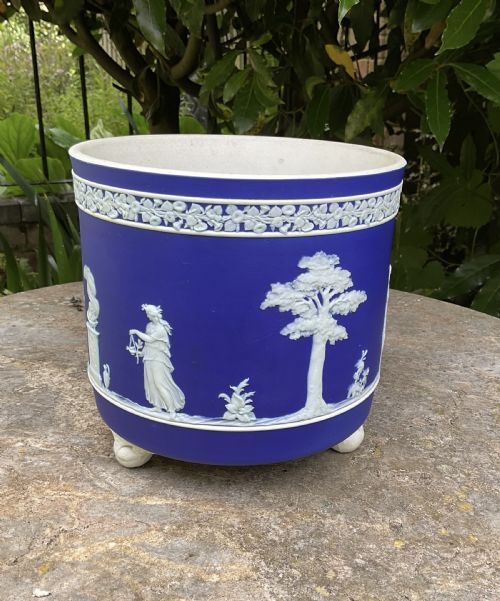


Cobalt Blue Planter
These cobalt blue planters bring rich indigo depth to a room, offering robust homes for indoor greenery through enduring ceramic forms.
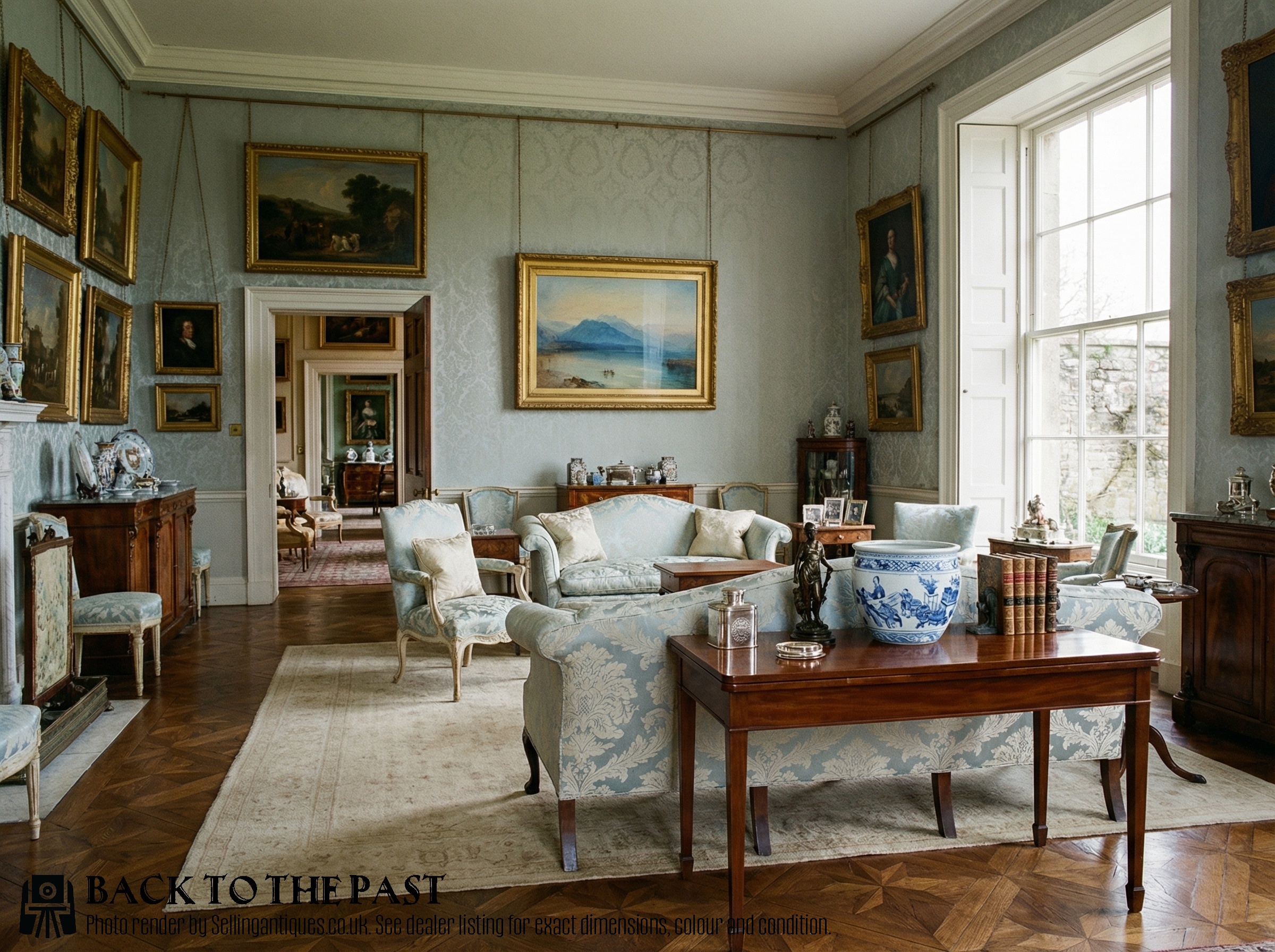
Cobalt Blue Planter
A cobalt blue planter is a vessel designed to house potted plants, appearing across this selection in forms such as jardinières, cachepots, fish bowls, and decorative urns. The pieces span the nineteenth century into the early twentieth, encompassing Victorian creations alongside Qing Dynasty and Japanese Meiji period imports.
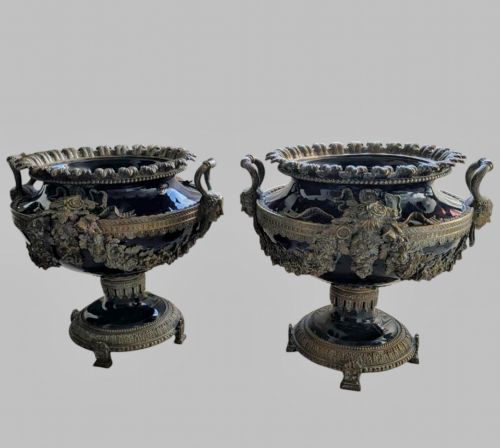
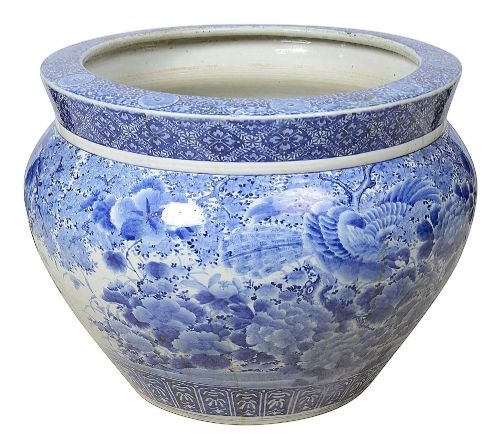
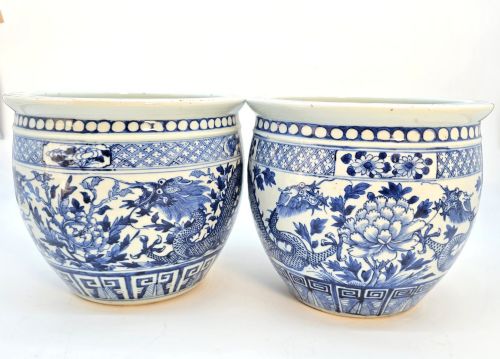
Buyers will most frequently encounter ceramic and porcelain bodies decorated with deep blue pigments, often taking the shape of substantial floor or table jardinières. English makers sit alongside French porcelain and ormolu mounts, Japanese Imari wares, and Chinese blue and white porcelain.
The category extends to heavy stoneware and salt-glazed bodies, demonstrating how makers across different regions utilised deep cobalt tones to accent domestic interiors and conservatories. These vessels function primarily to hold live plants while adding a distinct decorative anchor to a room.
Assessing craftsmanship and finish
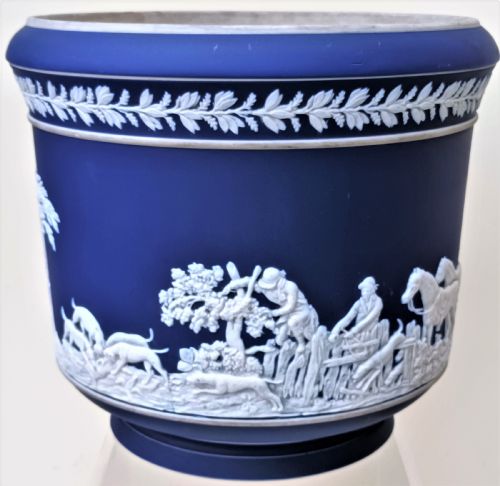
Quality rests in the precision of the ceramic body and the depth of the cobalt pigment, where finer examples display crisp underglaze painting and balanced proportions without warping from the kiln. The clarity of moulded reliefs in jasperware or the intricacy of hand-painted Imari patterns distinguishes standard production from exceptional studio output.
The presence of secondary materials, such as finely chased ormolu mounts or specialised salt-glazed finishes, elevates the sophistication of a piece. Heavier, well-balanced thrown bodies demonstrate superior potter control compared to uneven or hastily finished utilitarian vessels.
Materials span glazed ceramic, stoneware, jasperware, and porcelain, occasionally paired with gilt bronze mounts.
William Adams And Sons·Royal Doulton·Doulton Lambeth·Minton·George Jones·Coalport·Wedgwood
The Cobalt Blue Planter Glossary
- Jardiniere
- A large ornamental pot or stand designed to hold a live plant or floral arrangement. These vessels typically sit on tables or directly on the floor.
- Cachepot
- A decorative flowerpot cover used to conceal a plain inner plant pot and catch drainage water. The term originates from the French words for hiding a pot.
- Jasperware
- A type of fine stoneware developed by Josiah Wedgwood, characterised by a matte unglazed surface and contrasting raised white relief decorations. It appears frequently in blue body colours.
- Imari
- A style of Japanese porcelain featuring a distinct palette of cobalt blue, iron red, and gold. These pieces were widely exported to Europe during the Meiji period.
- Salt glaze
- A decorative and protective coating formed by throwing common salt into the kiln during high-temperature firing, resulting in a pebbled texture resembling orange peel.
Cobalt Blue Planter: Frequently Asked Questions
How do I use a jardiniere safely?
Place a plastic saucer or a smaller waterproof pot inside the vessel to catch drainage water and protect the historic ceramic interior from moisture damage.
Avoid planting directly into unglazed or porous antique bodies unless the interior is fully sealed against dampness and soil acids.
Are these planters frost resistant?
Most antique ceramic and porcelain pieces are designed for indoor use and will crack if exposed to freezing winter temperatures outdoors.
Keep these vessels inside heated rooms or protected conservatories to preserve the glaze and body integrity.
How do I date a blue and white planter?
Examine the base for maker marks, impressed registry numbers, or regional stamps that correspond to known Victorian and late nineteenth-century production periods.
Stylistic clues such as Meiji period motifs or Qing Dynasty floral painting styles also help narrow the manufacturing decade.
What is the difference between a cachepot and a jardiniere?
A cachepot specifically acts as an outer container to hide a functional plant pot, whereas a jardiniere often functions as a standalone decorative bowl.
In modern usage, collectors frequently apply both terms interchangeably to describe these ornamental ceramic vessels.