



Cobalt Blue Mantel Garniture
A cobalt blue mantel garniture brings striking symmetry to a fireplace, pairing central clocks with matching side vases in rich ceramic.
Cobalt Blue Mantel Garniture
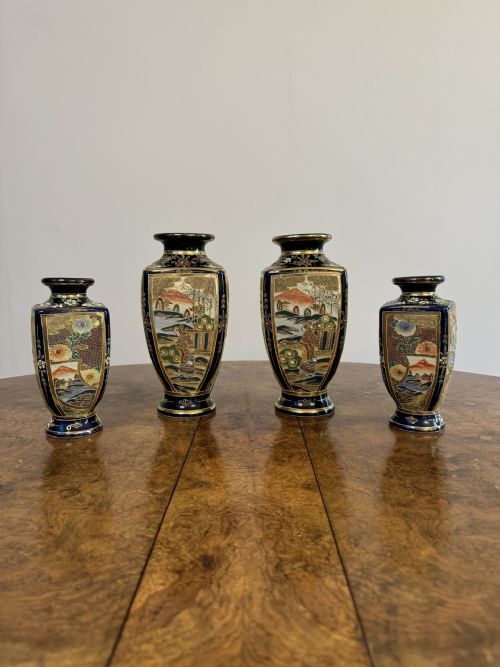
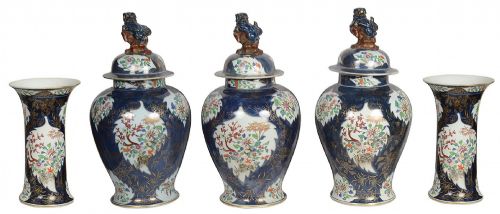
A cobalt blue mantel garniture is a matched decorative set designed for display on a fireplace shelf, typically comprising a central clock flanked by two vases or a set of three to four matching vases. These arrangements range from Victorian French porcelain and gilded metal clock sets to Japanese Satsuma and Imari porcelain vases dating across the eighteenth, nineteenth, and early twentieth centuries.
Buyers encounter diverse stylistic interpretations within this category, including French Rococo Revival, Louis XVI Revival, Chinoiserie, and Edo period pieces. The forms incorporate Bleu De Roi porcelain, Sevres style lidded urns, lyre clocks, and shaped decorative vessels mounted in ormolu or gilt bronze.
What varies in quality
The sophistication of the hand-painting and the crispness of the bronze or ormolu chasing define the upper tier of these pieces. Superior examples display deeply saturated cobalt glazes, precise gilding, and finely articulated metal mounts that integrate seamlessly with the ceramic forms.
Proportion and completeness separate matched multi-piece sets from assembled groups. Sets that retain their original clock movements, matching side urns, and undamaged porcelain show greater coherence and manufacturing ambition.
Thomas Steel signed his Minton vases, proving that even porcelain needs an autograph.
Thomas Steel·Minton·Sevres
The Cobalt Blue Mantel Garniture Glossary
- Garniture
- A set of matched decorative vessels or a clock and side vases designed to be displayed together as a decorative unit. These sets traditionally balance a mantelpiece or sideboard.
- Ormolu
- Finely ground high-carat gold mercury-gilded onto a bronze object. This technique imparts a rich, warm metallic lustre to the mounts of nineteenth-century French sets.
- Bleu De Roi
- A deep, rich royal blue ceramic glaze developed at the Sevres pottery. It serves as the primary ground colour for many French porcelain clock sets.
- Imari palette
- A traditional Japanese decorative scheme utilising underglaze cobalt blue, iron red, and gold. Edo period and later pieces employ this palette on shaped vases.
- Famille rose
- A ceramic palette dominated by opaque pink enamel, introduced in Chinese porcelain production. Nineteenth-century interpretations adapt these floral schemes for Western interiors.
Cobalt Blue Mantel Garniture: Frequently Asked Questions
How do I style a garniture?
Place the central clock or tallest vessel in the exact centre of the mantelpiece to anchor the display. Arrange the matching side vases symmetrically at either side to maintain the balanced aesthetic intended by the maker.
Ensure the pieces have adequate clearance from heat sources and foot traffic. A stable surface protects delicate ormolu mounts and ceramic edges from accidental bumps.
Are clock garnitures still working?
Many nineteenth-century French clock garnitures retain their original mechanical movements, though operational status varies by individual piece. Some clocks require professional servicing or adjustment to keep accurate time.
The side vases and urns serve purely decorative functions, often featuring lidded designs or painted cobalt blue panels. The clock remains the functional centrepiece of the set.
How do I identify French versus Japanese pieces?
French garnitures typically incorporate Sevres style porcelain, Bleu De Roi glazes, and heavy ormolu or gilt bronze mounts in Rococo Revival or Louis XVI styles. These sets frequently include clock movements alongside decorative vases.
Japanese pieces from the Edo, Meiji, or later periods focus on ceramic form, utilising Imari palettes, Satsuma earthenware, and hand-painted floral or figural motifs without clock components. The underlying clay body and glaze style distinguish the geographic origin.