

Cobalt Blue Jug
A cobalt blue jug brings deep cobalt tones and rich pattern to a room, ranging from simple Georgian glass creamers to robust ironstone ewers.
Cobalt Blue Jug
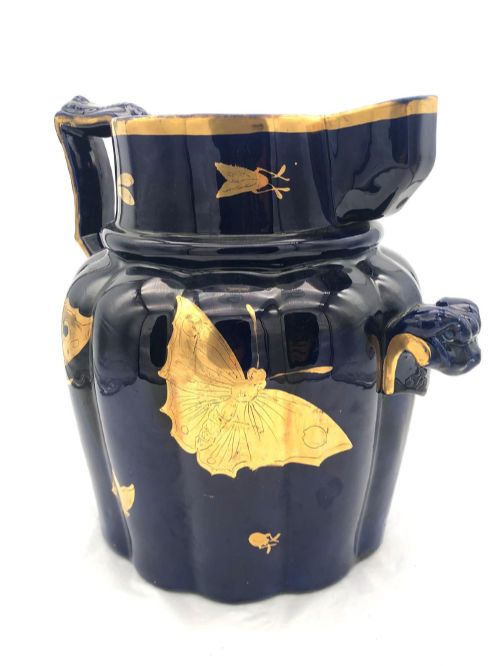
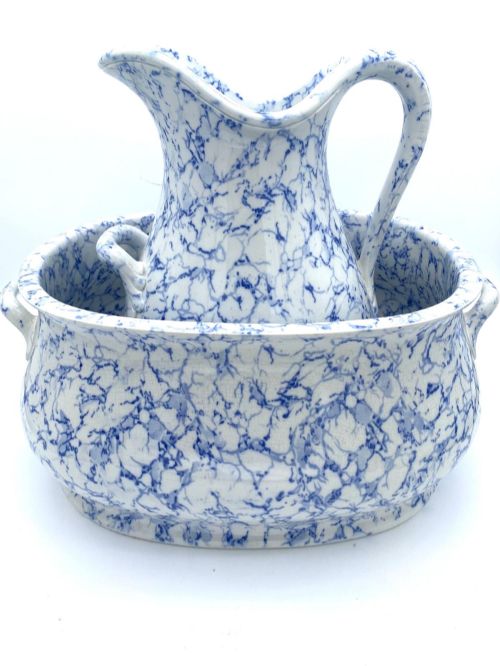
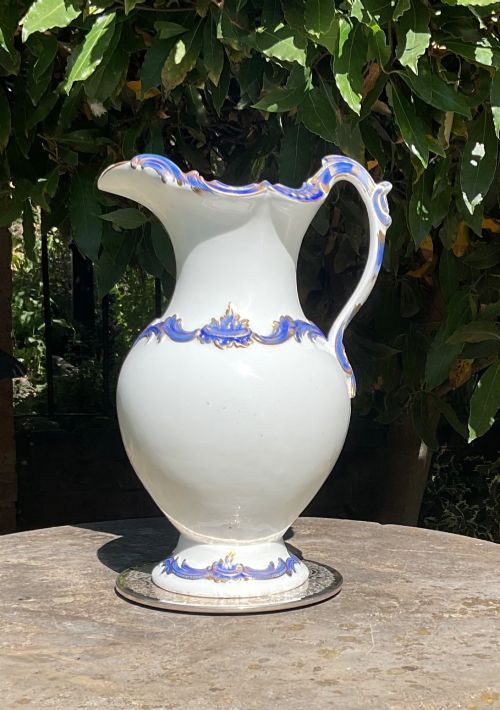
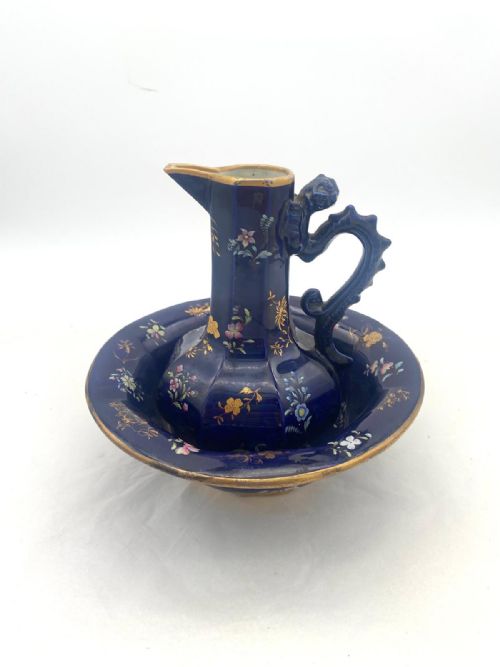
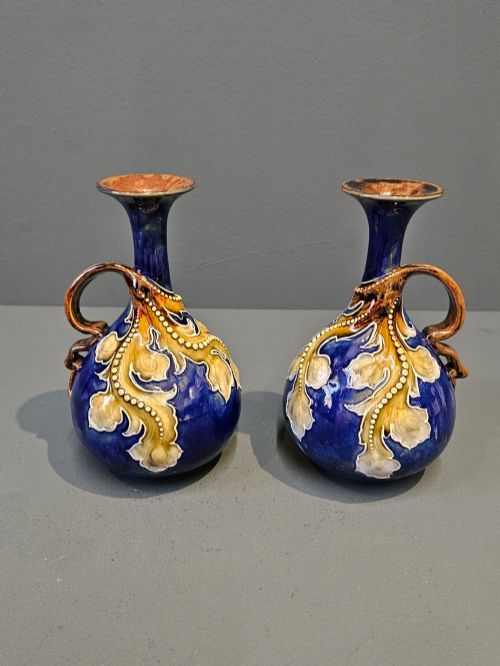
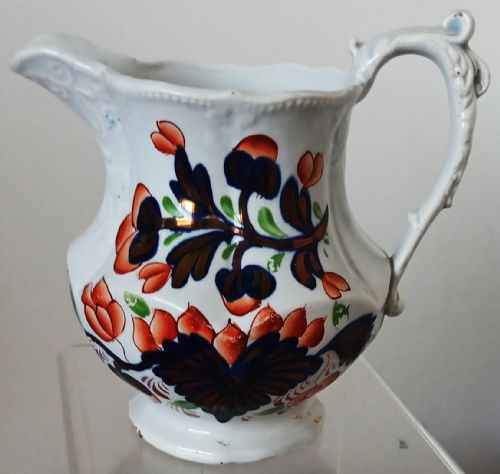
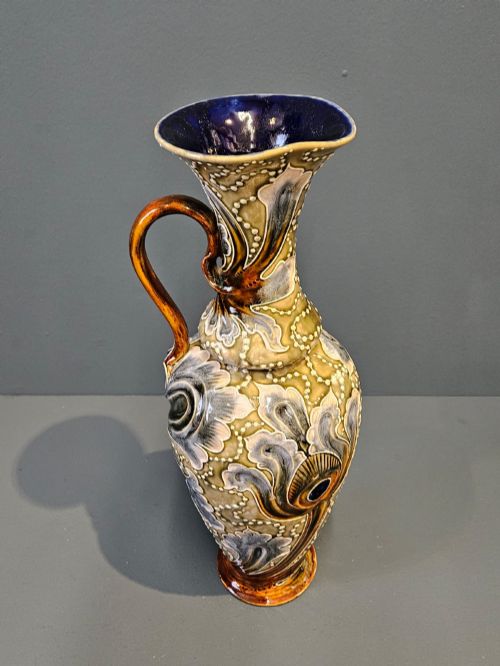
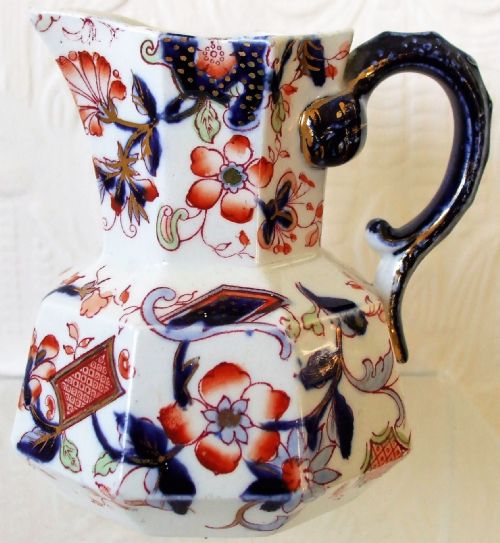
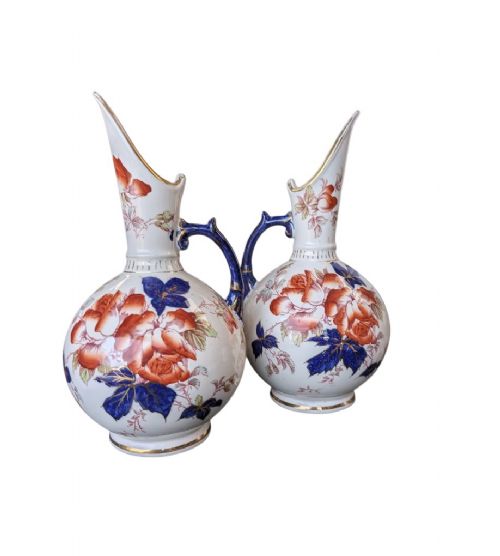
A cobalt blue jug encompasses everything from small creamers used at the tea table to large ewers and footbath sets designed for the washstand. These vessels appear in various forms across centuries, including pitcher shapes, mask-head jugs, and octagonal bodies.
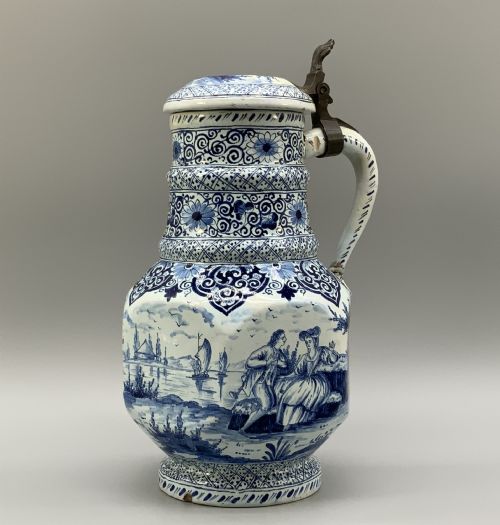
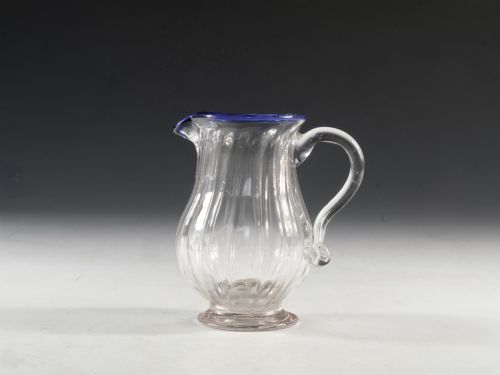
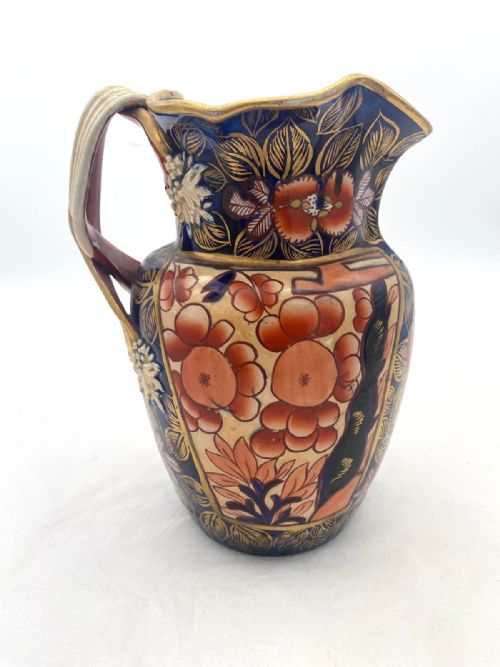
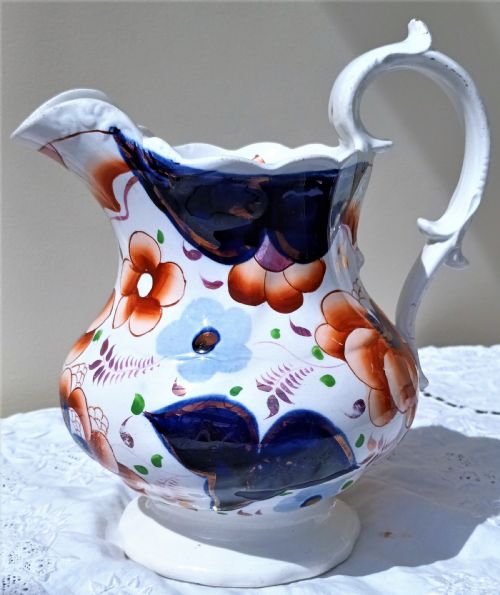
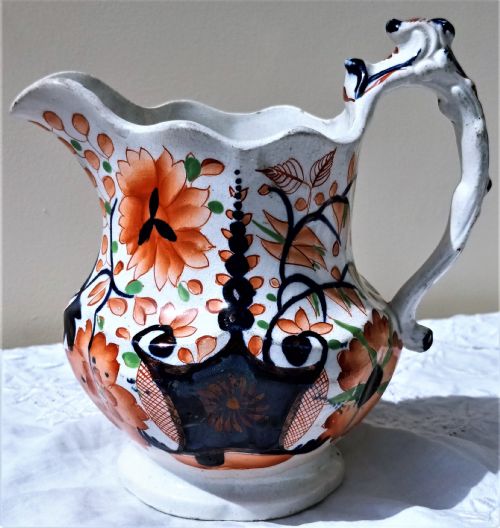
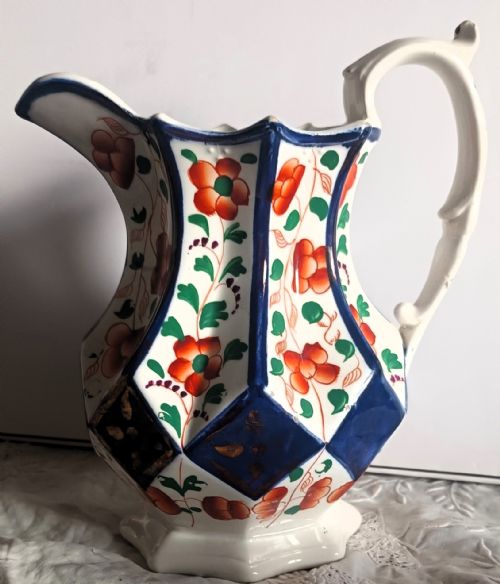
The versions most commonly met in this selection are nineteenth-century ironstone pieces bearing patterns like Gaudy Welsh alongside Victorian ceramics and German salt-glazed stoneware. Earlier examples stretch back into the eighteenth century with Dutch Delftware and Bristol glass.
Makers and potteries utilise distinct motifs ranging from floral designs and Chinese-inspired Chinoiserie to historical battle scenes and royal ciphers. Buyers encounter utilitarian cream jugs alongside monumental decorative pitchers meant for display.
How they were made
Potters form these vessels using earthenware, ironstone, and porcelain bodies, applying rich cobalt blue glaze or transfer-printed decoration before firing. Salt-glazed stoneware requires salt thrown into the kiln during firing to produce a textured finish.
Glass pieces rely on free-blowing or mould-blowing techniques using deep blue glass batches, sometimes complemented by enamel and gold leaf or gilt details. Stoneware and earthenware often feature hand-painted or moulded reliefs.
Handles and spouts receive careful shaping, seen in serpent handles on hydra jugs, grotesque forms, and pewter lids attached to Dutch delftware.
Some nineteenth-century potters gave their jugs serpentine monster handles to make pouring milk feel like a mythological encounter.
What varies in quality
The crispness of the cobalt blue application and the depth of the glaze distinguish standard production from superior pieces. Hand-painted botanical or figural details show the painter's skill compared to uniform transfer-printing.
The complexity of the form dictates standard versus exceptional pieces, with moulded serpent handles, mask heads, and octagonal bodies requiring greater skill from the potter. Weight and thickness in ironstone and porcelain also indicate the ambition of the maker.
Simon Peter Gerz·Keeling & Co.·Royal Davenport·Doulton Lambeth·Caughley Coalport·Minton·Mason's Ironstone
The Cobalt Blue Jug Glossary
- Ironstone
- A heavy, durable type of earthenware patented in the nineteenth century to imitate Chinese porcelain. It forms the body of many large ewers and patterned jugs.
- Salt glaze
- A vitreous coating formed by throwing salt into the kiln at high temperatures, creating a pitted texture resembling orange peel on stoneware jugs.
- Hydra jug
- A ceramic pitcher featuring a flared rim, bulbous body, and a distinctive serpent-like handle. These often display cobalt blue grounds with Chinoiserie patterns.
- Flow blue
- A nineteenth-century transfer printing technique where cobalt blue bleeds slightly into the surrounding white glaze during firing. This creates a soft, hazy aesthetic.
- Wrythen
- A spiral pattern moulded into glass or ceramics, often seen on eighteenth-century cream jugs and tableware. The twist follows the vertical curve of the vessel.
Cobalt Blue Jug: Frequently Asked Questions
How do I date a cobalt blue jug?
Dating relies on combining the material type, maker's marks, and stylistic clues. Ironstone and transfer-printing point towards the nineteenth century, while salt-glazed stoneware with royal ciphers often dates earlier.
Looking at the form and handle style helps narrow down the period. Georgian glass creamers differ significantly in weight and tint from Victorian earthenware sets.
Were these jugs used for serving tea?
Many smaller pieces functioned as cream jugs or milk pitchers for the tea table. Examples include Georgian glass creamers and small ironstone vessels.
Larger versions served different domestic purposes, such as water jugs, washstand ewers, or components of large footbath and basin sets.
What is the difference between stoneware and ironstone?
Stoneware is a dense, high-fired ceramic that is vitreous and impervious to liquid even without glaze. German Westerwald pieces demonstrate this durable material.
Ironstone is a refined earthenware developed to resist chipping, serving as a sturdy base for heavy cobalt blue and gilt decoration.
How should I display a cobalt blue jug?
The deep blue tones stand out well against neutral backdrops in a cabinet or on an open shelf. Placing them where light catches the glaze highlights the hand-painted or transfer-printed patterns.
Larger ewers and pitchers command attention as single statement pieces on sideboards, while smaller creamers suit grouped ceramic displays.