
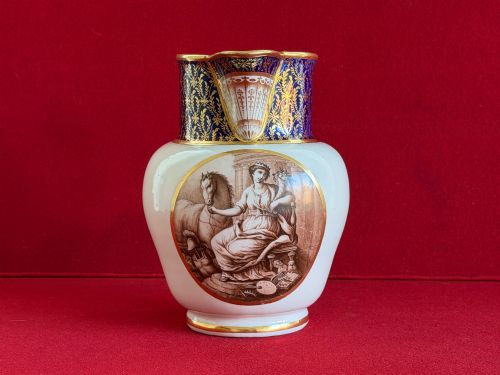
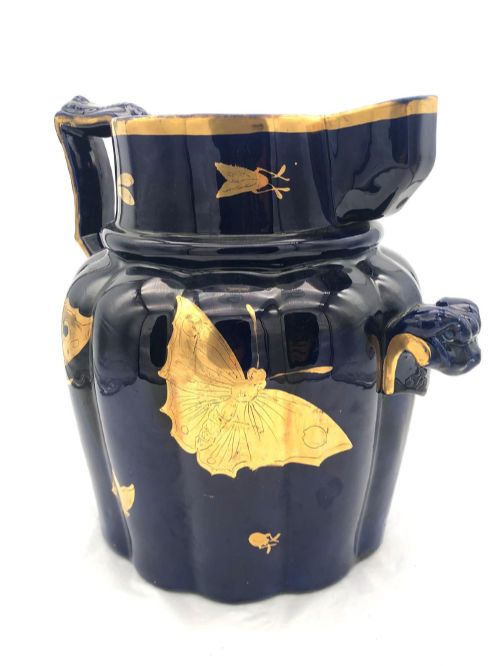
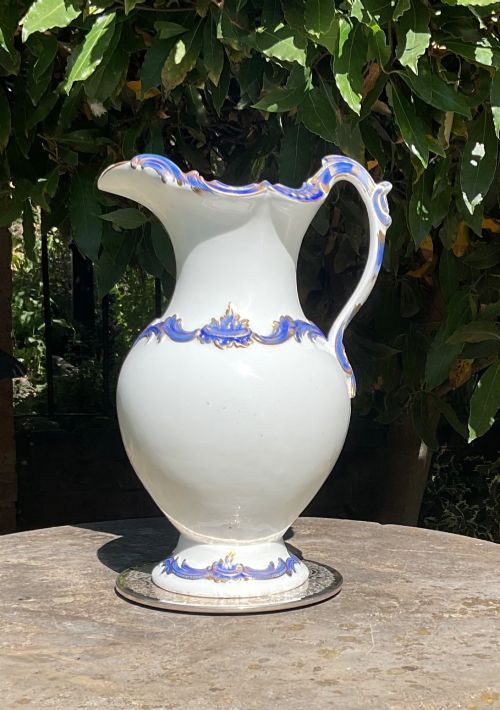
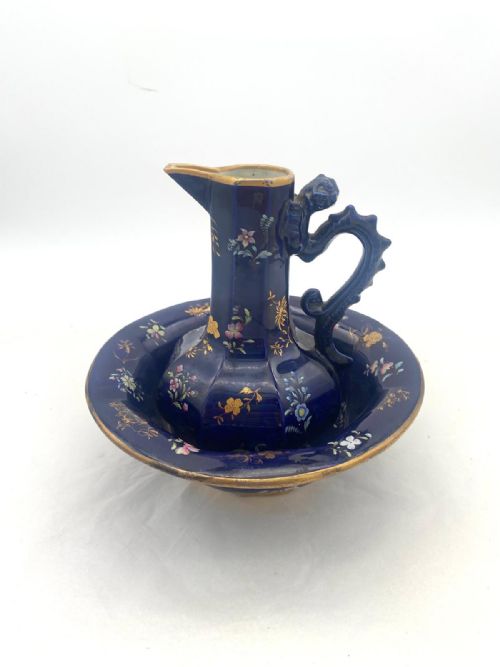
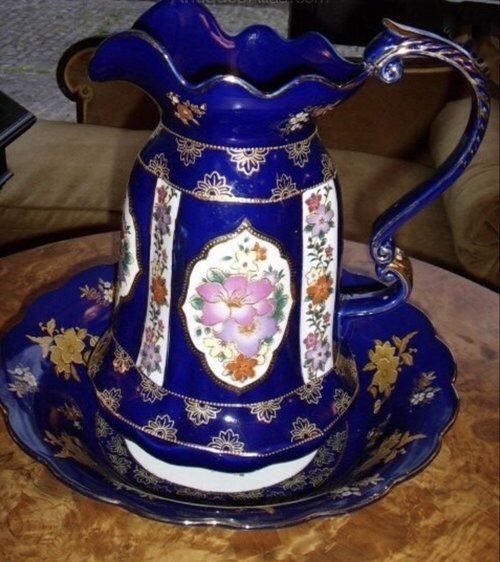


Gilded Blue Porcelain Jug
These gilded blue porcelain jug pieces combine rich cobalt grounds with gleaming metal highlights, bringing striking colour and historic craftsmanship directly into your home.
Gilded Blue Porcelain Jug
When you search for a gilded blue porcelain jug, you are looking at decorative and functional vessels defined by deep cobalt finishes and metallic gold ornamentation. These pieces range from substantial washstand sets and ewers to smaller tea service items, spanning periods from the early nineteenth century through to the Edwardian era.
The versions you are most likely to meet on this page include nineteenth-century ironstone pieces, Victorian washware sets, and decorative ewers featuring floral patterns or chinoiserie designs. Many examples incorporate intricate handles and matching bowls, reflecting the diverse domestic uses of their respective periods.
Makers such as Mason's, Royal Davenport, Doulton Burslem, and Coalport appear across the evidence, showcasing the prominent factories that produced these rich blue and gold ceramics. Styles stretch across Regency, Victorian Rococo Revival, and Edwardian designs, offering a clear view into changing aesthetic tastes.
How they were made
Potters shaped these items using porcelain, ironstone, and earthenware bodies, applying rich cobalt blue glazes to create the characteristic saturated background colour. Skilled hands then added gold leaf or gold gilding over the glazed surfaces, often highlighting moulded details and rims.
Enamel colours were frequently incorporated alongside the blue glaze and gold leaf, particularly in floral or fence and doves patterns. Firing techniques bonded the glazes and gilding to the ceramic base, ensuring lasting brilliance across ewers, teapots, and washware sets.
Listings show pieces spanning from eighteen-fifty to nineteen-thirty, utilising porcelain, ironstone, earthenware, glaze, and gold leaf.
What varies in quality
The standard of a gilded blue porcelain jug depends heavily on the crispness of the moulding and the depth of the cobalt glaze. Superior examples display precisely applied gold leaf and refined details, such as grotesque handles or intricate chinoiserie motifs.
The prestige of the producing factory, such as Mason's or Doulton Burslem, also distinguishes finer items from anonymous wares. Preservation of the original gilding and the integrity of associated bowls or tea sets further determine the standing of each piece within its period.
Royal Davenport·Doulton Burslem·Coalport
The Gilded Blue Porcelain Jug Glossary
- Cobalt blue glaze
- A deep blue ceramic colouring agent applied beneath or within the glaze layer. It provides the intense background hue seen on these vessels.
- Gilding
- The application of gold leaf or gold powder to the surface of ceramics. This technique adds metallic highlights and decorative borders.
- Ewer
- A large pitcher with a wide spout and elaborate handle, traditionally used for pouring water. Many surviving examples form part of washstand sets.
- Ironstone
- A dense, durable type of earthenware patented in the nineteenth century. It combined the strength of stoneware with the refined appearance of porcelain.
- Chinoiserie
- A European decorative style reflecting Chinese artistic influences. It frequently appears on nineteenth-century ceramics through landscape and floral motifs.
Gilded Blue Porcelain Jug: Frequently Asked Questions
What were gilded blue porcelain jugs used for?
These vessels served both practical domestic purposes and decorative display in period homes. Larger examples functioned as water jugs within washstand and basin sets.
Smaller pieces formed part of tea services or stood alone as decorative ewers. Their rich blue and gold surfaces allowed them to sit prominently in reception rooms.
How do I tell nineteenth century pieces apart?
Nineteenth-century pieces often display distinct factory marks, heavier ironstone bodies, and styles ranging from Regency elegance to Victorian Rococo Revival. Examining the depth of the cobalt glaze helps indicate the production era.
Later Edwardian and twentieth-century items tend to feature lighter porcelain bodies and simplified floral motifs. Comparing handle shapes and decorative techniques clarifies the chronology.
Are jug and bowl sets complete?
Many listings combine the jug with its original matching basin, reflecting how they were originally sold for bedroom washstands. These matched sets provide a complete picture of nineteenth-century domestic routines.
Individual jugs also appear without basins, having survived independently over the decades. Both complete sets and standalone pieces offer distinct ways to collect these ceramics.
How do I care for antique gilded ceramics?
Antique gilded ceramics require gentle handling to protect the delicate gold leaf and enamel decorations from wear. Cleaning should be done manually with lukewarm water, avoiding harsh detergents or abrasive scourers.
Displaying these items away from direct sunlight and sudden temperature changes helps preserve the cobalt glaze and metallic finish. Proper placement ensures the longevity of the piece.