


Cobalt Blue Glassware
Cobalt blue glassware brings deep, striking colour to a room through vessels shaped by centuries of glassmaking skill.
Cobalt Blue Glassware
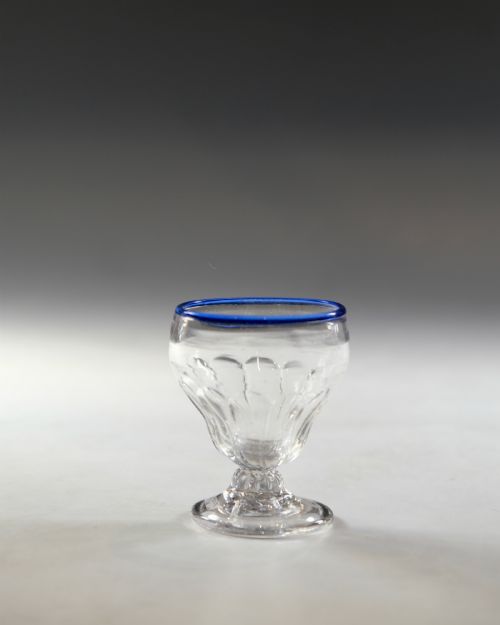
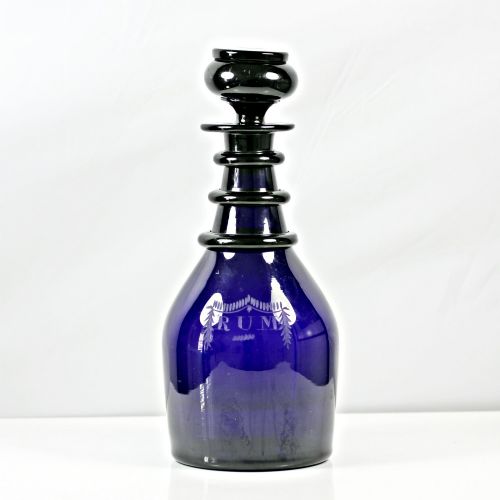
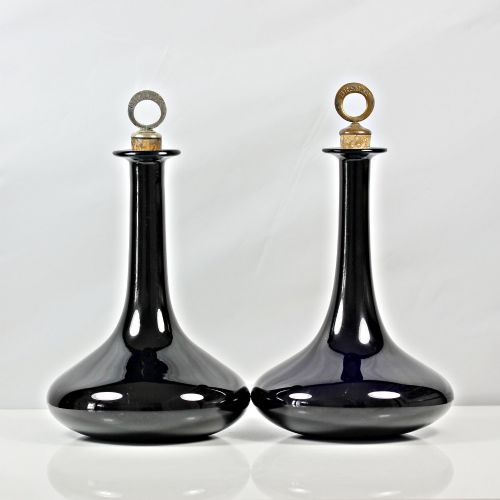
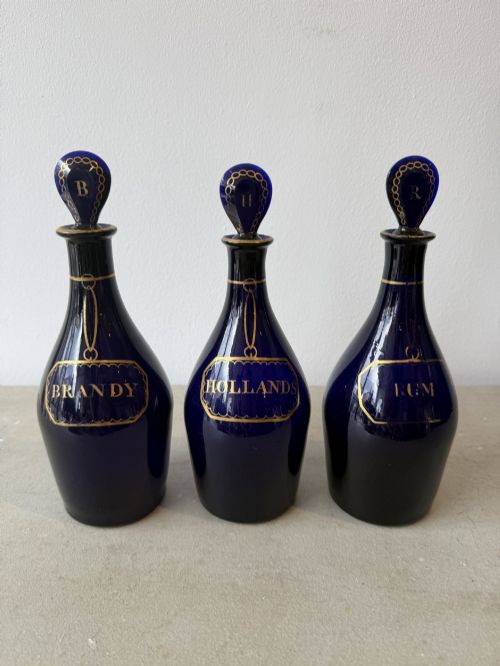
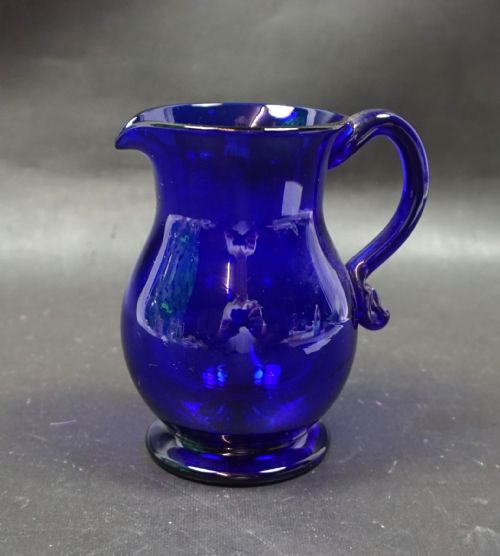
Cobalt blue glassware encompasses a rich variety of utilitarian and decorative objects shaped from deep-toned glass across several centuries. You encounter items ranging from Georgian decanters and cream jugs to Victorian vases and Bohemian bowls, each reflecting the aesthetic demands of its era.
Many surviving pieces showcase surface embellishments such as hand-painting, enamel work, and gold leaf overlay. Others rely entirely on the purity of the lead crystal and the striking depth of the cobalt hue for their visual impact.
Materials and construction
Makers achieved the characteristic rich blue colour by introducing cobalt oxide to the molten glass batch during production. Lead glass and lead crystal provided the heavy, clear base necessary for deep coloration and subsequent cutting techniques.
Craftsmen shaped these vessels using traditional blowing methods, often applying wrythen twisting or octagonal moulding while the glass remained hot. Decanters and bottles frequently incorporated fitted stoppers and applied glass rings, whilst decorative vases received hand-cut facets.
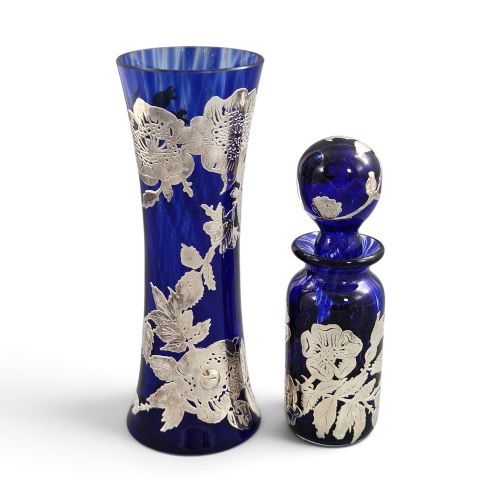
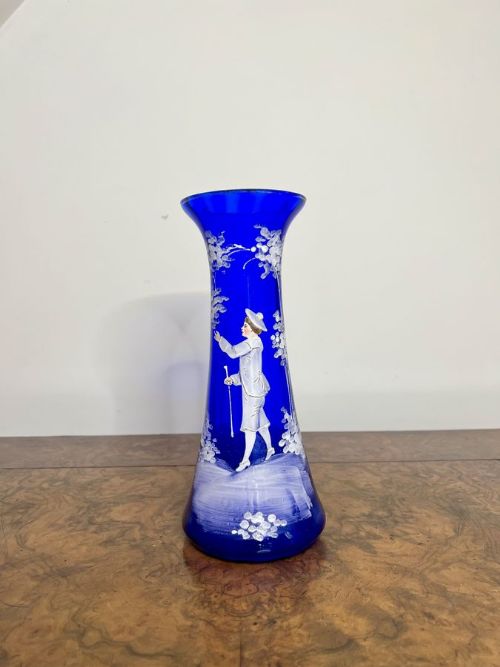
Surface decoration involved meticulous hand-enamelling, gilding with gold leaf, and delicate white enamel painting depicting figures or foliage. Metal mounts and sterling silver overlay were later added to secure or embellish specific perfume bottles and vases.
Listings feature lead crystal, enamel, and gold leaf across periods ranging from the eighteenth century to twentieth-century studio glass.
Assessing quality in cobalt glass
Quality rests significantly on the depth and evenness of the cobalt colour throughout the glass body. Superior pieces display a rich, saturated tone without distracting bubbles or streaks in the material.
The precision of the hand-cutting and the finesse of any surface enamelling or gilding distinguish finer examples from standard production. Crisp facets, well-defined silver overlay, and neatly executed painted details indicate the hand of a skilled artisan.
The weight and clarity of the underlying lead crystal also dictate standard, where heavier, more resonant vessels demonstrate superior craftsmanship and material selection.
Moser·Otto Prutscher·Laugharne Glass·Wiener Werkstätte
The Cobalt Blue Glassware Glossary
- Bristol blue
- A deep cobalt blue glass traditionally associated with the English city during the eighteenth and nineteenth centuries. It was widely utilised for decanters, finger bowls, and tablewares.
- Mell decanter
- A specific bottle shape featuring a rounded body and a tapering neck, often associated with Scottish and English production. These vessels were designed to hold and serve wine securely.
- Wrythen
- A decorative spiral pattern moulded into the body of glassware while hot. This technique creates a subtle twisted optical effect across the surface.
- Mary Gregory
- A style of glassware decorated with white enamel silhouettes depicting Victorian children playing in outdoor settings. The technique gained popularity during the late nineteenth century.
- Lead crystal
- Glass containing a high proportion of lead oxide, which increases the weight, brilliance, and refractive index. This material allows for deep, sharp hand-cutting.
Cobalt Blue Glassware: Frequently Asked Questions
What is Bristol blue glass?
Bristol blue refers to the deep cobalt glassware produced in England, particularly during the Georgian and Victorian eras. These rich blue vessels became famous for their use in domestic table settings and apothecary collections.
Craftsmen shaped them into decanters, cream jugs, and sugar bowls, often enhancing the blue tone with gold gilding or enamel painting.
What are mell decanters used for?
Mell decanters were traditionally designed to hold and serve wine or spirits at the dining table. Their distinctive rounded forms and sturdy bases ensured stability during service.
Today, they serve as decorative display pieces that catch the light through their deep cobalt walls.
How can I tell the period of a decanter?
Dating often relies on the shape of the neck rings, the presence of pontil marks on the base, and the overall manufacturing technique. Earlier Georgian examples typically feature hand-blown bodies with distinct pontil scars.
Victorian and later pieces often incorporate heavier lead crystal, machine moulding, or specific decorative styles like Mary Gregory enamel work.