


Glass Brandy Decanter
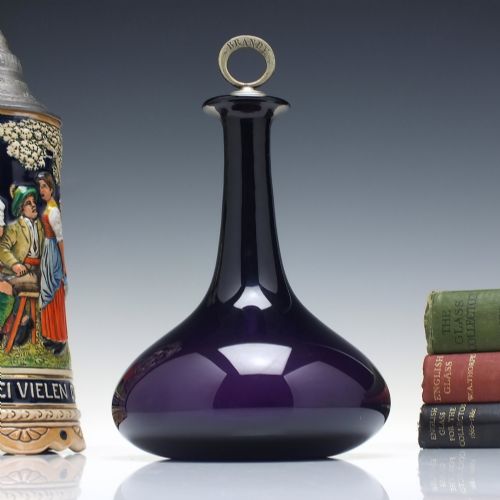
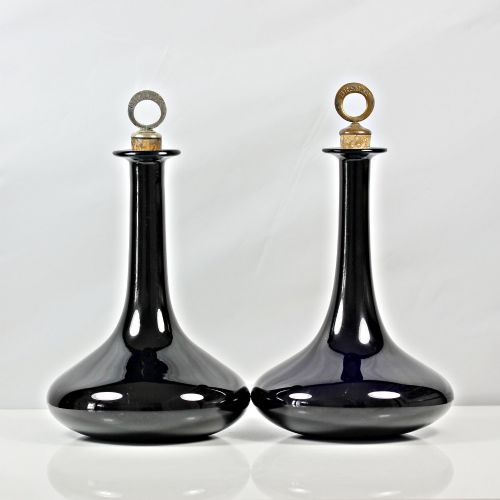
These glass brandy decanter examples combine heavy lead metal with rich blue and amethyst tones, offering a tactile anchor for any sideboard.
Glass Brandy Decanter
When searching for a glass brandy decanter, collectors encounter diverse forms ranging from Georgian and Victorian spirit bottles to Edwardian Tantali and mid-century dispensers. The pieces on this page span several eras including the nineteenth century, William IV period, and the 1960s.
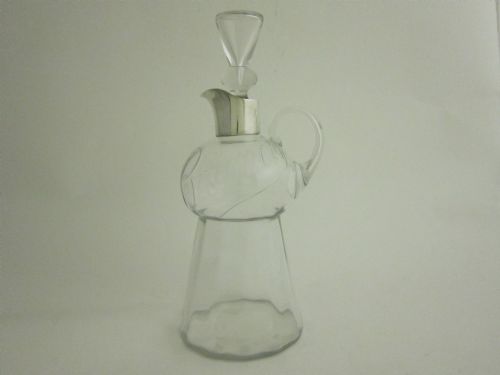
Vessels take various shapes such as mell decanters, rectangular spirit bottles, and large brewery fountains made for commercial and domestic use. Blue glass, amethyst glass, and clear crystal mounted with sterling silver or silver plate define the visual landscape of these selections.
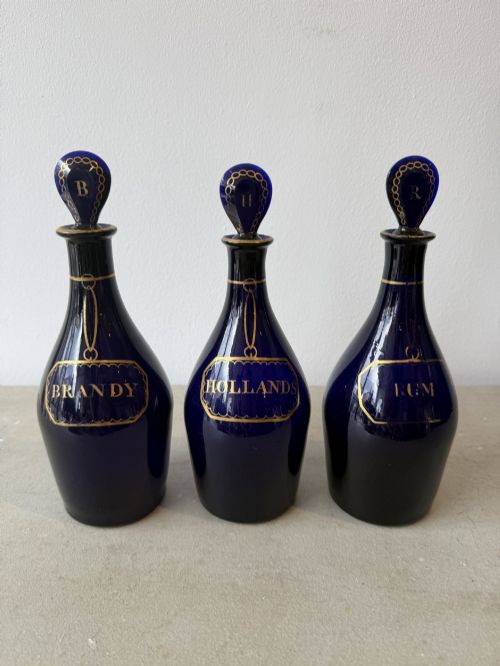
Origins include English workshops and makers such as James Powell and Freeman & Son Ltd, often accompanied by engraved labels or gilt decoration. Buyers typically find items equipped with stoppers, corks, or housed within secure locking frames.
How they were made
Manufacturing methods rely heavily on glassblowing techniques, seen clearly in optically blown crystal and coloured vessels shaped by hand. Craftsmen utilised deep-toned metal oxides to achieve rich Bristol blue, ruby, and amethyst hues.
Mountings and hardware incorporate sterling silver, silver plate, and gold leaf applied to secure rims, necks, and labels. Metal components are frequently hallmarked to indicate London origins and specific manufacturing years.
Listings feature items spanning the Georgian, Victorian, Edwardian, and mid-20th century periods, incorporating sterling silver, amethyst glass, and Bristol blue.
What varies in quality
The sophistication of the glass body and the clarity of any hand-engraved lettering dictate the upper tiers of craftsmanship. Optically blown vessels with precise proportions show superior handling by the glasshouse.
The quality of the metal mounts, from heavy sterling silver collars to fitted silver-plated tantalus frames, distinguishes standard utility pieces from fine presentation items. Associated accessories like matching stoppers and original silver brandy labels elevate the completeness of a piece.
James Powell·Freeman & Son Ltd
The Glass Brandy Decanter Glossary
- Mell decanter
- A mallet-shaped bottle with a broad base and tapered neck, commonly produced in deep-coloured glass during the Georgian and Victorian periods.
- Tantalus
- A locking wooden or metal frame holding decanters securely to prevent unauthorized access to the spirits inside while displaying the contents through glass.
- Spirit dispenser
- A large tap-fitted vessel or fountain designed to hold and pour large volumes of liquor in commercial or domestic settings.
- Silver gilt
- Silver objects coated with a thin layer of gold, providing a rich yellow lustre over the white metal base.
- Optically blown
- A glassblowing technique where molten metal is inflated inside a ribbed mould to create consistent internal patterns and surface refraction.
Glass Brandy Decanter: Frequently Asked Questions
What is a spirit barrel?
A spirit barrel is a horizontal, cask-shaped glass vessel designed to hold liquor, often mounted on a stand or fitted with a tap.
Victorian makers produced these containers as novel alternatives to standard upright decanters for home and tavern use.
How should I clean antique decanters?
Careful washing with warm water and soft bottle brushes helps preserve fragile glass and historical residue without scratching the interior.
Harsh detergents and sudden temperature changes must be avoided to protect antique metal collars, silver labels, and delicate stoppers.
Are stoppers usually original?
Stoppers frequently get matched over decades of use, meaning many antique decanters carry replacements rather than their factory pairings.
Matching the glass tint, wear patterns, and grinding marks helps determine if a stopper belongs to the specific bottle neck.
What is a tantalus?
A tantalus is a locking wooden or metal stand that secures decanters by their stoppers, preventing removal while allowing the bottles to remain visible.
Edwardian households used these locking frames to restrict access to expensive brandy and whisky.