
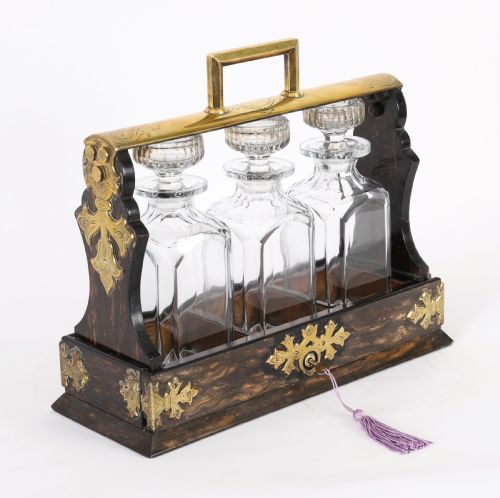
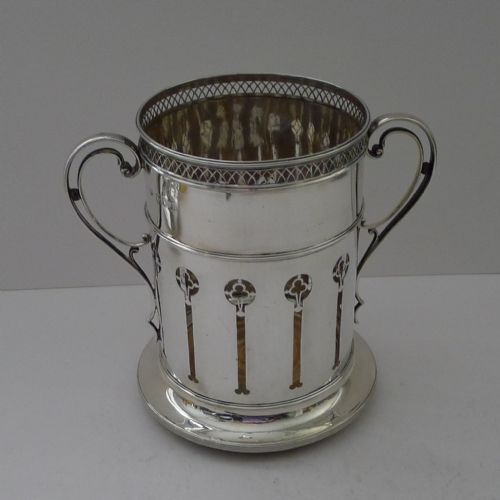


Vintage Decanter Caddy
A vintage decanter caddy secures and organises your bottles with period craftsmanship, offering a functional centrepiece for any traditional dining room.
Vintage Decanter Caddy
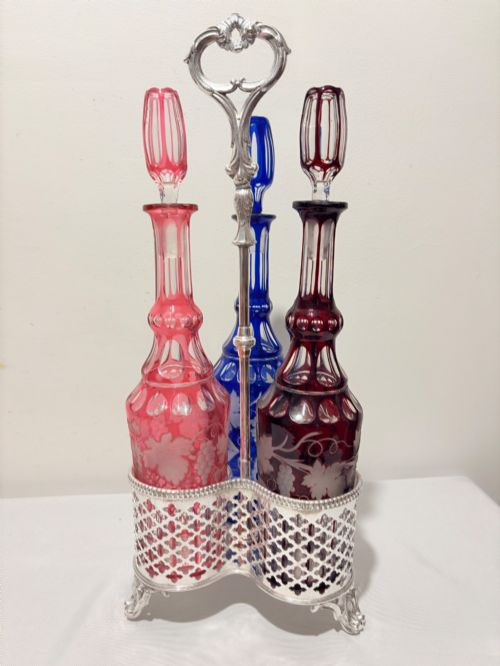
A vintage decanter caddy encompasses robust oak and mahogany frameworks designed to hold glass bottles securely during transit or display. These functional receptacles range from open stands to locked tantalus frames.
The versions most commonly met on this page date from the Victorian and Edwardian eras, utilising silver plate and solid timber to house multiple cut glass decanters.
How they were made
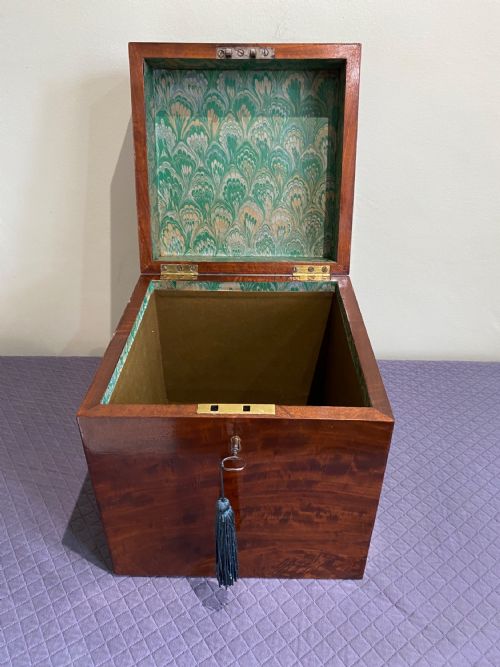
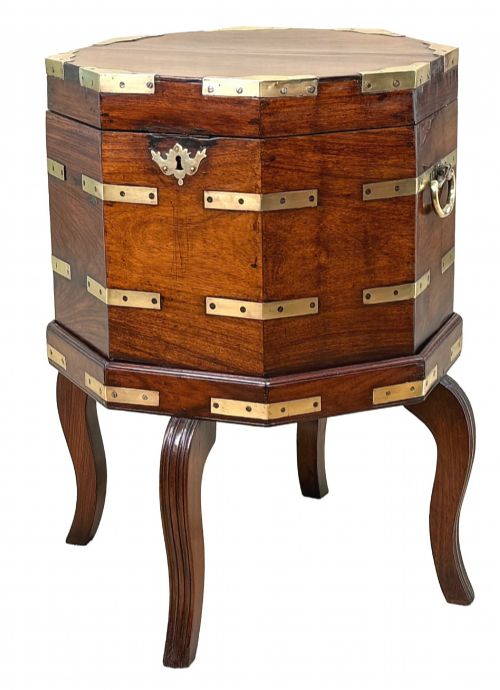
Craftsmen built the structural frames using dense hardwoods like mahogany and oak, often mounting them with cast brass handles and lock mechanisms. These sturdy enclosures protect the fragile glass vessels held within.
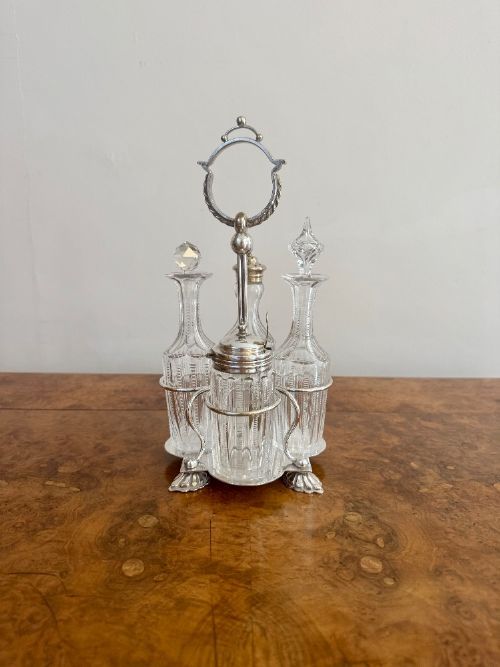
Silver plating on metal mounts and frames provides a polished decorative finish that contrasts with the dark timber. Cut glass decanters feature heavy hand-cut patterns designed to catch the light.
Listings span periods from the 18th century through to the Art Deco era, featuring materials such as cut glass, mahogany, and silver plate.
What varies in quality
The weight and clarity of the glass bottles dictate the baseline standard of the piece, alongside the thickness of the silver plating on the metal mounts. Heavier gauge metals and intact locking mechanisms elevate the standing of a container.
Joinery techniques in the timber frames distinguish workshop standards, with finely dovetailed boxes and carved wooden details representing higher levels of period craftsmanship.
The Vintage Decanter Caddy Glossary
- Tantalus
- A locked decanter frame that displays the bottles while preventing unauthorised access to the contents. The mechanism typically secures the stoppers beneath a metal bar.
- Cruet set
- A matched collection of small glass bottles or jars mounted in a metal stand for condiments or liqueurs. These frames frequently include integrated carrying rings.
- Silver plate
- A thin layer of silver fused to a base metal core such as copper or brass. This technique allowed manufacturers to produce decorative tableware at a lower cost than solid silver.
- Cellarette
- A large cabinet or box designed to hold wine bottles and decanters near the dining table. Many examples from the Georgian period feature fitted interior partitions.
Vintage Decanter Caddy: Frequently Asked Questions
What is a tantalus?
A tantalus is a locking bottle frame that displays the decanters while holding the stoppers fast.
This clever mechanism keeps the drinks secure from servants or guests while still showing off the cut glass.
How do I clean the silver plate?
Clean the metal components gently with a specialised silver cloth to avoid wearing through the plating.
Harsh chemical dips can damage both the historic finish and any adjacent timber surfaces.
Can I use modern decanters in these frames?
Modern decanters rarely fit the precise apertures and height clearances of antique frames. Original caddies were custom-made to match the specific dimensions of their included bottles.
How do I date an oak caddy?
Dating relies on examining the construction methods, hardware styles, and overall aesthetic periods like Edwardian or Victorian.
Lock types and fastener fixings also offer reliable clues to the decade of manufacture.