




Coastal Seascape Wall Art
Coastal seascape wall art brings the movement of tides and the breadth of open water directly into a room.
Coastal Seascape Wall Art
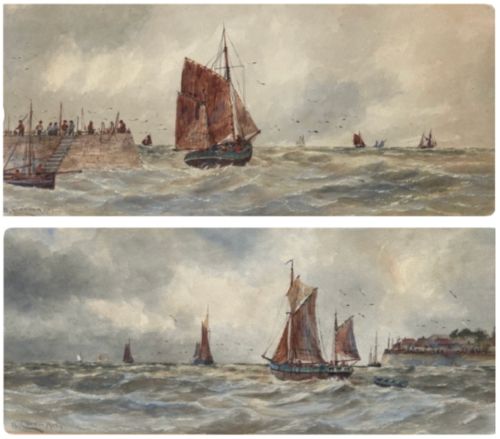
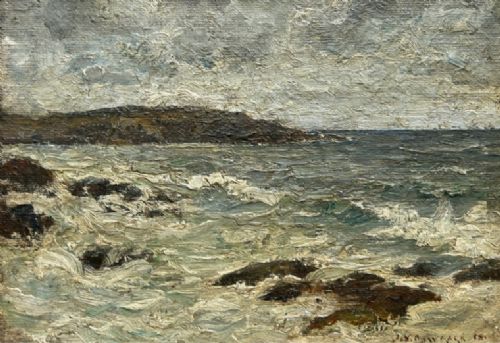
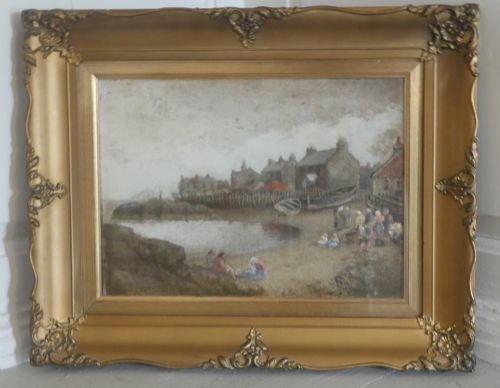
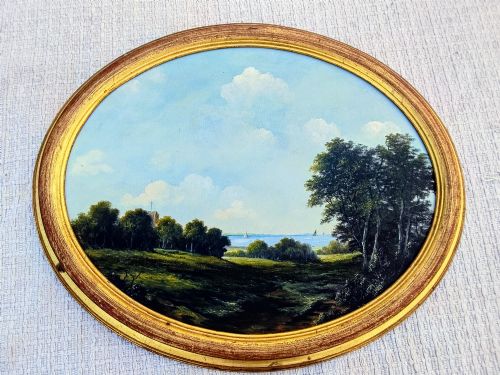
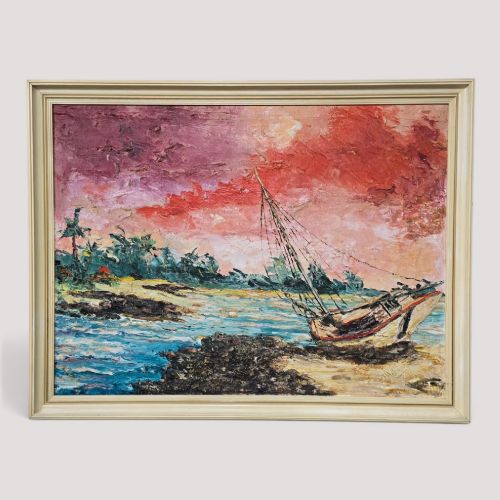
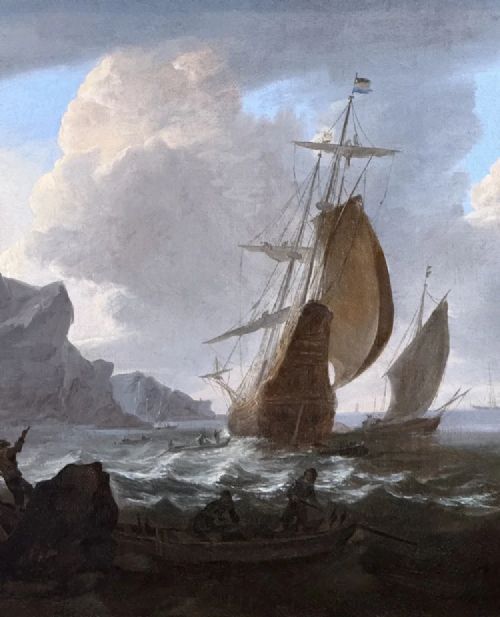
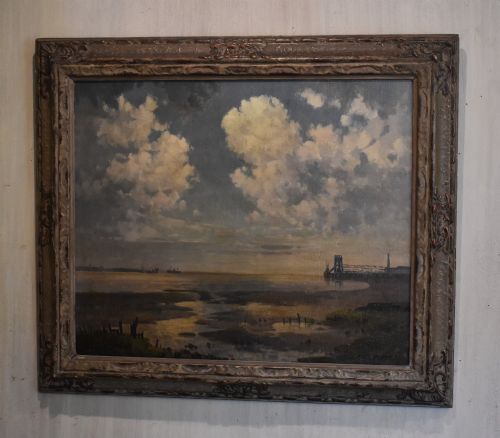
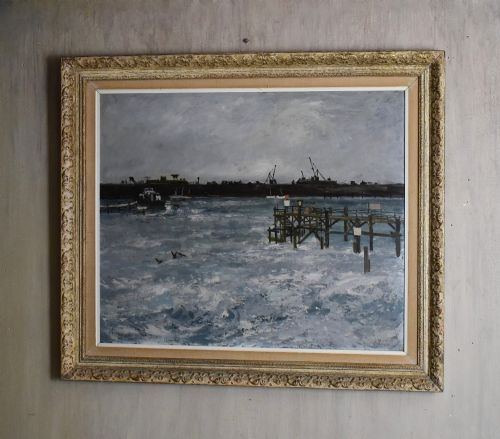
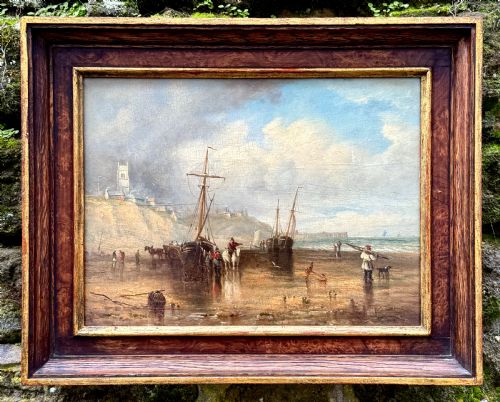
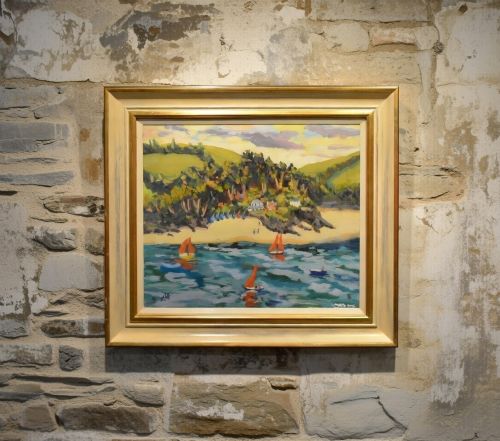
Coastal seascape wall art captures maritime scenes, ranging from Dutch Golden Age vessels in heavy gales to en plein air views of Cornish harbours. These works span several distinct periods, including the seventeenth century, the Victorian era, and twentieth-century interpretations.
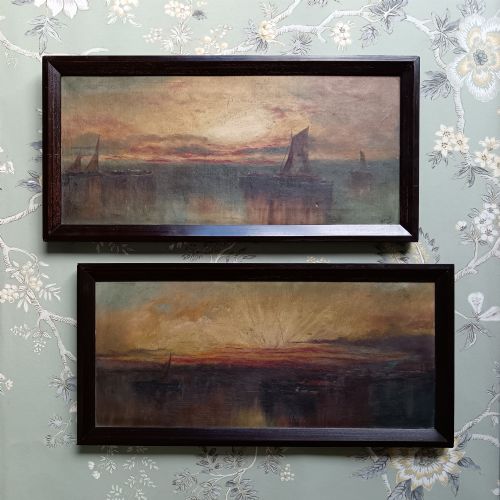
The dominant form on this page is the oil painting, executed on canvas or panel, alongside occasional works in watercolour and gouache. Subjects focus heavily on maritime life, featuring fishing boats, shipping vessels off the Isle of Wight, and Brixham trawlers.
Buyers encounter varied stylistic approaches, from Maritime Realism and British Impressionism to Dutch marine traditions. Each piece records a specific coastal atmosphere, preserved through historic paint layers and period frames.
How they were made
Artists utilise oil paint on stretched canvas to build rich textures that render the shifting qualities of sea and sky. Many works employ en plein air techniques, capturing immediate light and weather conditions directly on the Cornish coast or open water.
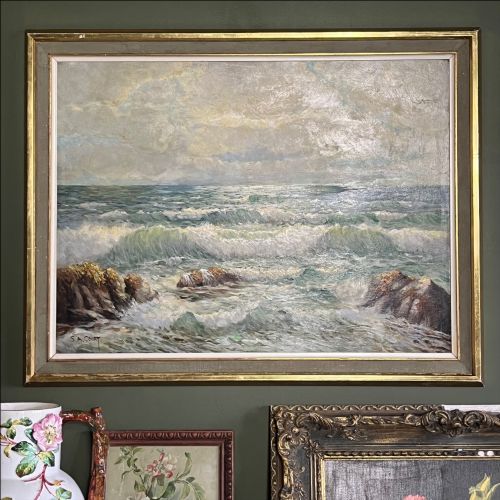
Historic frames often feature gilt wood, applying gold leaf over carved timber to complement the maritime subjects within. Watercolour and gouache works on paper demonstrate precise brushwork for intricate rigging and coastal architecture.
Coastal Seascape Wall Art Retail Price Guide 2026
Typical asking prices for coastal seascape wall art among the pieces listed under this phrase on Sellingantiques today, from the lower quarter to the upper quarter. They describe what is for sale here now, not the wider market.
Listings span periods from the seventeenth century through the Victorian era to the 1960s, executed in oil, watercolour, and gouache.
What varies in quality
Quality rests in the artist's command of light, atmosphere, and maritime accuracy, distinguishing masterly brushwork from formulaic studio production. Dynamic compositions that capture the genuine force of a gale or the subtle luminosity of coastal air elevate a painting above standard marine recording.
The preservation of the original paint surface and the integrity of the canvas dictate the lasting value of these works. Furthermore, the presence of period giltwood framing enhances the visual completeness of historic canvases.
Bonaventura Peeters·William Henry Williamson·George Gregory·Sidney A. Court
The Coastal Seascape Wall Art Glossary
- En plein air
- Painting outdoors to capture natural light and atmospheric conditions directly. This method allows artists to record shifting coastal weather with immediacy.
- Giltwood
- Timber carved and coated with thin gold leaf or gilt powder. It frequently surrounds historic oil paintings to frame and protect the edge.
- Maritime Realism
- An artistic style dedicated to the accurate depiction of ships, seas, and coastal environments. Practitioners focus on nautical detail and topographical precision.
- Impressionism
- A style emphasising loose brushwork and the depiction of light rather than microscopic detail. British practitioners applied these principles to coastal scenes.
- Gouache
- An opaque water-based medium used with watercolour on paper. It provides solid areas of colour and sharp highlights in works on paper.
Coastal Seascape Wall Art: Frequently Asked Questions
How do I identify a seventeenth century marine painting?
Seventeenth century maritime works typically display meticulous attention to ship rigging and dark, dramatic palettes associated with the Dutch Golden Age. Canvas preparation and wooden stretcher construction also reflect historical building methods of the period.
Examination under magnification reveals characteristic craquelure and pigment usage specific to early oil painting traditions.
What is British Impressionism in coastal art?
British Impressionism applies broken brushstrokes and vibrant colour to capture the transient effects of light on British waters. Artists working in this manner prioritised mood and atmosphere over strict topographical accuracy.
These pieces often emerge from coastal artist colonies established around Cornwall and other scenic shores during the late nineteenth and early twentieth centuries.
How should I hang heavy oil paintings safely?
Large oil paintings require sturdy picture hooks rated well above the combined weight of the canvas and its gilt wood frame. Fixings must anchor securely into wall studs or masonry rather than plaster alone to prevent structural failure.
Positioning works away from direct sunlight and strong heat sources protects the oil paint from premature drying and cracking.
What subjects appear most frequently in these seascapes?
Fishing boats and working vessels dominate the compositions, capturing maritime commerce and coastal industry. Scenes often feature specific locations such as Brixham harbour, St Michael's Mount, or the Isle of Wight.
Artists also depicted vessels weathering heavy gales or resting quietly in sheltered coastal waters.