


Coal Purdonium Box
When you search for a coal purdonium box, you find heavy fireside fuel storage made to keep domestic hearths tidy and supplied.
Coal Purdonium Box
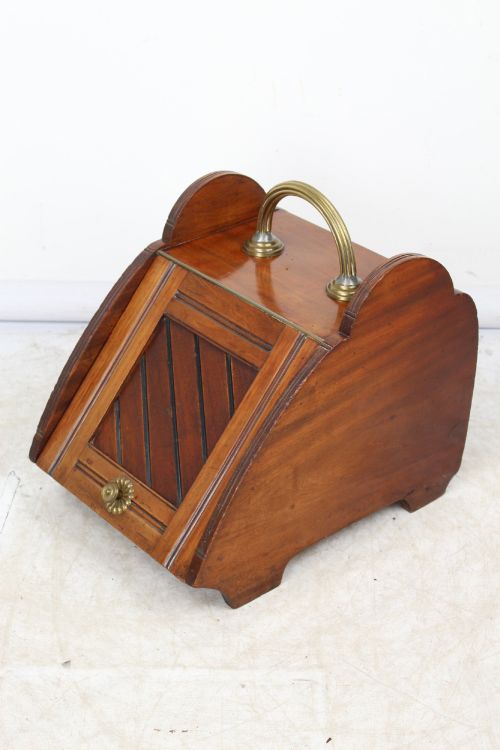
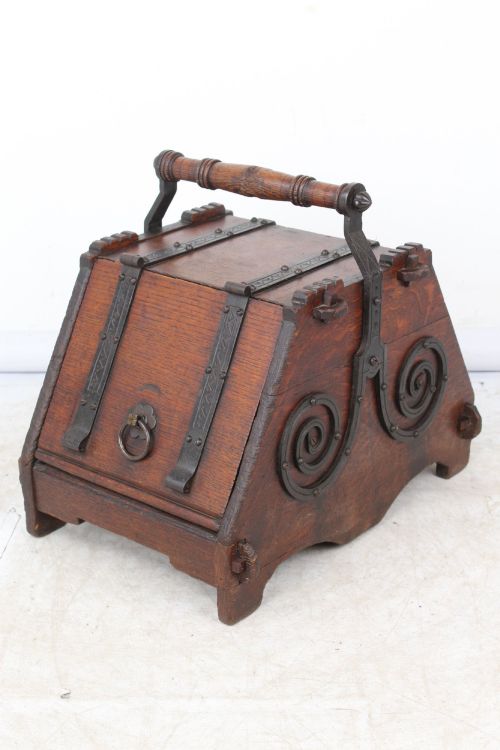
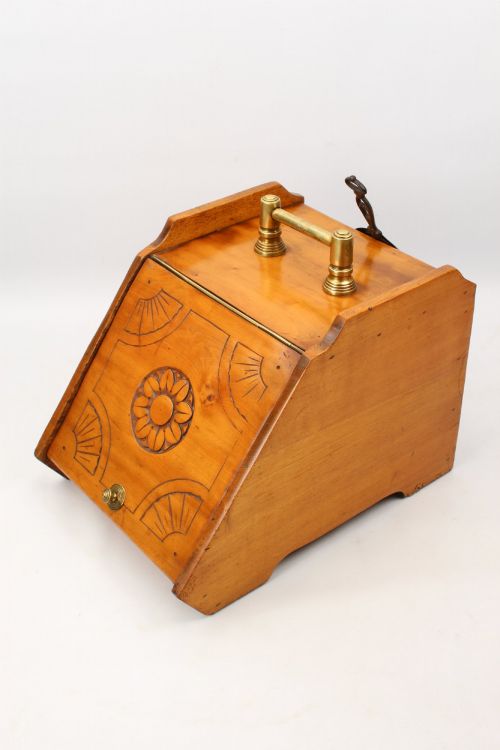
A coal purdonium box is a dedicated fireside accessory designed to house domestic fuel close to the fireplace without spilling dust across the floor. These pieces range from upright wooden cabinets with drop-down doors to sloping metal scuttles and lidded bins.
Victorian and Edwardian examples dominate the available selection, often taking the form of architectural cabinets in mahogany, oak, or walnut fitted with internal metal liners. Earlier Georgian and Regency models appear occasionally as heavy timber bunkers and decorated bins.
Buyers will encounter both upright purdonium cabinets with built-in shovel compartments and traditional scoop-handled buckets. Many retain their original metal liners and matching shovels, which makes them complete practical units for fireside use.
How they were made
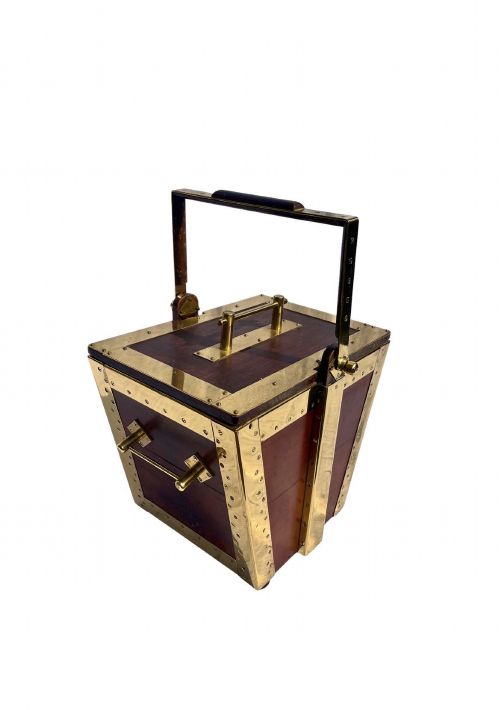
Cabinet-style purdoniums rely on solid hardwoods like oak, mahogany, and walnut, frequently enhanced with marquetry inlay, carved panels, or brass mounts. Carpenters joined these timber boxes to withstand the daily weight of dense fuel loads.
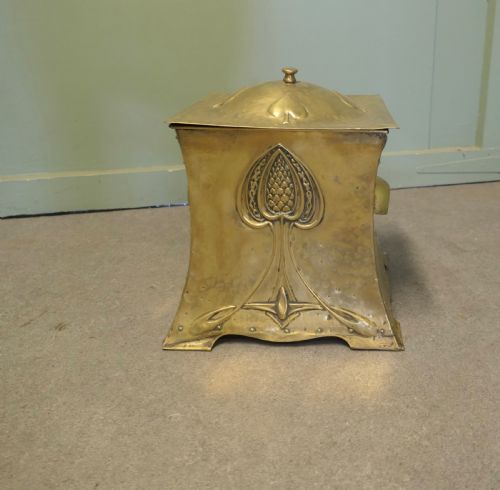
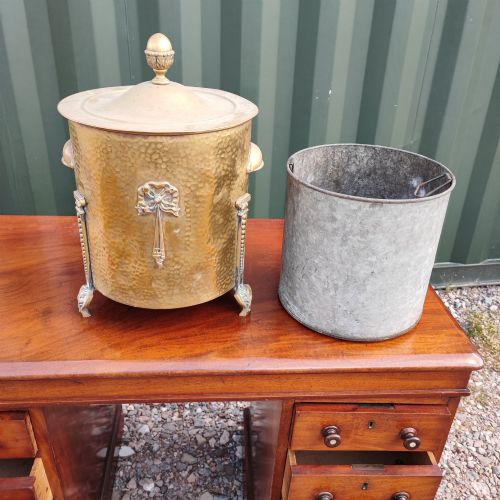
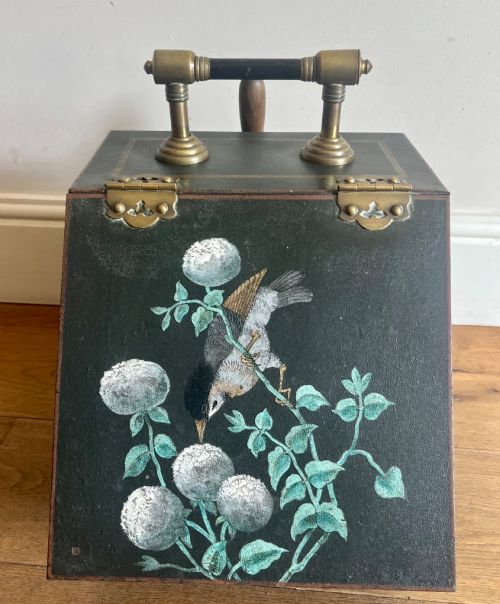
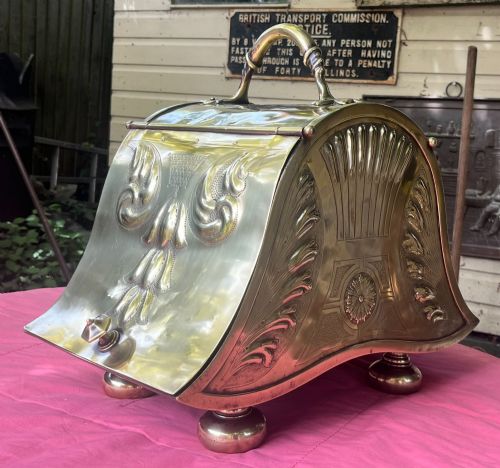
Metal versions utilise spun or beaten brass and copper, sometimes finished with painted toleware or industrial iron framing. Workshops often integrated heavy brass handles, hinges, and drop-front mechanisms to handle frequent tipping and carrying.
Internal components typically feature galvanised or zinc metal liners designed to contain coal dust and moisture, protecting the external wood or metal body from corrosion and debris.
Listings feature woods like mahogany, oak, walnut, rosewood, and pollard oak alongside worked brass, copper, and iron.
What varies in quality
Quality rests in the heaviness of the timber construction, the crispness of applied carvings, and the robustness of the internal metal liner. Better examples use dense hardwoods and substantial brass fittings rather than thin laminates and pressed sheet metal.
The refinement of the mechanism dictates the tier of the piece, from simple lift-lidded buckets to balanced drop-front purdoniums that tilt smoothly on solid pivots. Original matching shovels and intact ceramic or brass interior appointments elevate the integrity of a piece.
Benham and Froud
The Coal Purdonium Box Glossary
- Purdonium
- A specialised cabinet or box for storing domestic coal by the fireside, usually featuring a sloping drop-down front or tilt mechanism. This term came into common use during the nineteenth century for refined coal containers.
- Scuttle
- A metal or wooden bucket fitted with a swinging handle and often a lip or scoop for carrying fuel to the grate. These items trace their lineage deep into historical hearth management.
- Toleware
- Japanned or painted metalware produced on a tinplate base, sometimes utilised for decorative fireside coal buckets. The technique creates a durable, glossy surface finish.
- Liner
- The removable internal metal tray housed inside a wooden coal box to catch debris and hold heavy fuel blocks. Original liners are vital for maintaining the interior condition of timber purdoniums.
- Metamorphic
- Describing furniture that transforms into another object, such as a coal box designed to double as a small table. These dual-purpose items showcase clever nineteenth-century carpentry.
Coal Purdonium Box: Frequently Asked Questions
How do I use one today?
These boxes serve well beside modern wood-burning stoves or open fireplaces to hold logs, kindling, or peat briquettes. Their enclosed design hides clutter while keeping fuel within arm's reach.
Many people also repurpose smaller cabinets as side tables, blanket storage, or magazine holders in living spaces.
Did they always come with shovels?
Many period purdoniums and scuttles were manufactured with matching metal shovels that slotted into dedicated exterior brackets or internal clips. Finding a piece with its original shovel is a notable bonus.
Replacement brass or iron shovels can be substituted if the original is missing, provided the size matches the designated holder.
How do I distinguish Victorian from Edwardian styles?
Victorian coal boxes often display heavier carved decoration, dark walnut or mahogany timbers, and robust Gothic or Aesthetic Movement brass detailing. They emphasise solid utility and dark, rich grains.
Edwardian examples frequently lean towards lighter oak, refined Arts and Crafts copper work, or flowing Art Nouveau brass mounts with softer decorative lines.