




Clear Lead Crystal Goblets
Clear lead crystal goblets bring heft and brilliance to the table, spanning Georgian air twists and Victorian cut rummers.
Clear Lead Crystal Goblets
Clear lead crystal goblets cover drinking vessels designed for wine, ale, rum and port, shaped by English makers across the eighteenth and nineteenth centuries. The phrase encompasses stemware, rummers and dram glasses intended for formal dining and daily hospitality.
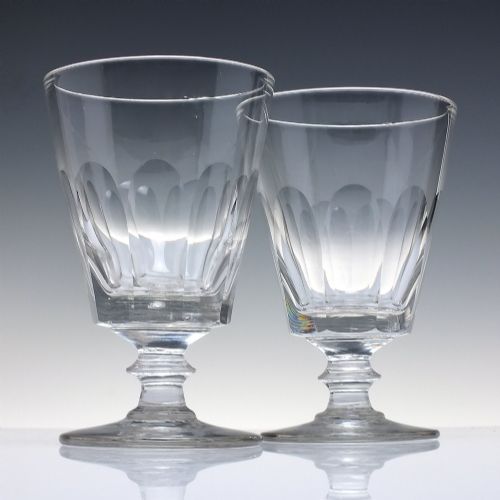
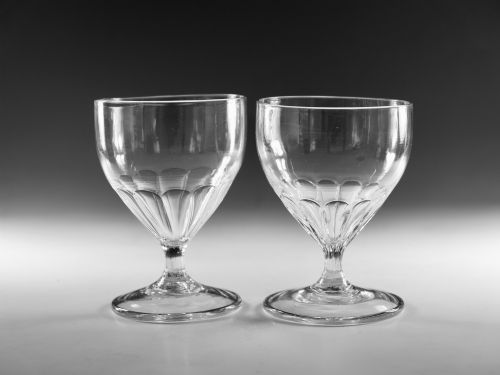
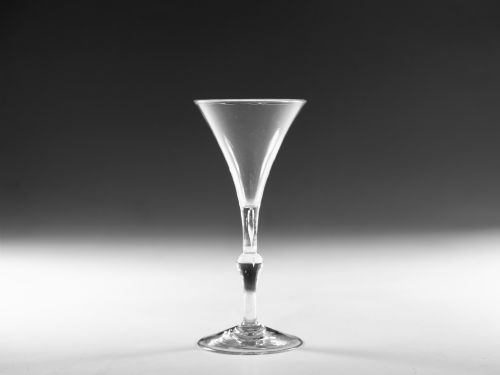
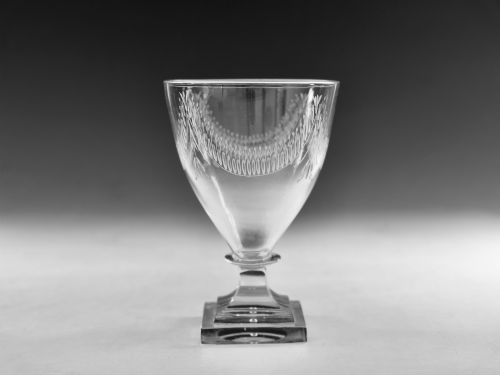
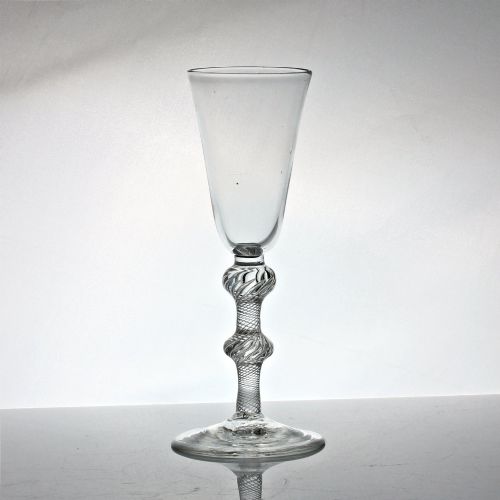
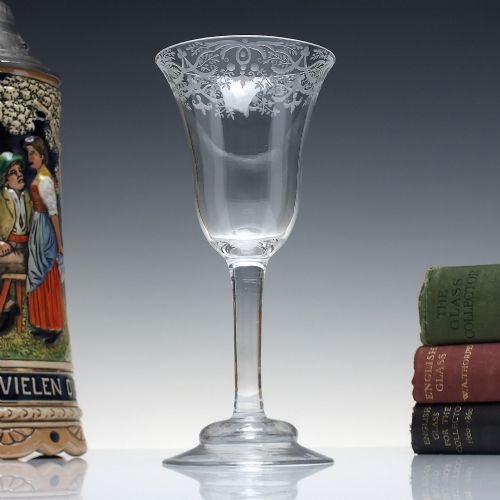
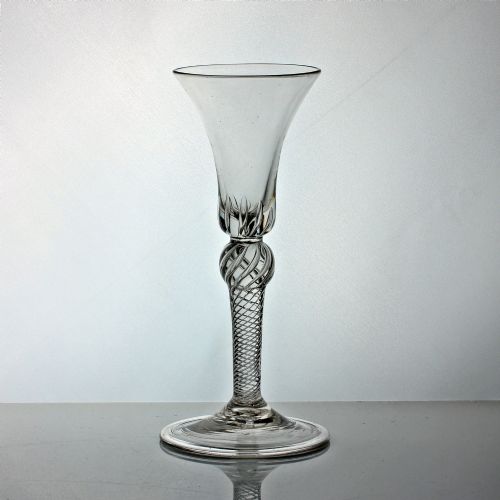
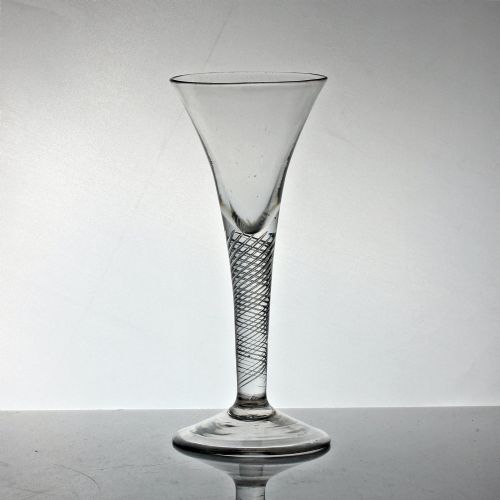
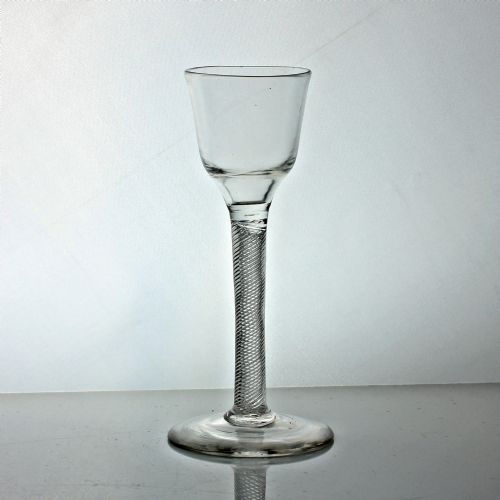
Georgian examples dominate the selection, appearing with air twists, opaque twists and plain stems supporting bell, ogee or trumpet bowls. Later Victorian pieces often arrive as large cut glass rummers, pairing generous bowls with heavy bases.
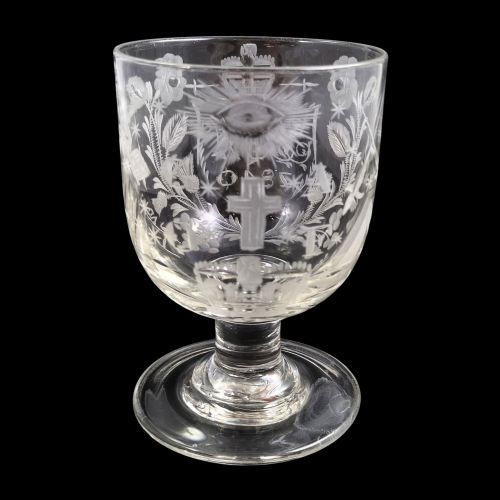
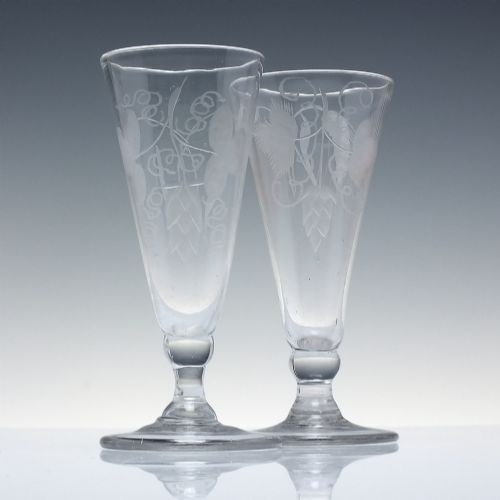
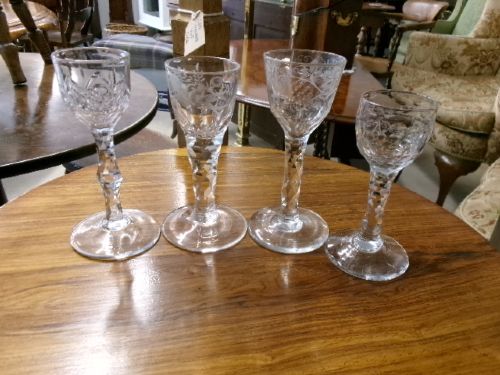
The objects stem from English and Irish workshops, showing forms from baluster stems to faceted drinking glasses with wide foot bases. Buyers encounter everything from small port glasses to large serving rummers engraved with hops and barley.
Materials and construction
Makers utilised lead glass, flint glass and hand-blown glass to achieve high refractive index and clarity. The heavy metal content allowed glassmakers to cut deep facets, mould inverted petals and pull delicate air twists without losing structural integrity.
Decoration relied on wheel engraving, moulding and optical blowing to pattern bowls with hops, barley and commemorative motifs. Stems were formed separately using multi-spiral air twists, single and double series opaque twists, or built up through composite and baluster knops before attachment to folded feet.
Some eighteenth-century glasses carry anti-Jacobite engravings, hiding political allegiance within subtle floral motifs for secret toasts.
Assessing quality in antique glassware
Quality rests upon the purity of the metal and the precision of internal optical effects. Heavy lead crystal with exceptional clarity and minimal internal seed bubbles represents the upper tier of production.
Mastery shows in the execution of decorative elements, such as the symmetrical rotation of an air twist or the clean depth of wheel engraving on rummer bowls. Proportion between the bowl, stem and foot also dictates the elegance of the finished drinking vessel.
The Clear Lead Crystal Goblets Glossary
- Air twist
- A decorative stem containing spiral threads of trapped air created during the drawing process. This technique requires considerable skill to maintain uniform thickness and spacing.
- Opaque twist
- A stem enclosing white enamel threads, either single or double series, twisted within the clear glass. These threads give a milk-white contrast against the transparent body.
- Rummer
- A large, heavy drinking glass popular in the eighteenth and nineteenth centuries, typically used for ale, beer or rum. They often feature faceted bowls or wheel-engraved agricultural motifs.
- Baluster
- A thick, swelling stem form resembling architectural columns, common in early eighteenth-century drinking vessels. They provide substantial weight and balance in the hand.
- Folded foot
- A base edge turned under to create a thickened rim, strengthening the vessel against chips and adding stability. This feature appears frequently on eighteenth-century stemware.
Clear Lead Crystal Goblets: Frequently Asked Questions
What is the difference between a rummer and a wine glass?
Rummers are substantially larger, heavier drinking vessels designed for ale, beer, or spirits, featuring robust bowls and sturdy feet. Wine glasses are more delicate, with slender stems intended for smaller pours of wine.
Historically, rummers served communal or hearty drinking functions at the table, whereas wine glasses suited the refined dining customs of the Georgian period.
How do you date an air twist glass?
Air twist stems gained popularity primarily during the mid-eighteenth century, roughly between 1740 and 1770. Examining the bowl shape, foot style and metal composition helps narrow the decade.
Earlier examples often pair air twists with bell or ogee bowls and folded feet, while later variations shift toward straight-sided trumpet shapes.
Are these glasses safe to use today?
Many collectors use eighteenth and nineteenth-century stemware for special occasions, provided they receive careful hand washing. Sudden temperature changes can crack old lead glass.
Hand-blown lead crystal requires gentle care to preserve the original surface brilliance and prevent damage to delicate stems and foot rims.
Why do some glasses feel heavier than others?
Weight depends on the lead oxide content and the intended function of the vessel. Heavy lead crystal and flint glass were developed to give drinking vessels greater brilliance and heft.
Serving rummers and nineteenth-century cut glass require thick walls and heavy bases to withstand robust daily use, unlike delicate eighteenth-century dram glasses.