



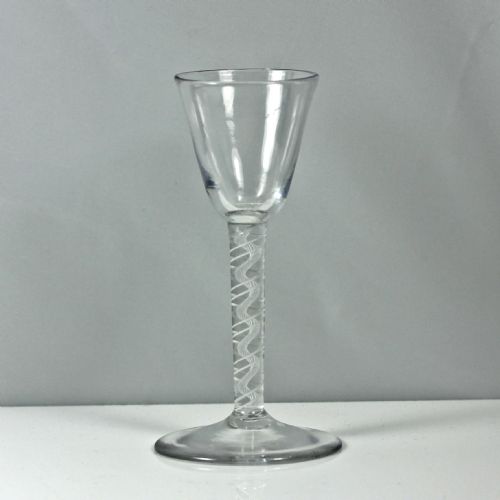


Georgian Engraved Crystal Goblets
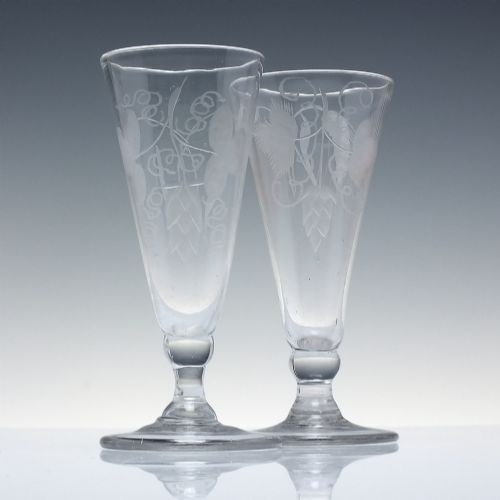
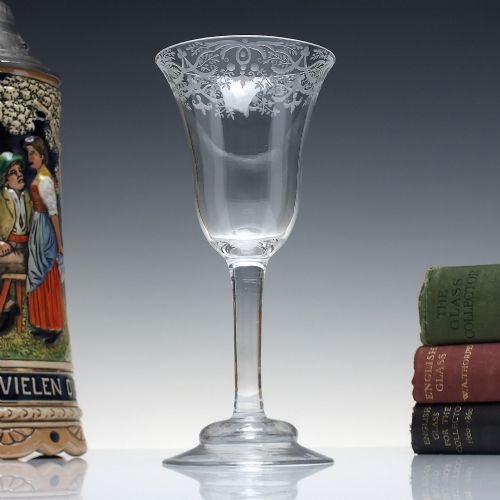
Georgian engraved crystal goblets bring heavy lead glass and detailed wheel-engraved hops, barley, and armorial motifs to the table.
Georgian Engraved Crystal Goblets
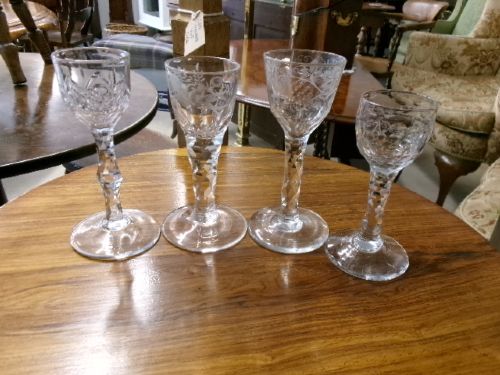
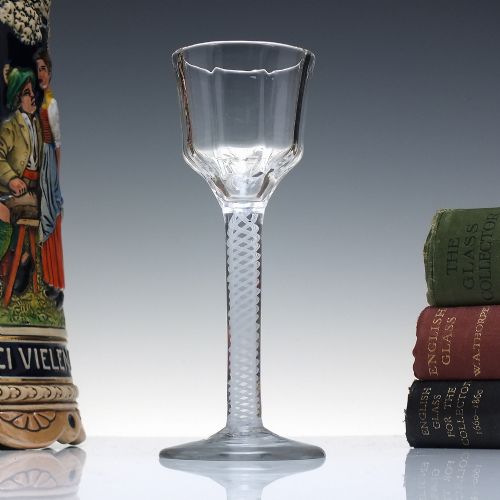
Georgian engraved crystal goblets span drinking vessels produced across the eighteenth and early nineteenth centuries, encompassing heavy rummers, ale glasses, and commemorative stemware. The selection concentrates heavily on eighteenth-century examples featuring plain stems, air twists, and opaque twists alongside Regency-era cut and engraved rummer forms.
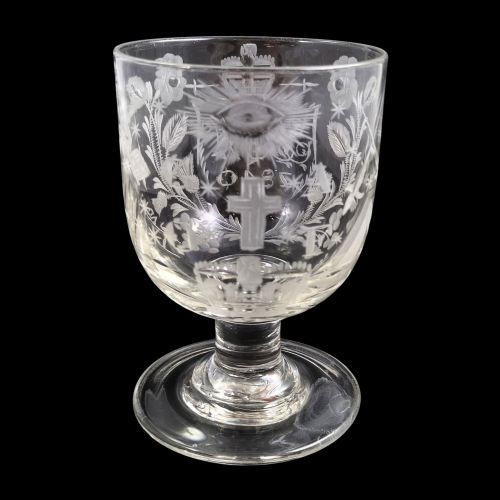
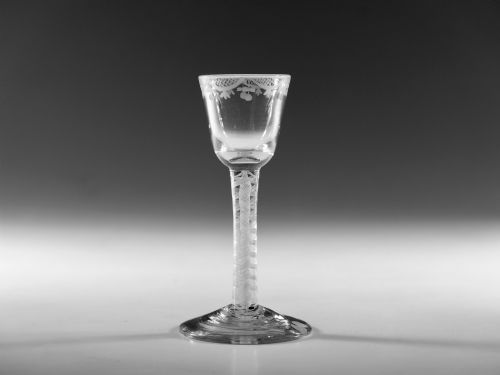
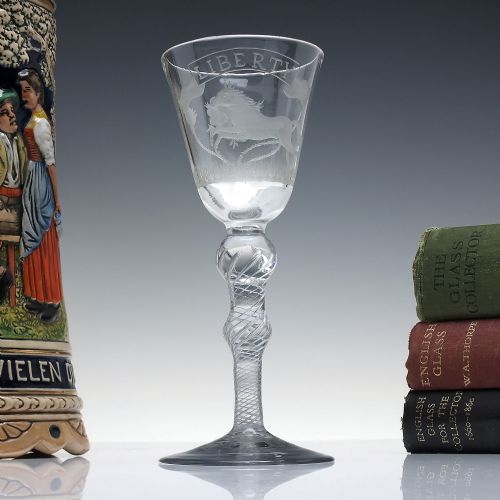
Forms range from intimate wine glasses with ogee or rounded funnel bowls to large serving rummers and champagne glasses designed for communal toasts. Many pieces display specific historical decoration, including Jacobite emblems, Masonic symbols, ships, and agricultural motifs such as hops and barley.
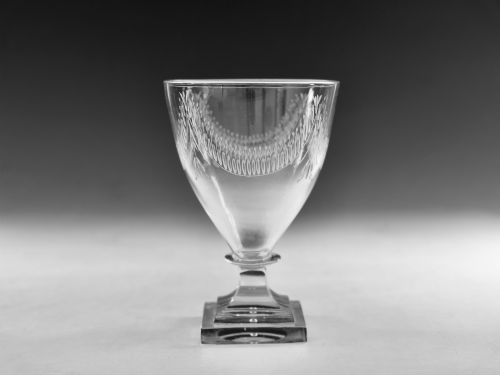
Origins are predominantly English, with regional variations evident in North-East production and heavy square-based rummer designs. Buyers encounter both delicate baluster stemware from the early seventeen-hundreds and robust, faceted vessels from the transitional period into the nineteenth century.
How they were made
Makers utilised lead crystal, flint glass, and hand-blown clear glass, often incorporating heavy metal content that produced a resonant ring and deep refractive quality. The addition of lead oxide allowed craftsmen to manipulate the hot metal into thick-walled rummers or draw slender stems containing air twists.
Decoration relied on wheel-engraving techniques, where skilled artisans pressed the glass against rotating stone or copper wheels to cut floral sprays, armorial bearings, and inscriptions into the surface. Optical effects were further enhanced through faceted cutting and nut moulding on the lower bowls or stems.
Some eighteenth-century drinkers hid treasonous loyalties inside their wine glasses, trusting a tiny engraved rose to speak volumes when the punch bowl ran dry.
What varies in quality
The standard of an engraved goblet rests on the depth and clarity of the wheel-work, where crisp, confident lines denote superior hand-craftsmanship over shallow or hesitant surface scratching. Metal quality also plays a role, with heavier lead crystal displaying greater brilliance and absence of seed bubbles.
Proportion and form dictate the balance of the piece, from the stability of the wide foot base to the harmonious draw of the stem. Surviving examples that retain original polish and show minimal rim wear demonstrate careful preservation alongside initial manufacturing excellence.
The Georgian Engraved Crystal Goblets Glossary
- Rummer
- A large, sturdy drinking glass popular in the late eighteenth and early nineteenth centuries, typically used for ale or wine. These vessels often sit on square lemon squeezer feet or heavy circular bases.
- Air twist
- A decorative stem formation enclosing spiral channels of trapped air inside the glass. Craftsmen achieved this effect by drawing out air bubbles within the molten metal during manipulation.
- Opaque twist
- A stem style featuring white or coloured enamel threads twisted through the clear glass core. This technique originated in mid-eighteenth-century English glasshouses.
- Lemon squeezer base
- A square, pressed glass foot with indented corners resembling a citrus juicer. This form appeared frequently on heavy Regency and Georgian rummers.
- Baluster stem
- An early eighteenth-century stem shape characterised by swelling nodal profiles reminiscent of architectural balusters. These stems provide substantial weight beneath small wine bowls.
Georgian Engraved Crystal Goblets: Frequently Asked Questions
What were Georgian engraved crystal goblets used for?
These vessels served diverse social functions, from formal dining toasts to tavern gatherings and political sympathies. Heavy rummers held ale, beer, or punch, while smaller stemware accommodated wine during extended eighteenth-century dining.
Many pieces carried specific political or fraternal messages, allowing drinkers to signal loyalties through engraved Jacobite roses, Masonic emblems, or armorial crests during private gatherings.
How do you date Georgian engraved crystal goblets?
Dating relies on combining the bowl form, stem construction, and engraving style against known manufacturing periods. Eighteenth-century examples frequently feature air twists, opaque twists, or plain baluster stems, while nineteenth-century pieces lean towards heavy lead crystal rummers with facet cutting.
Foot shapes and manufacturing techniques provide additional clues, such as the transition from folded feet on early pieces to heavy square bases around eighteen hundred.
How should you display heavy crystal rummers?
Heavy crystal rummers require stable shelving with adequate depth to support their substantial weight and wide foot bases. Placing them near natural light allows the lead glass content and wheel-engraved details to refract illumination effectively.
Avoid stacking or overcrowding the pieces to protect delicate rims and engraved surfaces from accidental contact during handling.
What is a Jacobite wine glass?
A Jacobite glass is an eighteenth-century drinking vessel engraved with clandestine symbols supporting the exiled Stuart dynasty. These markers included specific flowers like roses and buds, along with inscriptions such as the Latin fiat.
Collectors prize these glasses for their historical association with secret societies and loyalty toasts raised during times of political unrest.