



Georgian Facet Cut Stemware
Georgian facet cut stemware brings brilliant light refraction and crisp geometric stems to the table, offering tactile pleasure in every sip.
Georgian Facet Cut Stemware
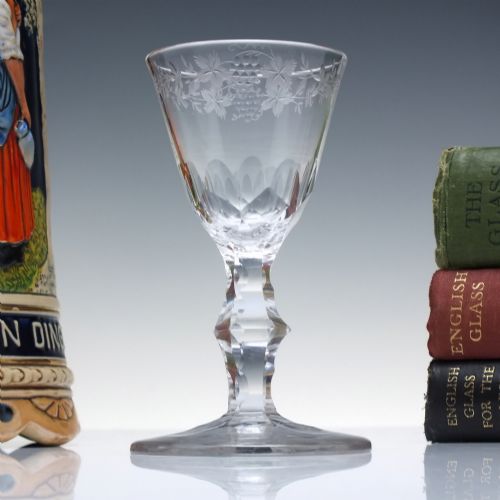
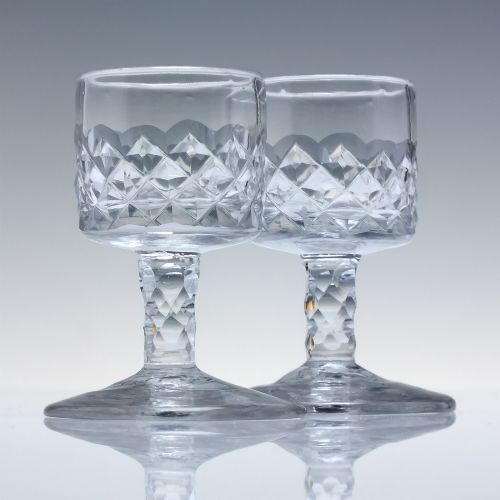
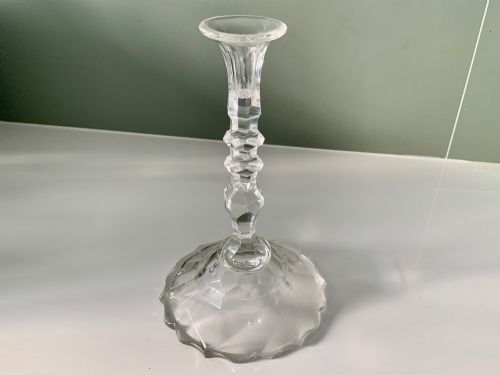
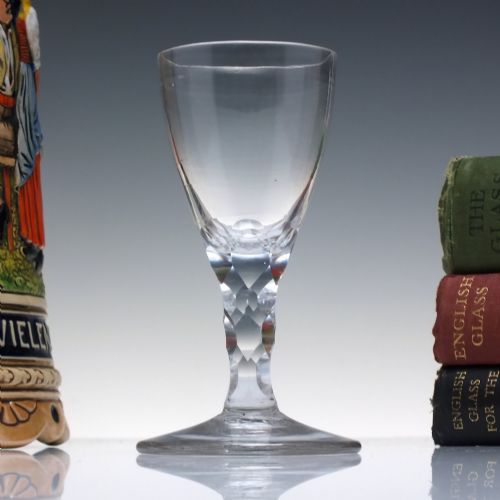
Georgian facet cut stemware comprises drinking vessels shaped during the eighteenth century and the Regency period, featuring stems worked with flat polished planes. Buyers seeking this category encounter glassware designed for wine, port, sherry, cordials, and ale.
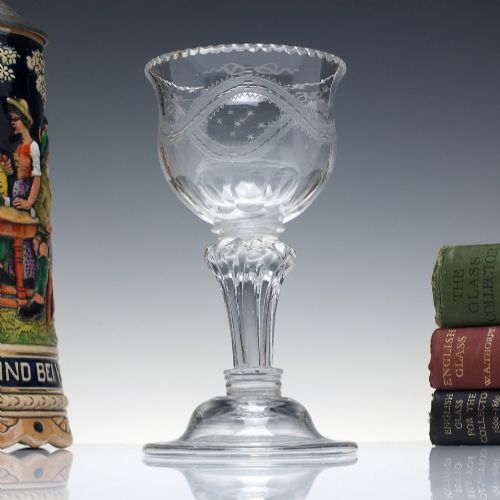
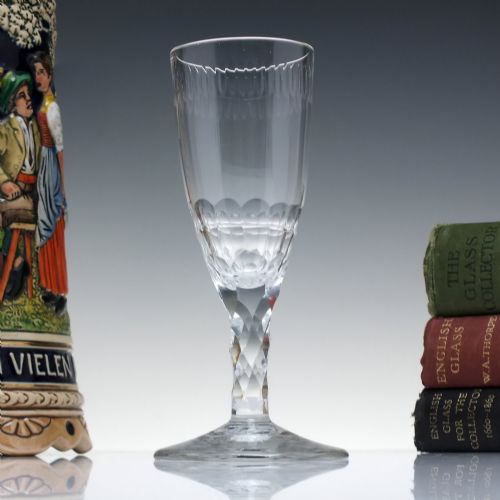
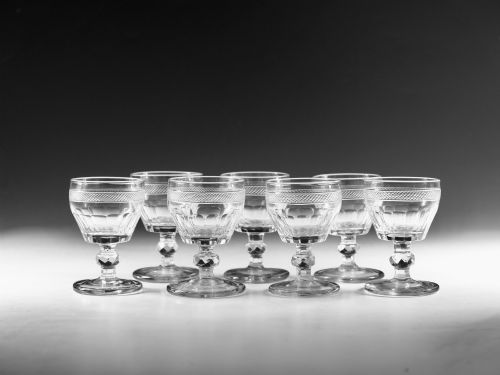
The objects on this page span the eighteenth century and the Regency era, taking forms such as wine glasses, port glasses, ale flutes, cordials, goblets, and drinking glasses. Most examples utilise clear lead glass or lead crystal, occasionally enriched with gilding or engraving.
Vessels most commonly met here include English and Irish pieces with wide foot bases and decorated bowls above the signature cut stems. Dates across the items stretch from the seventeen-seventies through to approximately eighteen-twenty.
How they were made
These glasses are formed from lead glass and lead crystal, molten materials that allowed glassmakers to achieve heavy clarity and sharp structural lines. Artisans shaped the bowls and applied wide foot bases before cutting precise facets into the stems.
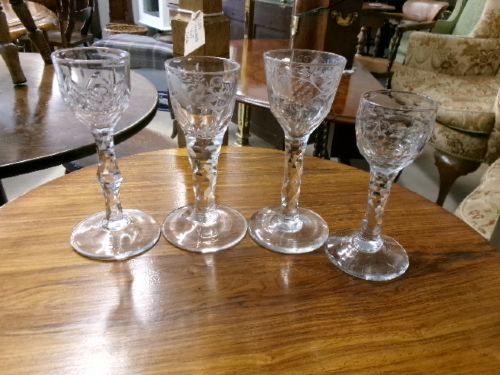
Decoration on these pieces often involves wheel engraving, depicting motifs such as hops and barley, alongside delicate gold leaf application associated with workshops like that of James Giles. The facet cutting requires skilled hand work to ensure uniform reflective surfaces down the stem.
Georgian Facet Cut Stemware Retail Price Guide 2026
Typical asking prices for georgian facet cut stemware among the pieces listed under this phrase on Sellingantiques today, from the lower quarter to the upper quarter. They describe what is for sale here now, not the wider market.
Some eighteenth-century drinkers raised facet cut glasses adorned with secret symbols, drinking to political loyalties across the table.
What varies in quality
Quality in these drinking vessels rests upon the crispness of the facet cutting along the stem and the proportion between the bowl, stem, and wide foot base. Finer examples display clean geometric lines that catch the light directly, contrasting with softer or more rounded facet work.
The presence of specialised decoration, such as specific hop and barley engravings or contemporary gilding, elevates certain pieces above standard drinking glasses. The clarity of the lead glass itself also distinguishes finer eighteenth-century specimens from later nineteenth-century production.
The Georgian Facet Cut Stemware Glossary
- Facet cut stem
- A stem shaped by grinding flat planes into the glass surface, creating distinct edges that reflect light. This technique defines the visual and tactile character of the glassware.
- Lead crystal
- A heavy, clear glass containing lead oxide, which increases brilliance and makes the material softer for cutting. It forms the primary body of these drinking vessels.
- Ale flute
- A tall, slender glass designed for serving ale, often featuring an engraved bowl above a faceted stem. These pieces suit formal eighteenth-century dining.
- Wide foot base
- The broad circular foundation at the bottom of the glass, providing stability for the heavy stem and bowl above. Many Georgian examples feature polished pontil marks underneath.
- James Giles
- An independent decorator of porcelain and glass in eighteenth-century London, known for applying gilding and enamelling to fine wares. His work represents high craftsmanship of the period.
Georgian Facet Cut Stemware: Frequently Asked Questions
What is georgian facet cut stemware?
Georgian facet cut stemware consists of drinking glasses made during the eighteenth century and the Regency period with geometric, polished facets ground into their stems. These pieces include wine glasses, port glasses, cordials, and goblets formed from clear lead glass.
They combine practical drinking forms with decorative cutting that maximises the sparkle of the crystal under candlelight or natural daylight.
How do I date these glasses?
Dating relies on examining the form of the bowl, the style of the facet cutting on the stem, and the characteristics of the metal itself. Eighteenth-century pieces often display specific foot profiles and hand-finished pontil marks on the underside.
Comparing engraved motifs, such as hop and barley designs, alongside documented periods like the Regency era helps narrow down the decade of manufacture.
How were these glasses used originally?
These vessels served various alcoholic beverages at the dining table, with specific shapes designated for wine, port, sherry, ale, or cordials. The smaller cordials and port glasses held potent liquors, while taller flutes accommodated malt beverages.
Their heavy lead crystal construction made them durable enough for regular dining use while their cut stems offered a secure grip.
Are these glasses safe to use?
While these are historical objects made of lead glass, many collectors occasionally use them for special toasts or careful dining. Hand washing in lukewarm water with mild soap is essential to protect the fragile glass and any historic gilding.
Sudden temperature changes should be avoided to prevent thermal shock to the eighteenth-century metal.
What makes James Giles glass special?
James Giles operated as an independent decorator in London who embellished fine glass and porcelain with rich gilding and painting. Pieces associated with his workshop display superior artistic enhancement above standard commercial output of the era.
His decorated facet cut stemware commands attention for its refined surface enrichment.