

Clear Cut Glass Glasses
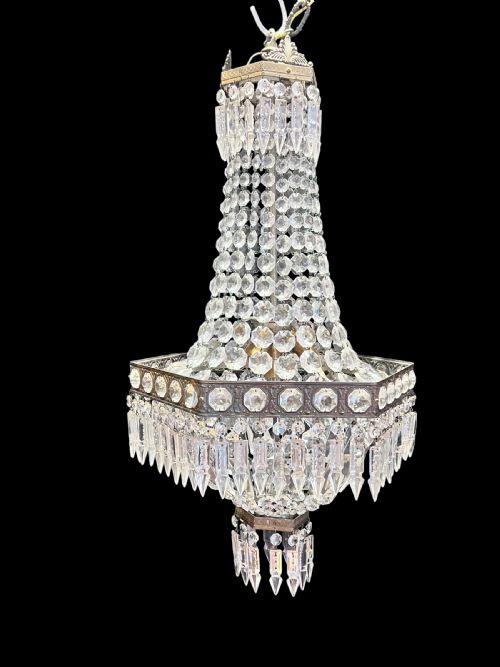
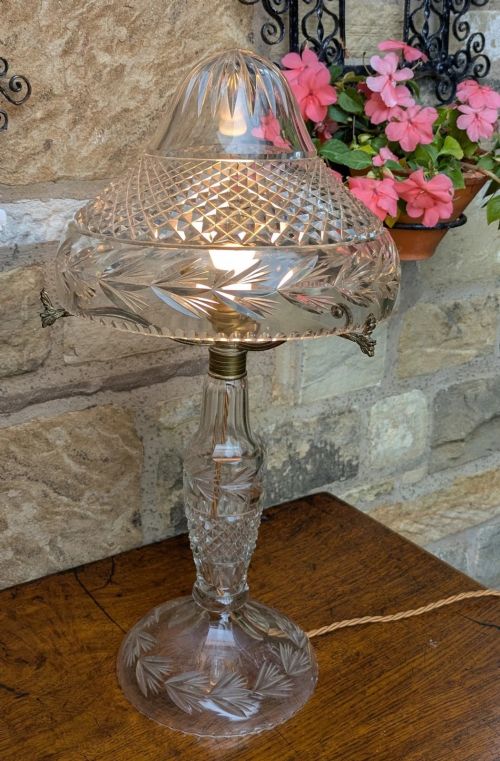
Clear cut glass glasses bring brilliant sparkle to a table, offering historic drinkware and lighting fashioned from lead crystal and glass.
Clear Cut Glass Glasses
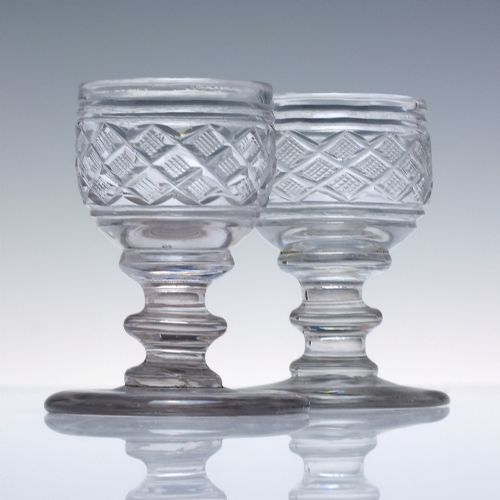
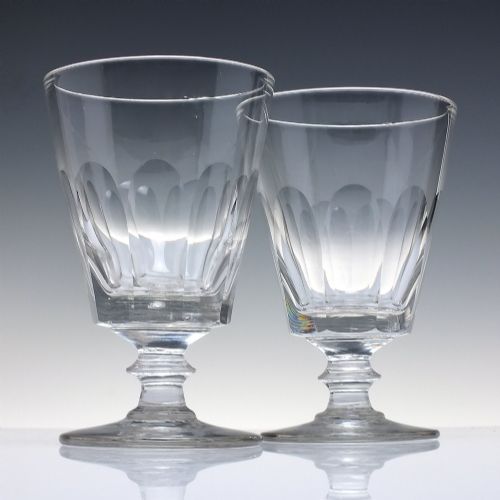
When you search for clear cut glass glasses, you encounter a diverse range of objects spanning the Georgian, Victorian, Edwardian and Art Deco periods. These pieces include drinking vessels such as whiskey dram glasses, rummers, sherried flutes, champagne bowls and tumblers alongside larger table accessories.
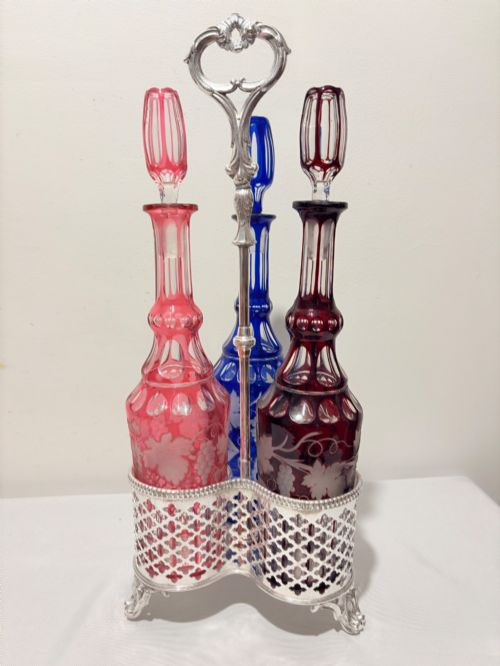
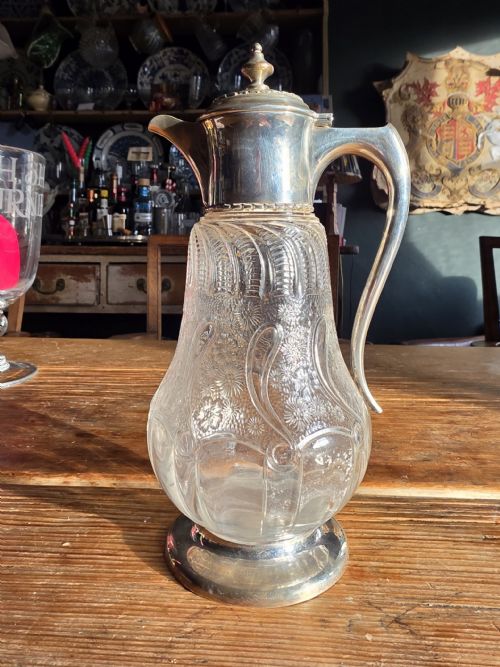
The selection on this page leans heavily toward nineteenth-century and early twentieth-century British and continental European examples. You will frequently find matching sets of drinking glasses, decanters and jugs designed for formal dining and entertaining.
How they were made
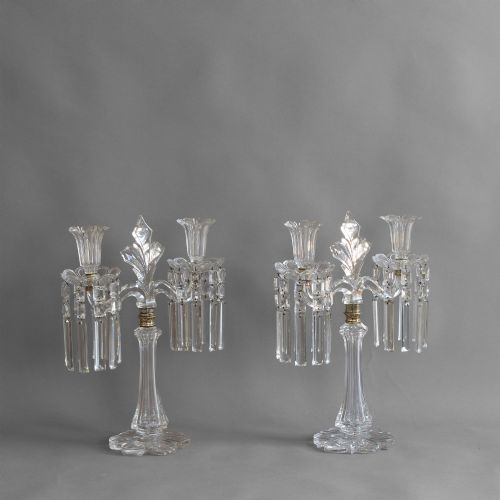
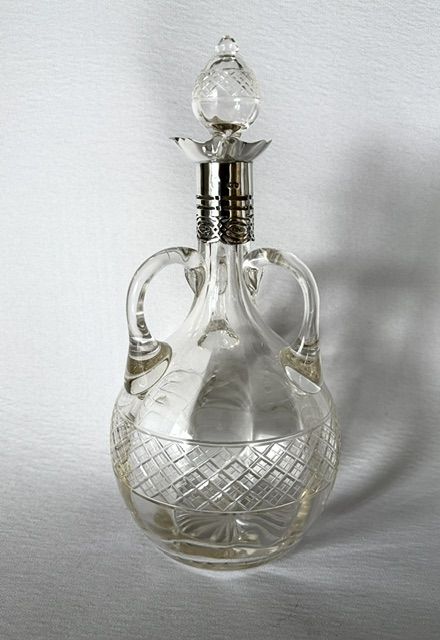
Maker's workshops utilised lead crystal and clear glass, shaping molten material by hand before applying precise wheel-cut geometric patterns. Many items incorporate mounts, stands or decorative details fashioned from sterling silver, silver plate, brass and gilt bronze.
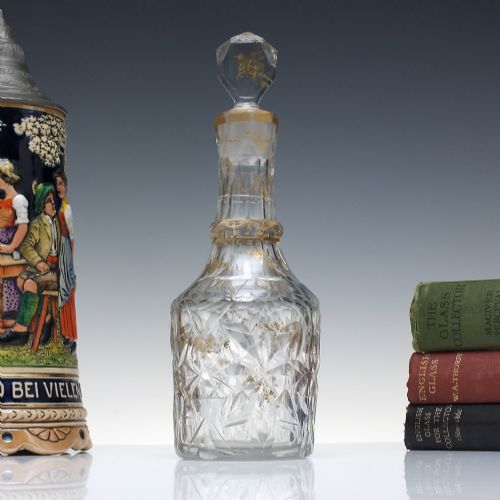
Techniques evolved from Georgian pillar and prism cutting to Victorian thumb-cuts and Edwardian hand-cut crystal. Artisans combined deep facets with engraved details and gilding on select decorative goblets and decanters.
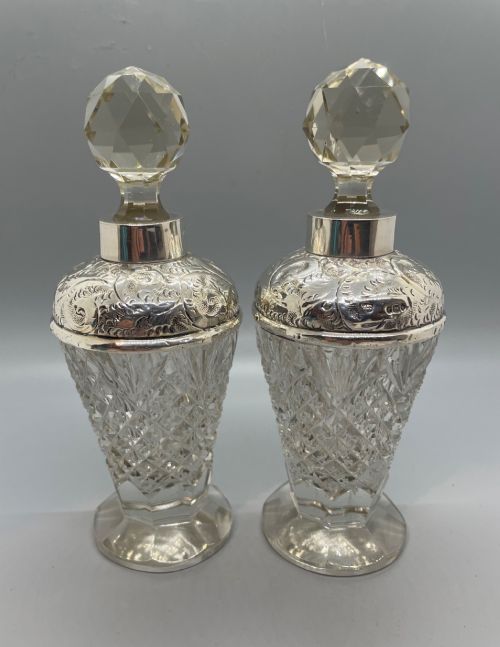
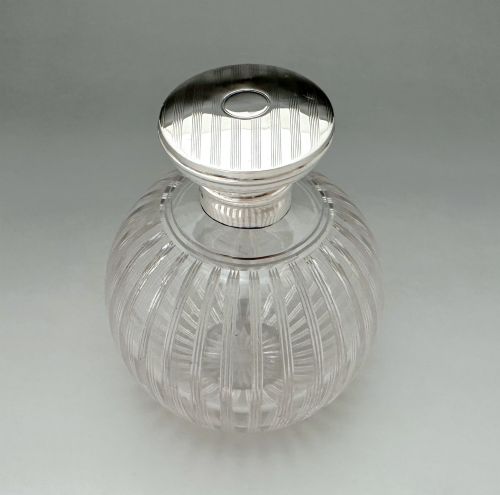
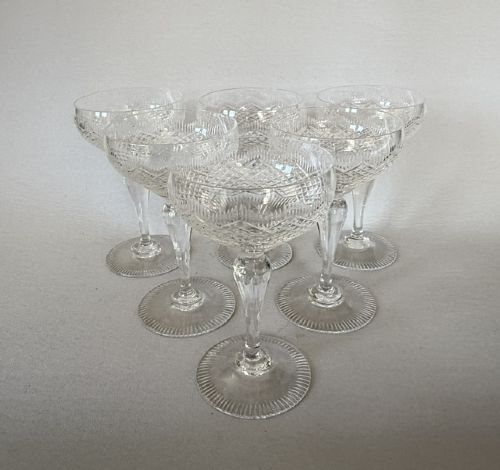
A massive Bohemian Jewish ceremonial engraved glass beaker from the mid-nineteenth century sits alongside delicate champagne bowls and pocket perfume bottles.
What varies in quality
Quality depends upon the clarity and weight of the crystal material, alongside the crispness and depth of the wheel-cut facets. Pieces with sharp, well-defined geometric cuts refract light more brilliantly than softer, shallower incisions.
The integrity of silver mounts and the uniformity of matched sets also influence the standing of an item. Superior pieces maintain balanced proportions and pristine rims without excessive wear from historic use.
James Giles·Stevens and Williams·Baccarat·Moser·Webb
The Clear Cut Glass Glasses Glossary
- Rummer
- A large, heavy drinking glass popular in the eighteenth and nineteenth centuries, typically used for ale, beer or wine. They often feature sturdy stems and cut bases.
- Lead crystal
- A type of glass containing metallic lead oxide, which increases the weight, refractive index and clarity of the material. This composition permits sharper, more brilliant cutting.
- Pillar cut
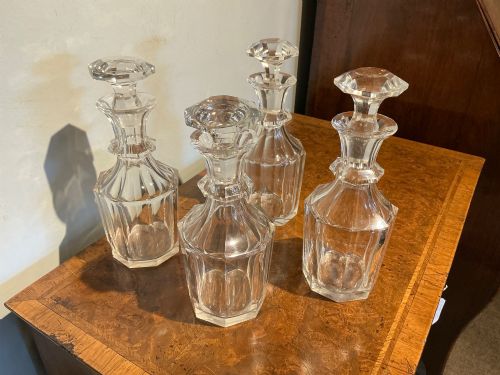
- A decorative cutting technique featuring broad, vertical flutes or pillars carved into the body of a vessel. It creates strong optical effects in Georgian decanters and jugs.
- Thumb-cut
- A shallow, rounded concave facet resembling the impression of a thumb, applied in rows around glassware. This pattern provides both decorative texture and a secure grip.
- Intaglio
- A technique where the design is engraved beneath the surface of the glass rather than raised in relief. It produces a smooth exterior with sunken decorative motifs.
Clear Cut Glass Glasses: Frequently Asked Questions
How do I date old cut glass glasses?
Dating relies on examining the pontil mark at the base, the style of the cutting, and the form of the vessel. Georgian pieces often display polished pontils and heavier lead content, while Edwardian and Art Deco items show more standardised machine or acid finishing alongside distinct stylistic motifs.
Comparing the rim thickness and the sharpness of the facets helps distinguish eighteenth-century work from later Victorian and twentieth-century productions.
Can I use antique cut glass for daily dining?
Many people enjoy using historic glassware for special occasions, provided it receives careful handling. Sturdy rummers and heavy tumblers withstand gentle use, though fragile stems and gilded rims require extra caution.
Hand washing in lukewarm water with mild detergent is essential, as modern dishwashers can cloud the historic glass and damage delicate silver mounts.
What is the difference between glass and lead crystal?
Lead crystal contains a significant percentage of lead oxide, which makes the material heavier, softer to cut, and gives it a higher refractive index. This higher refraction creates the characteristic rainbow sparkle seen in quality cut pieces.
Standard glass lacks this metallic oxide content, resulting in a lighter weight and less pronounced brilliance when faceted.
How should I clean cloudy antique decanters?
Cloudiness inside decanters typically results from mineral deposits or historic wine residue etching the interior surface. Gentle soaking with warm water and specialised cleaning beads often helps lift stubborn film without scratching.
Harsh chemical abrasives should be avoided to protect the internal glass structure and any delicate cut patterns on the exterior.