
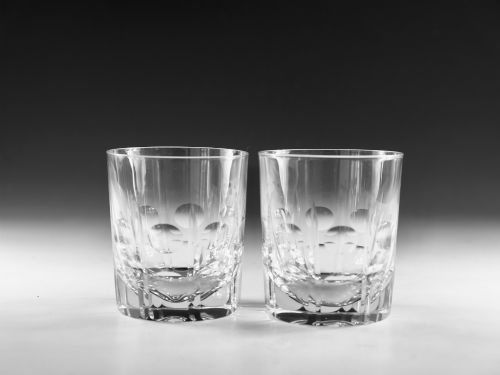
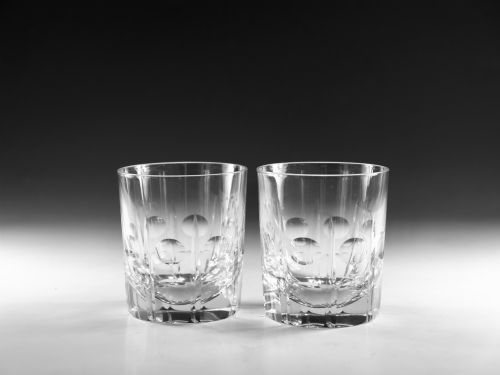
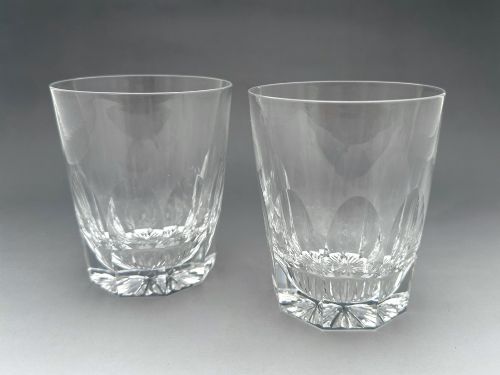
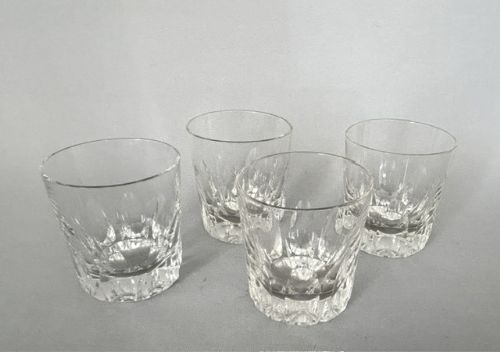
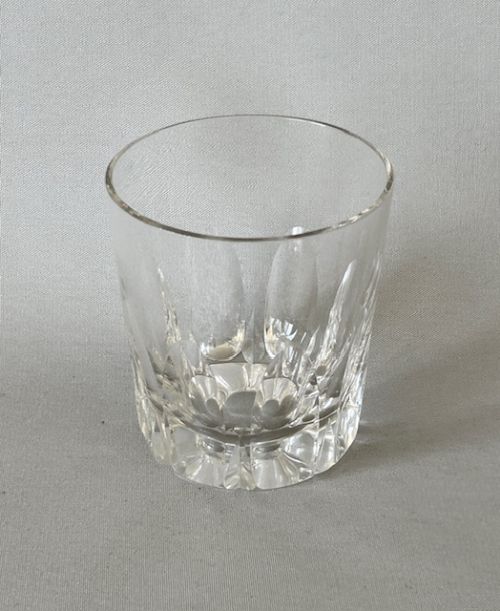


Cut Glass Rocks Glasses
These cut glass rocks glasses bring heft and brilliance to the table, offering tactile weight and historic charm for anyone pouring a dram.
Cut Glass Rocks Glasses
When you search for cut glass rocks glasses, you are looking at substantial drinking vessels designed for spirits. These pieces span the Victorian and Edwardian eras up to the early twentieth century.
The most common forms on this page are whisky tumblers, often found in pairs or small sets. You will also encounter related glassware service items and intaglio engraved drinking glasses.
Originating predominantly from English makers, these vessels range from modest Victorian tumblers to heavy Edwardian crystal drinking sets.
How they were made
Makers shaped lead crystal and heavy glass through traditional hot-forming techniques before applying deep mechanical or wheel cutting. This process created the refractive facets characteristic of the period.
Selected pieces incorporate sterling silver mounts or wrought iron elements, combining glasswork with metalworking to form swing handles or structural supports.
Listings span the Victorian and Edwardian periods, utilising cut glass, lead crystal, sterling silver, and wrought iron.
What varies in quality
The standard of cutting dictates the visual depth of each vessel, separating sharp, crisply defined facets from softer, shallower impressions. Weight and clarity of the lead crystal further distinguish the heavier service pieces from lighter examples.
The integration of secondary materials, such as hallmarked silver mounts by makers like William Comyns, adds structural and historical complexity that elevates certain items above standard glassware.
William Comyns·Webb Corbett·La Maison Bagues
The Cut Glass Rocks Glasses Glossary
- Tumbler
- A flat-bottomed drinking glass without a stem or handle. These vessels rely on their sheer weight and thick base to remain stable on the surface.
- Intaglio
- A design carved into the surface of the glass rather than standing out in relief. This technique creates a sunken image that catches the light from within.
- Lead Crystal
- Glass containing a high proportion of lead oxide, which increases brilliance and density. This material allows for deeper and sharper facet cutting.
- Rock Crystal
- A term historically applied to high-clarity colourless quartz, later used by makers to describe exceptionally clear lead glass. It denotes superior transparency in antique drinking vessels.
Cut Glass Rocks Glasses: Frequently Asked Questions
Are these glasses safe for daily use?
These antique vessels are durable enough for gentle everyday handling, though hand washing is necessary to protect the lead crystal and any silver mounts.
Avoid thermal shock by keeping them away from extreme temperature changes, such as boiling water or freezing environments.
How do I date an old whisky tumbler?
Dating relies on stylistic clues, pontil marks on the base, and the depth of the glass cutting. Victorian examples often show softer wear and smaller proportions.
Edwardian and early twentieth-century pieces tend to feature heavier lead crystal and sharper, more geometric facet patterns.
What is intaglio engraving?
Intaglio engraving involves grinding a design directly into the glass surface using small rotating wheels. This creates recessed motifs that appear frosted or three-dimensional.
It requires considerable skill from the artisan to maintain even pressure across curved drinking vessels.
Why are some tumblers sold in pairs?
Many historical drinking glasses survived as matched pairs or small sets because they were acquired and stored together for formal dining.
Finding a matched set from the nineteenth century is uncommon, which makes pairs particularly desirable for collectors.