


Crystal Whisky Tumblers
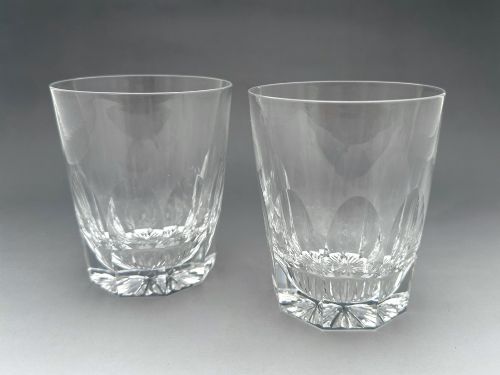
Crystal whisky tumblers are heavy drinking vessels designed to hold spirits, prized for their brilliant refraction and satisfying weight in the hand.
Crystal Whisky Tumblers
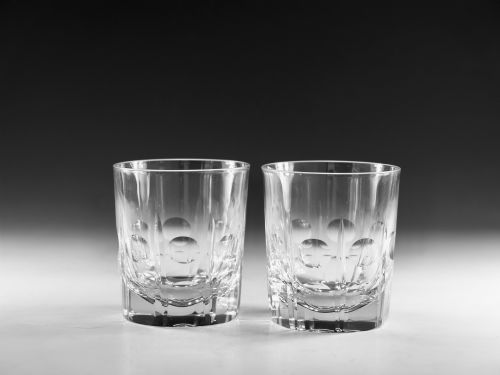
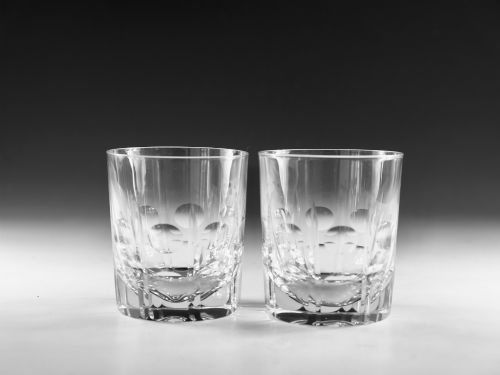
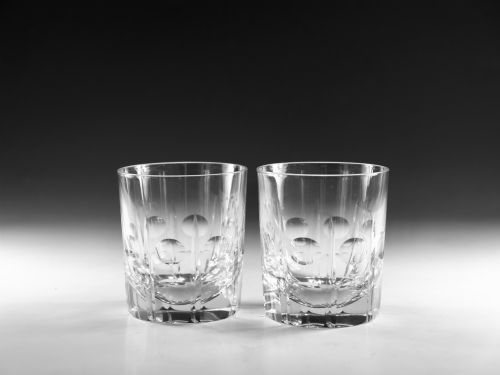
When you search for crystal whisky tumblers, you are looking at sturdy drinking vessels designed for spirits, encompassing heavy bases and straight or slightly tapered sides. The examples found here span multiple periods, from Georgian and Victorian eras through to the Edwardian period and Art Deco designs.
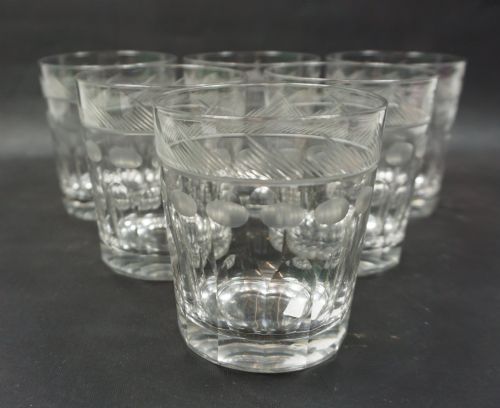
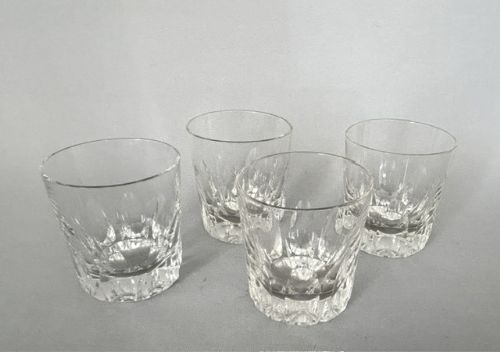
You are most likely to meet pairs or small sets of English glass, often featuring traditional cut patterns that catch the light. The forms include both modest daily vessels and larger, heavily cut presentation pieces originating from the nineteenth and early twentieth centuries.
How they were made
These items are shaped from lead crystal, lead glass, and standard glass, utilising traditional blowing and heavy cutting techniques. The characteristic weight and clarity derive from the lead content within the material.
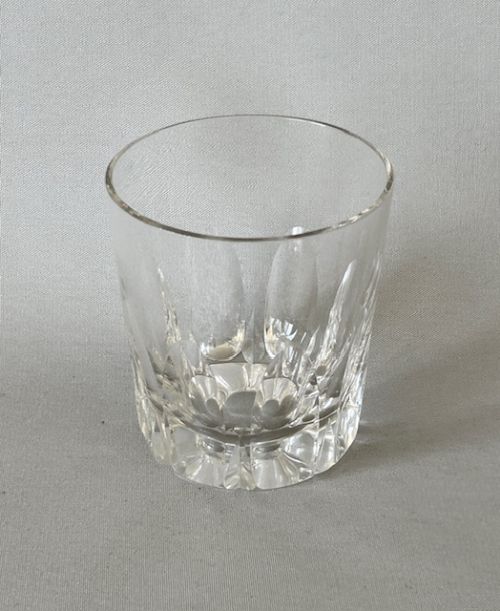
Decoration is achieved through wheel-cutting, where deep facets or blaze cuts are carved directly into the surface. Select pieces from the Art Deco period incorporate hand enamelling applied to the lead crystal surface.
The listings here span the Victorian, Edwardian, and Art Deco periods, predominantly utilising lead crystal and cut glass.
What varies in quality
The standard of these vessels is determined by the crispness of the cutting and the weight of the metal itself. Finer items exhibit deeply carved facets with sharp, clean edges that enhance light refraction.
Completeness of a set strongly influences the standing of a group, as matched pairs and larger groupings hold greater utility. The purity of the glass and the absence of cloudiness in the material further distinguish superior examples.
Karl Palda
The Crystal Whisky Tumblers Glossary
- Lead crystal
- Glass containing a significant lead oxide component, increasing both weight and optical brilliance. This material allows for deeper and sharper cutting without fracturing.
- Blaze cut
- A specific linear cutting style featuring broad, shallow facets that create sweeping flashes of light. It is frequently encountered on Georgian and Regency pieces.
- Decanter set
- A matched grouping comprising a serving vessel alongside a number of matching tumblers. These sets were designed for formal entertaining and spirit storage.
- Hand enamelled
- Decorated using fired vitreous enamels applied manually to the glass surface. This technique adds colour and opaque detail, often seen on continental pieces.
Crystal Whisky Tumblers: Frequently Asked Questions
How do I use crystal whisky tumblers?
These vessels are designed primarily for serving neat spirits or drinks with ice, offering a comfortable and substantial grip.
Their heavy bases provide stability, making them suitable for everyday use as well as formal gatherings.
How do I tell Victorian tumblers apart from Edwardian ones?
Victorian examples often display denser, intricate cutting patterns across smaller forms, reflecting the decorative tastes of the nineteenth century.
Edwardian pieces tend toward heavier construction and broader geometric facets characteristic of the early twentieth century.
Are these glasses safe for modern dishwashers?
Historic lead crystal benefits from careful hand washing in warm, soapy water to preserve the surface polish and prevent clouding.
Harsh detergents and high temperatures in modern appliances can etch the soft glass over time.
What defines a Georgian tumbler?
Georgian and Regency vessels typically feature simple, robust forms with hand-cut facets that display minor irregularities from early production methods.
They carry a distinct heft and tactile quality that separates them from later machine-pressed glassware.