
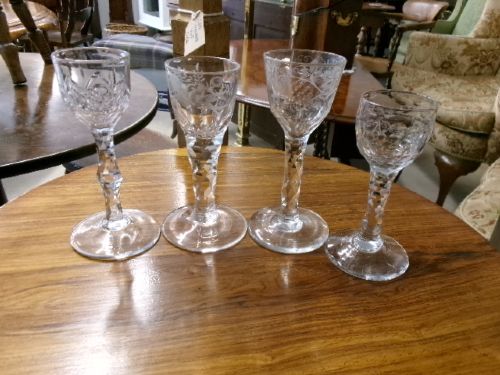
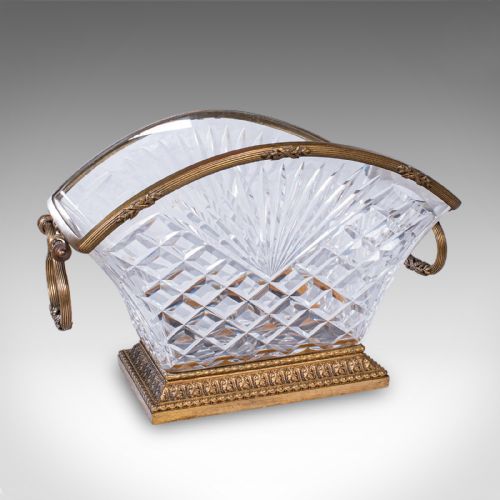
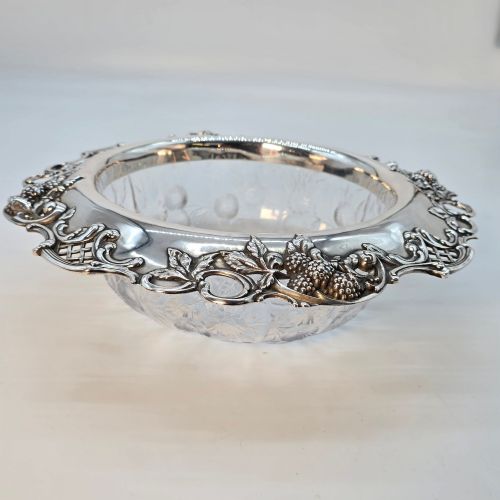
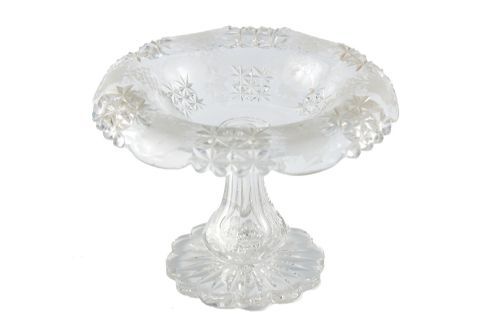
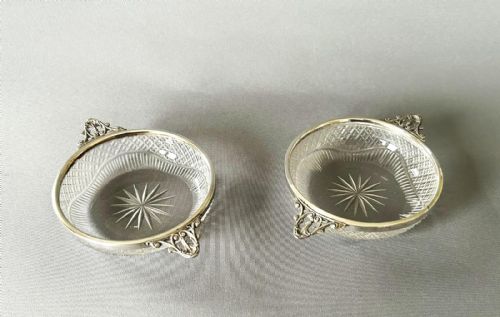


Clear Cut Crystal Bowl
When you handle a clear cut crystal bowl, you hold weight, precision cutting and brilliance forged across the Georgian, Victorian and Edwardian eras.
Clear Cut Crystal Bowl
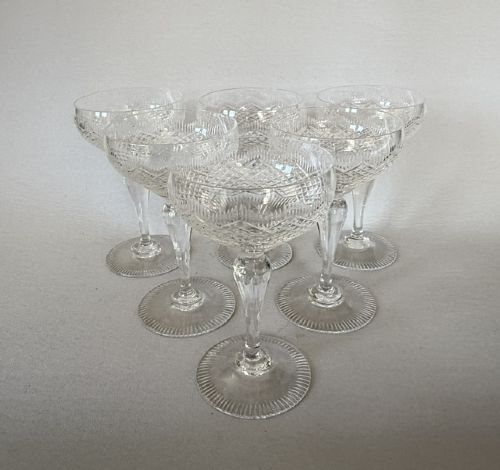
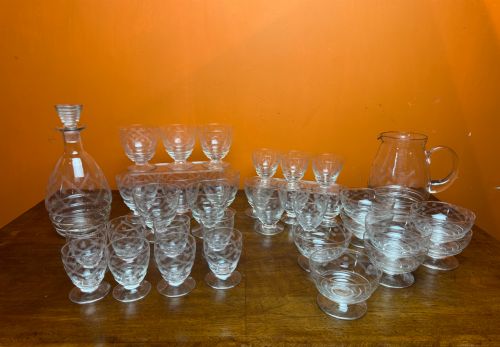
A clear cut crystal bowl brings heavy light-catching facets and traditional vessel forms into daily domestic spaces. You encounter heavy fruit dishes, tea mixing vessels, pedestal comports and table centrepieces.
The pieces span Georgian Irish standing bowls, Victorian pedestal designs and Edwardian table ware. Makers and workshops shaped these vessels from lead crystal and clear glass.
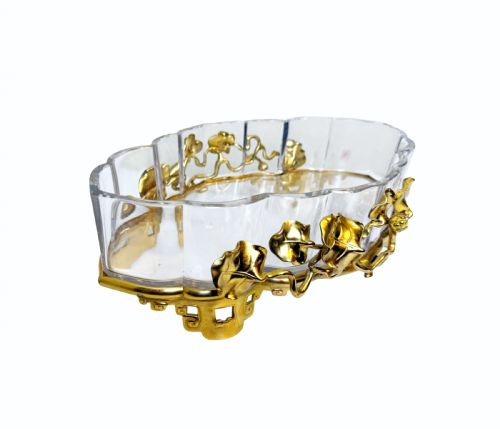
Many items incorporate mounts of brass, silver plate or gilt bronze alongside the primary glass body. Functional serving dishes sit alongside decorative centrepieces built for grand dining arrangements.
How they were made
Craftsmen shaped molten metal by hand-blowing glass into vessels before cooling them for cold-work decoration. Heavy lead crystal provided the dense material necessary for deep wheel-cutting.
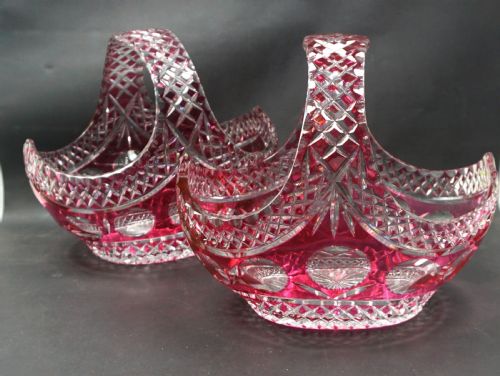
Artisans applied wheels to grind away sections of the surface, creating sharp geometric facets, hobnail patterns and Greek key motifs. Polishers then smoothed the cut paths to achieve absolute clarity in the glass.
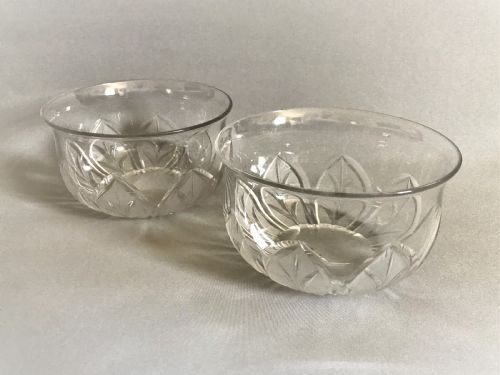
Some Victorian finger bowls doubled as miniature finger-baths where guests washed citrus-stained fingers between heavy courses.
What varies in quality
The depth and crispness of the wheel-cut facets dictate visual sharpness across the surface. Superior pieces maintain exact symmetry in their patterns and heavy weight from high lead content.
Mounts in silver plate, ormulu or gilt bronze show varying degrees of chased detail and secure attachment to the crystal body. Purity of the glass itself determines how light travels through the cut walls.
Tiffany and Co·Val St Lambert·Joseph Simon
The Clear Cut Crystal Bowl Glossary
- Hobnail
- A faceted diamond pattern cut into glass surfaces that resembles the hobnails found on heavy boots. It creates intense tactile texture and sparkle.
- Comport
- A large shallow bowl raised on a central stem and foot base, often used for serving fruit or sweets. These pieces dominate Victorian and Georgian dining tables.
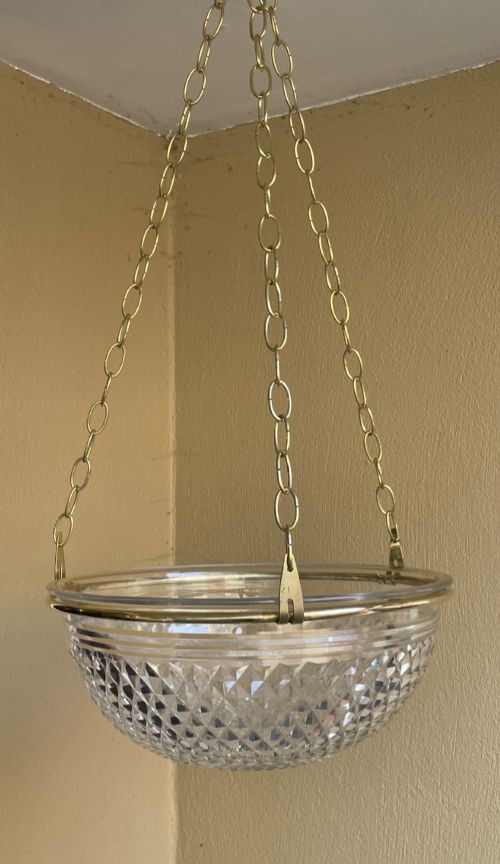
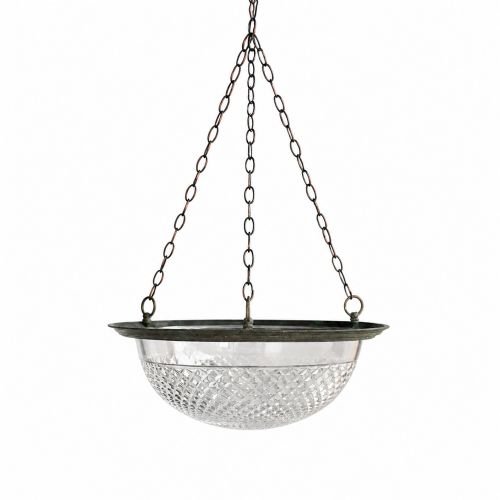
- Plafonnier
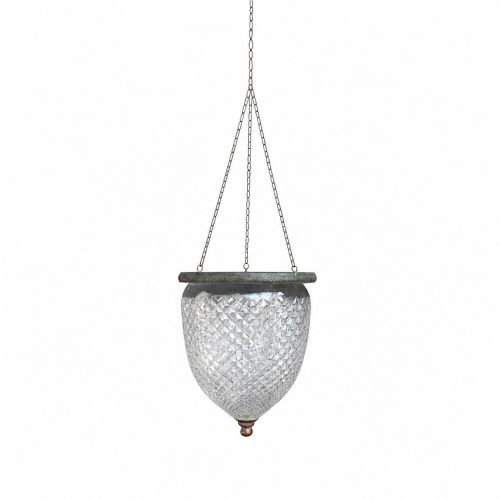
- A ceiling-mounted bowl light fixture held by metal framing or chains. They distribute diffused illumination through cut and frosted glass panels.
- Lead crystal
- Glass containing metal oxides that increase weight, refractive index and working time for deep cutting. It forms the heavy basis of fine antique bowls.
- Pedestal bowl
- A vessel elevated on a distinct foot and stem structure. This form lifts the cut glass body above the surface of the table.
Clear Cut Crystal Bowl: Frequently Asked Questions
How do I clean a cut crystal bowl safely?
Wash the vessel by hand using warm water and mild detergent without abrasive sponges. Place a towel at the bottom of the sink to protect the heavy base from sudden impacts during cleaning.
Dry the glass immediately with a lint-free cloth to prevent water spots from settling inside the deep facets. Avoid sudden temperature shifts between wash and rinse water to protect the historic glass.
Were these bowls used for fruit or dining?
Georgian and Victorian households utilised these large vessels for serving fruit, mixing tea leaves or holding finger bowls at the table. Their robust lead crystal construction suited active service during formal meals.
Over time, many transitioned into pure decorative centrepieces placed upon sideboards and dining tables. Their reflective surfaces were specifically designed to catch candlelight and gaslight during evening gatherings.
How can I tell a Georgian bowl from a Victorian one?
Georgian pieces often display hand-blown irregularities, polished pontil marks on the base and deep hand-cut facets. Irish Georgian glass frequently exhibits a slightly darker tone and heavy substantial weight.
Victorian examples introduced machine assistance, crisper geometric cutting and paired metal mounts in silver plate or ormolu. Etched Greek key motifs and botanical decorations also mark the later nineteenth-century output.
What causes the rainbow refraction in these bowls?
The high lead content within crystal glass increases its refractive index, bending light as it passes through the material. This chemical composition turns each cut facet into a miniature prism.
Precision wheel-cutting angles direct light beams across the room rather than letting them pass straight through. Older hand-cut surfaces disperse this light with distinct warmth compared to modern pressed glass.