




Antique Table Centre Bowl
An antique table centre bowl anchors a dining table with presence, bringing period glass, silver plate or porcelain into daily service.
Antique Table Centre Bowl
An antique table centre bowl serves as the focal point of a table setting, drawing the eye with decorative form and substantial presence. The pieces gathered here span periods from the Georgian era through Victorian and Edwardian times, alongside French and Italian examples.
The selection includes open bowls, footed baskets, jardinieres, tazzas and multi-tiered epergnes. Materials range from heavy cut glass and Baccarat crystal to silver plate, bronze, porcelain and carved wood.
How they were made
Cut glass and crystal bowls rely on deep wheel-cutting and polishing to catch the light, often paired with cast or silver-plated mounts. Ceramic and porcelain examples combine moulded figures, hand-painting and gilt highlights, frequently incorporating continental porcelain groups or cherub motifs.
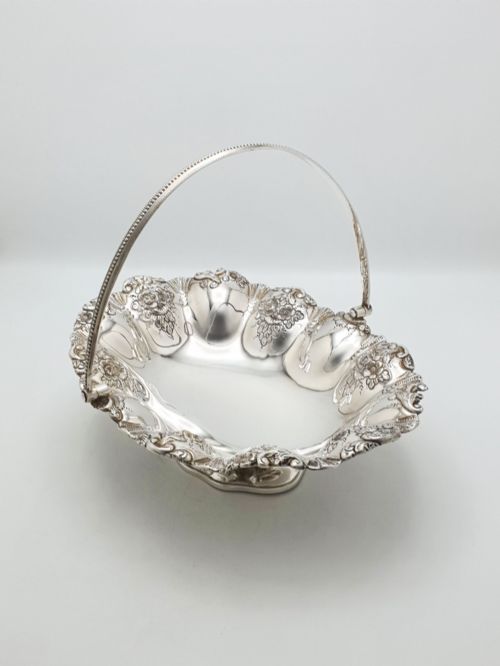
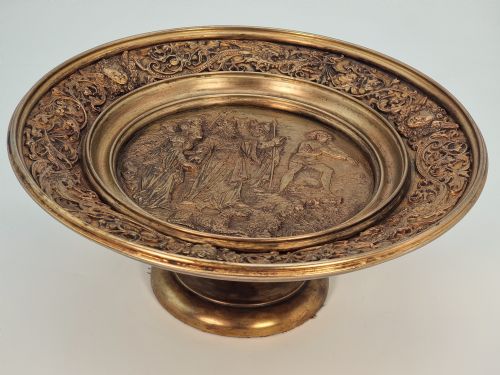
Metal pieces utilise techniques such as silver plating on copper, repoussé work for raised floral rims, and bronze casting. Carved wood examples employ detailed hand-carving, particularly seen in Black Forest works paired with glass inserts.
Several Victorian pieces feature carved wooden Black Forest animals watching over delicate crystal bowls.
What varies in quality
Quality rests on the crispness of the manufacture, whether through the depth of glass cutting, the sharpness of repoussé metalwork or the definition in carved wood and bronze casting. Heavier gauge metals and thicker crystal indicate superior substance.
The integration of materials dictates distinction, as seen where silver-plated frames hold heavy cut glass or crystal vessels securely without wobble. Finer pieces demonstrate balance in proportion between the decorative base or stand and the bowl above.
Joseph Rodgers·Royal Dux
The Antique Table Centre Bowl Glossary
- Centrepiece
- A large decorative object placed in the middle of a dining table. These range from simple bowls to elaborate epergnes.
- Epergne
- A tiered ornamental centrepiece featuring a central basket or bowl surrounded by smaller hanging baskets or arms. They often combine cut glass with silver plate.
- Jardiniere
- An ornamental pot or bowl designed to hold plants or flowers. Examples appear in bronze, pottery and ceramic formats.
- Repoussé
- A metalworking technique where the metal is hammered from the reverse side to form a raised design in relief. This creates textured floral rims on silver-plated baskets.
- Tazza
- A shallow bowl or saucer raised on a stem and foot, used for display. They feature in aesthetic movement and classical table settings.
Antique Table Centre Bowl: Frequently Asked Questions
What is an antique table centre bowl used for?
These bowls served as the decorative focal point of formal dining tables, often holding fruit, flowers or sweetmeats during a meal.
Today, they function as standalone display pieces on sideboards or dining tables, continuing their traditional role in interior arrangement.
How do I care for cut glass and silver plate?
Cut glass requires gentle hand washing in warm soapy water to preserve the clarity and avoid thermal shock. Silver plate benefits from occasional cleaning with a non-abrasive polish designed for plated wares to maintain the finish.
Harsh detergents and dishwashers should be avoided entirely to protect both the metal surfaces and the delicate glass structures.
How can I tell a Victorian piece from an Edwardian one?
Victorian examples often feature heavier ornamentation, deep cranberry glass, or ornate repoussé work reflecting nineteenth-century taste. Edwardian pieces tend to display lighter proportions, refined silver plating, and cleaner decorative lines.
Examining the marks, mount construction and glass thickness provides further guidance on the manufacturing period.
What materials are most common in these bowls?
The listings show a prevalence of cut glass and silver plate, alongside porcelain, bronze and carved wood. Many pieces combine two materials, such as crystal bowls set into silver-plated frames or bronze mounts.
Specialist items may incorporate Baccarat crystal, old Sheffield plate or hand-carved Black Forest wood.