
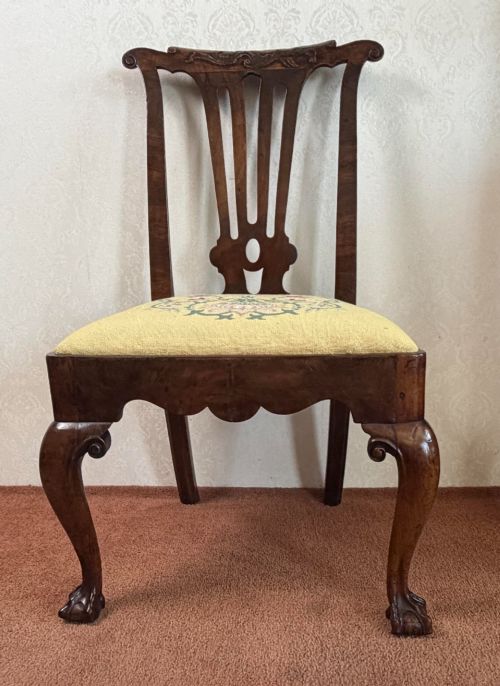


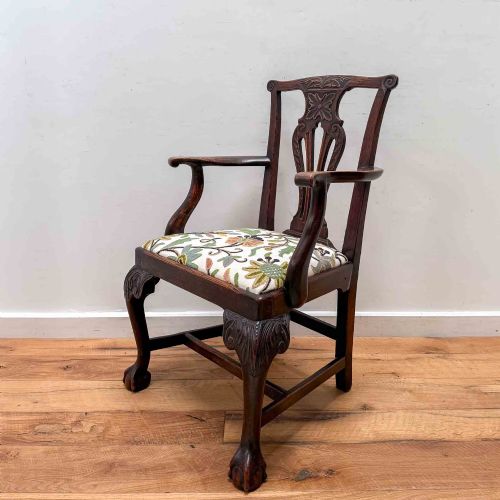


Claw Foot Accent Chair
A claw foot accent chair brings grounded presence to a room, offering carved wooden support resting on animal or talon paws.
Claw Foot Accent Chair
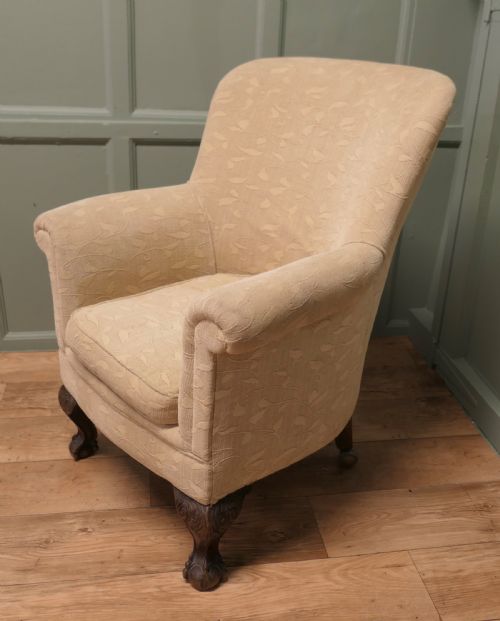
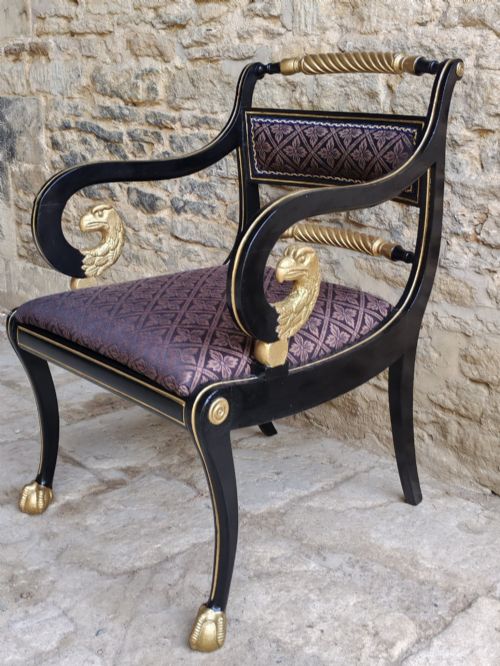
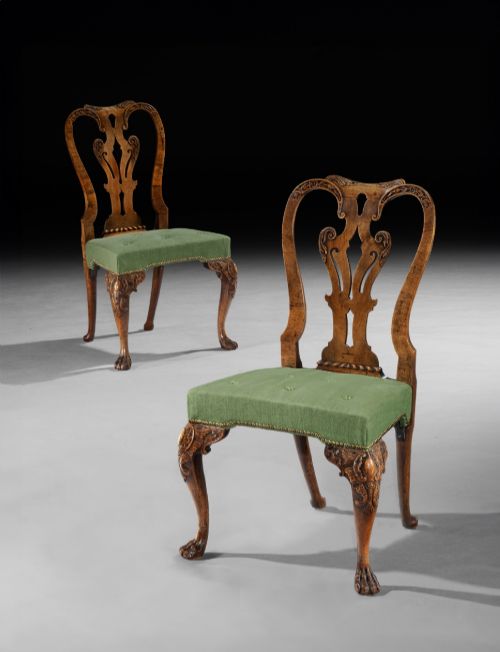
A claw foot accent chair is a seating piece defined by its distinct carved feet, drawing on centuries of cabinet-making traditions from various periods. You will encounter forms ranging from heavy Victorian barrel backs and library armchairs to delicate George II walnut side chairs.
The selections span numerous historic eras, notably the eighteenth century, Victorian period, and early twentieth-century revivals. Side chairs, armchairs, and occasional tub chairs make up the physical forms available to the buyer.
Makers historically employed regional idioms, producing English walnut designs, Italian Rococo pieces, Dutch Baroque chairs, and Swedish Neoclassical mahogany seating. Each variant brings distinct regional carving characteristics and upholstery choices to the interior space.
Materials and construction
Carpenters constructed these frames primarily using solid hardwoods such as walnut, mahogany, and oak, often carving intricate details directly into the timber. Walnut and mahogany provided the dense, stable foundation necessary for elaborate cabriole legs and detailed paw terminals.
Upholstered elements incorporate traditional textiles, ranging from crewel work and heavy fabric to velvet and textile seat inserts like drop-in pads. Metal components occasionally appear in cast brass details or supportive structural fittings.
Current listings incorporate timber framing in walnut, mahogany, oak, and hardwood, paired with velvet, fabric, and brass elements.
Assessing craftsmanship and execution
Quality rests primarily in the depth, crispness, and anatomical accuracy of the carved wooden feet and legs. Superior examples display fluid lines and confident carving that integrates harmoniously with the structural frame.
The integrity of the timber selection and the precision of the joinery distinguish finer workshop output from simpler utilitarian seating. Well-preserved frames maintain structural rigidity and balanced proportions across arms, backrests, and stretchers.
The Claw Foot Accent Chair Glossary
- Cabriole leg
- A furniture leg that bends outward in a convex curve and tapers inward to a concave curve, ending in a foot. This form mimics animal limbs and appears frequently on eighteenth-century seating.
- Drop-in seat
- A removable upholstered frame that fits into a recess in the chair seat rails. It allows for straightforward reupholstery without dismantling the main wooden structure.
- Crewel work
- Embroidery executed in wool yarn using various stitches on a plain-woven foundation fabric. It provides a tactile, patterned surface on historic chair seats.
- Tub chair
- An armchair featuring a rounded, enclosed back that curves continuously into low arms. This configuration creates a sheltered, enveloping seat.
- Wing back
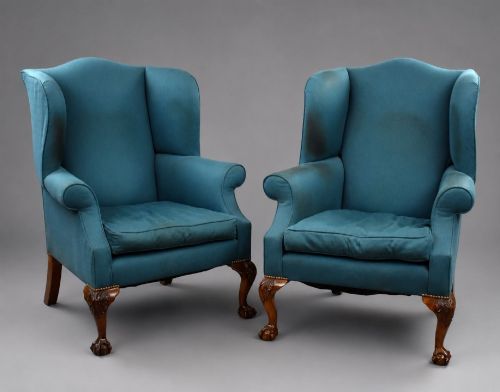
- An armchair with side panels or wings attached to the back frame, historically designed to shield the occupant from drafts. These chairs often feature prominent upholstered bodies raised on carved legs.
Claw Foot Accent Chair: Frequently Asked Questions
What periods do these chairs represent?
The listings span from the eighteenth century through the Victorian era up to early twentieth-century revivals. Pieces range from genuine Georgian and Regency eras to later interpretations inspired by earlier styles.
Cabinet-makers across these periods reinterpreted classical motifs, adapting leg styles and frame proportions to suit contemporary domestic tastes.
How do I identify different regional styles?
Regional variations show in the timber choice, carving depth, and overall silhouette. English walnut pieces often display restrained elegance, whereas Italian or Dutch examples from the eighteenth century exhibit more exuberant carving.
Examining the structural framing and secondary woods helps confirm the likely geographic origin of the piece.
Were these chairs used for dining or lounging?
The selection includes multiple seating types intended for different domestic functions. Side chairs served around dining tables or against walls, while library armchairs and barrel backs offered comfort for reading and relaxation.
Occasional tub chairs and corner armchairs provided flexible seating options for drawing rooms and studies.
What wood types are most common?
Walnut and mahogany dominate the higher-end historical seating, offering dense grains suitable for intricate carving. Oak also appears in earlier or more robust vernacular frames.
Secondary timbers within the frame construction typically reflect local availability during the period of manufacture.