


Classical Urn Planters
Classical urn planters bring formal garden design into the landscape through enduring bronze, cast iron, terracotta and stone forms.
Classical Urn Planters
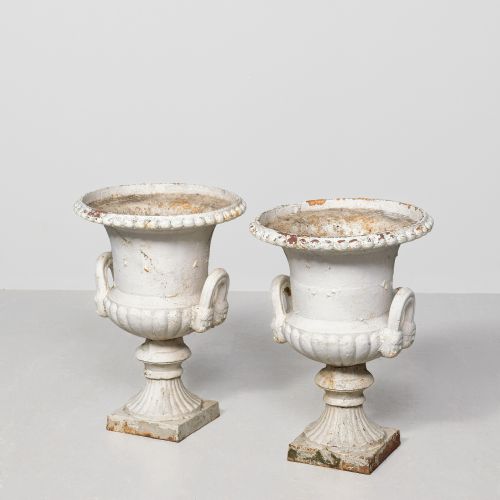
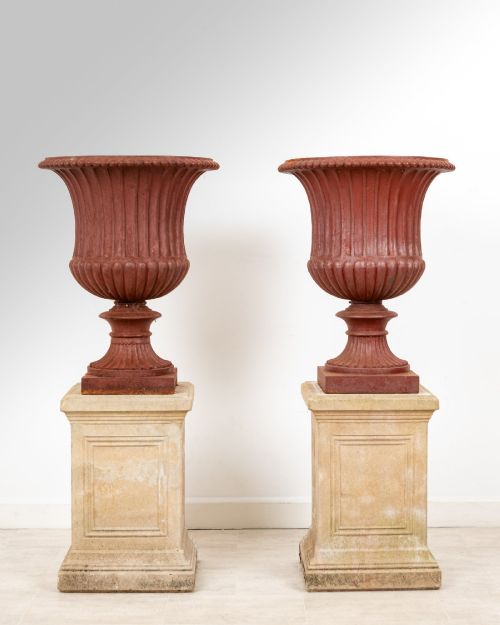
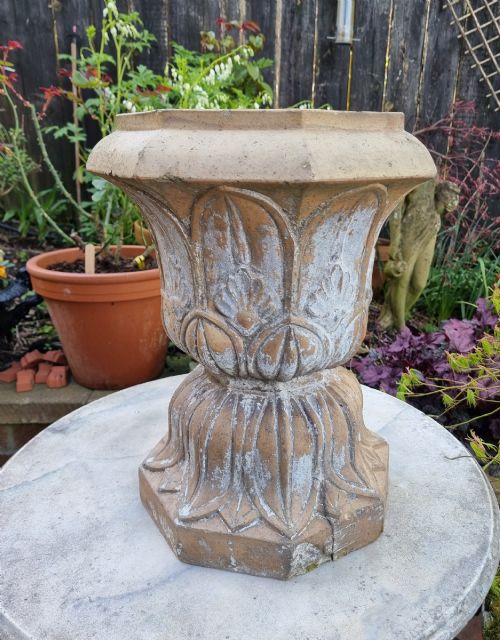
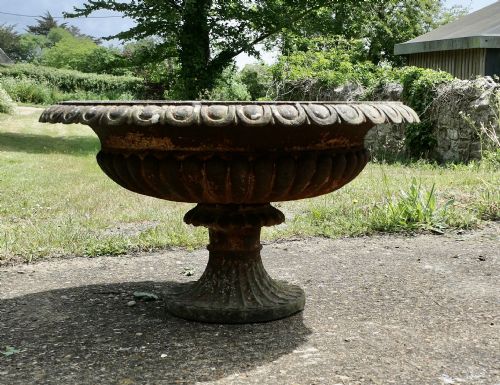
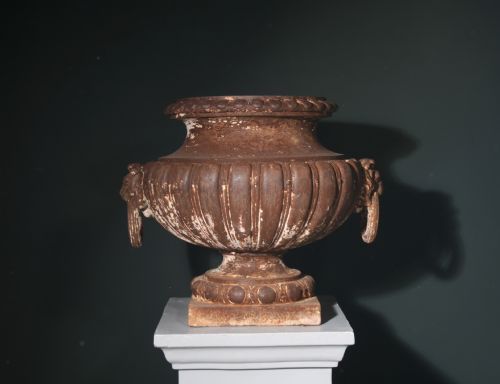
Classical urn planters follow ancient vessel traditions adapted for garden and interior display across the nineteenth and twentieth centuries. These vessels draw on neoclassical and Victorian design vocabularies, often taking the campana or tazza shape.
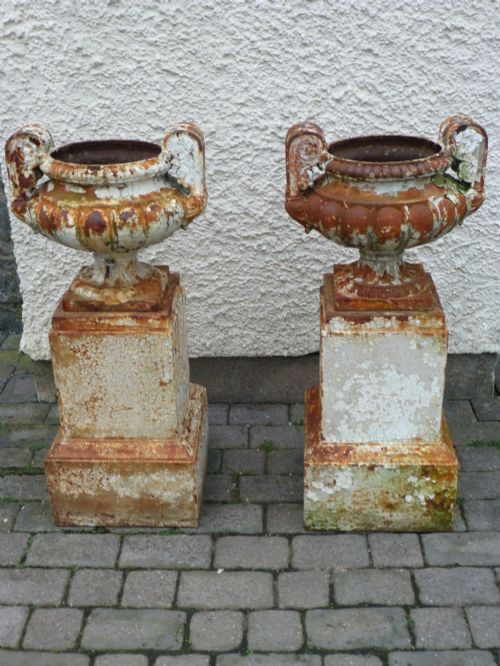
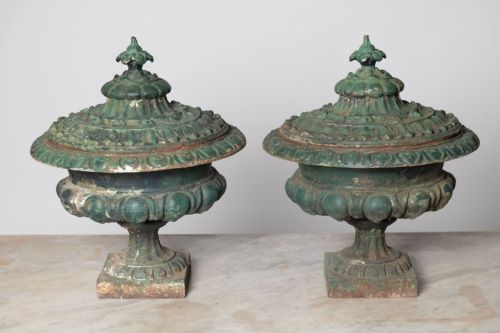
The versions most commonly met on this page are heavy cast iron pieces from the nineteenth century, frequently cast by prominent foundries like Falkirk Carron, Coalbrookdale, Andrew Handyside and Val d'Osne.
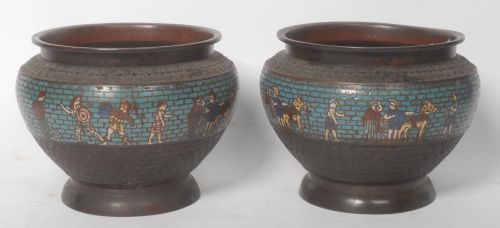
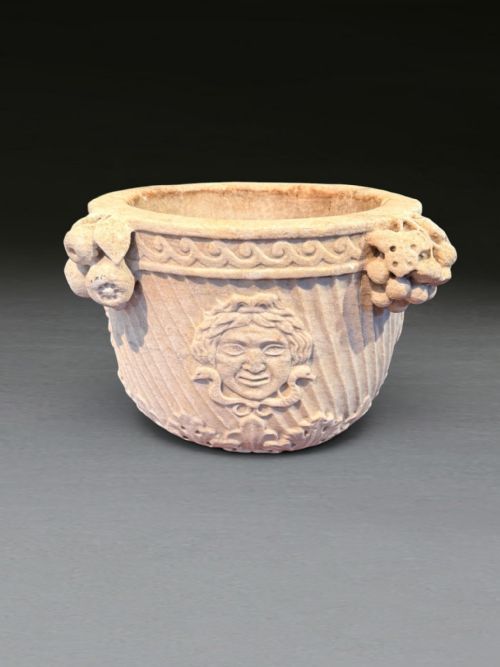
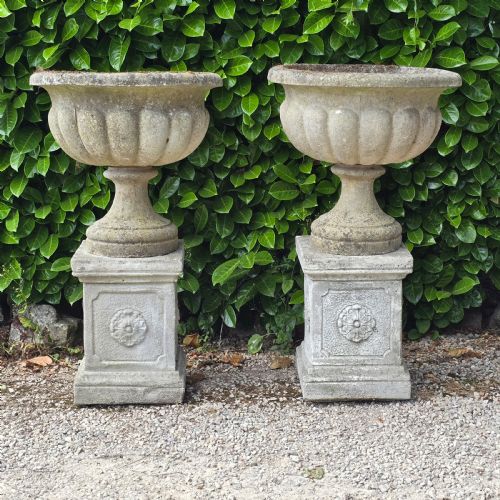
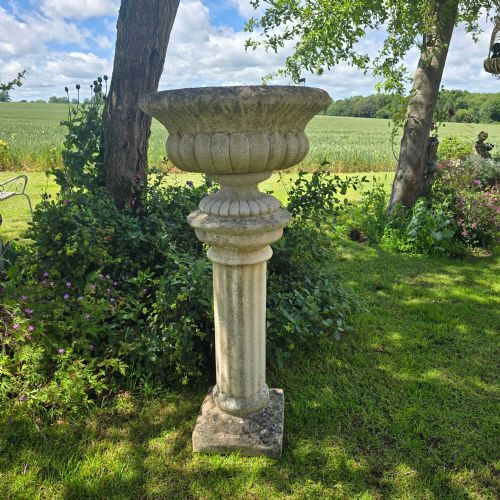
Beyond iron, the selection includes Italian and Scottish terracotta, bronze Grand Tour specimens, marble, and reconstituted stone. Many of these garden antiques stand upon original plinths or pedestals.
How they were made
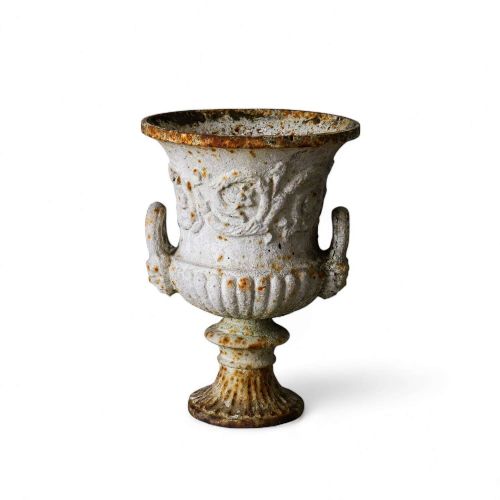
Foundries produced iron examples by pouring molten metal into sand moulds, yielding crisp surface detail in acanthus leaves and classical relief scenes. Surviving pieces often retain remnants of original distressed paint or protective lead coatings.
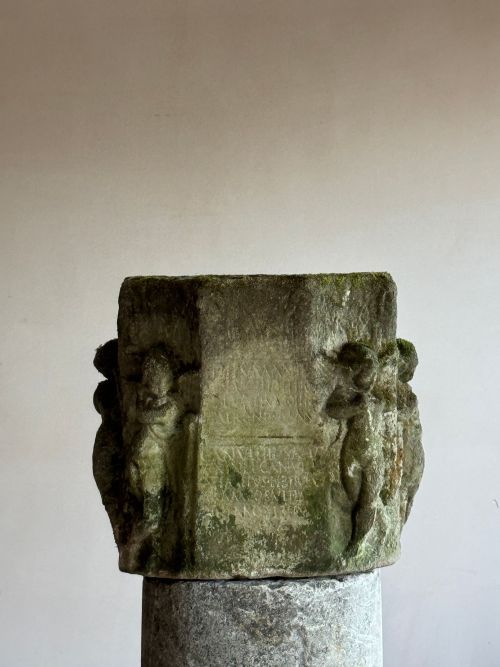
Terracotta and soft stone versions relied on hand-carving or moulding local clays and stones before kiln-firing or outdoor weathering. Marble and bronze pieces demanded skilled sculptural finishing, particularly evident in Grand Tour reductions of ancient monuments.
A nineteenth-century French foundry worker once poured molten iron to make a wine-cooler that now holds geraniums.
What varies in quality
Quality rests upon the crispness of the casting and the depth of the modelled relief, where superior foundry work preserves sharp lines in foliage and classical motifs. The presence of original matching pedestals, plinths or lids elevates the integrity of an assembly.
Material density and natural weathering also separate ordinary vessels from exceptional ones, particularly in cast iron and carved marble. Pieces bearing recognisable foundry stamps carry documented provenance that distinguishes them from unmarked production.
Falkirk Carron foundry·Coalbrookdale·Andrew Handyside·VAL D'OSNE FOUNDRY·Flight & Barr
The Classical Urn Planters Glossary
- Campana
- A bell-shaped garden urn with a flaring rim and a tapered body, frequently seen in nineteenth-century cast iron and terracotta. This profile derives from ancient Roman wine mixing vessels.
- Tazza
- A shallow bowl-shaped vessel raised on a stem and foot, used as a planter or garden ornament. These pieces often feature classical decorative handles or fluted bodies.
- Grand Tour
- A term describing souvenir bronzes, terracotta and marble vessels acquired by wealthy travellers in Italy during the eighteenth and nineteenth centuries. These objects typically reproduce famous classical antiquities.
- Jardinere
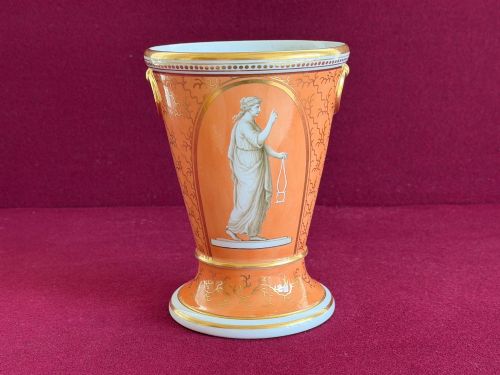
- An ornamental receptacle or planter designed to hold growing plants or flowers. They appear in porcelain, bronze, terracotta and faux marble across the Georgian and Victorian eras.
Classical Urn Planters: Frequently Asked Questions
Are these urns suitable for outdoor use?
Many of these pieces are cast iron, terracotta or stone designed specifically to withstand external garden conditions.
Heavier metal and stone urns remain stable in open landscapes, though winter frost precautions apply to porous terracotta.
Do classical urn planters come with pedestals?
Certain listings include original plinths, pedestals or stone bases that elevate the vessel to a traditional display height.
Other planters sit directly on the ground or function as table urns depending on their scale and origin.
How do I identify a nineteenth century iron urn?
Nineteenth century examples often display heavy casting seams, distinctive foundry marks, and layers of old paint or surface oxidation.
Stylistic cues such as campana shaping and neoclassical acanthus relief work help separate these period antiques from modern reproductions.
What is a Grand Tour urn?
Grand Tour urns are smaller decorative bronze or marble vessels collected by travellers visiting classical sites in Italy during the Victorian era.
These pieces replicate famous ancient monuments like the Warwick Vase for domestic interior or garden display.