


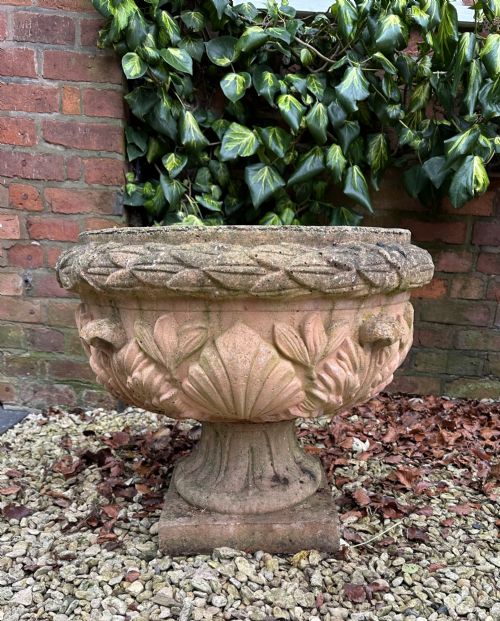


Terracotta Pedestal Planters
These terracotta pedestal planters bring classical weight and weathered garden form to a terrace, and you want one that holds its surface through the frost.
Terracotta Pedestal Planters
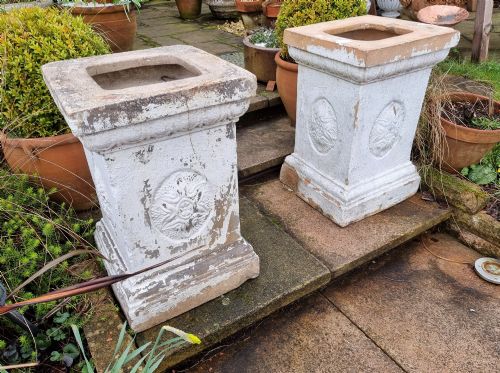
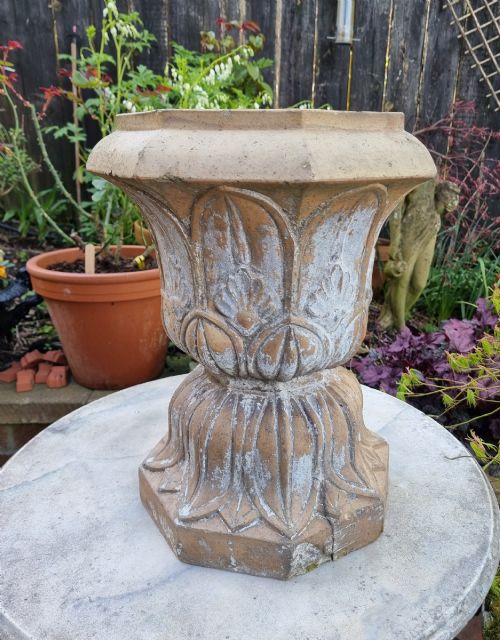
When you search for terracotta pedestal planters, you encounter garden urns, jardinières, and plinths originating from the Georgian period through to the 1930s. These pieces combine elevated stands or pedestals with deep planting vessels designed to anchor a formal path or garden corner.
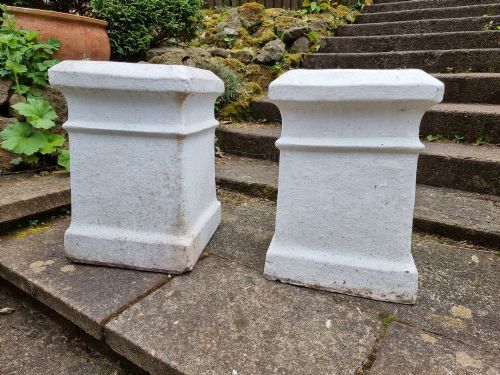
Many listings present complete matched pairs, while others offer individual garden urns or chimney pot pedestals adapted for planting. The materials span standard terracotta and earthenware to salt-glazed stoneware and majolica ceramic.
Materials and Making
Potters shaped these garden vessels using regional clays and fired earthenware, terracotta, or stoneware at high temperatures to achieve structural rigidity. Stoneware and salt-glazed pieces received a vitreous coating that sealed the porous clay against moisture.
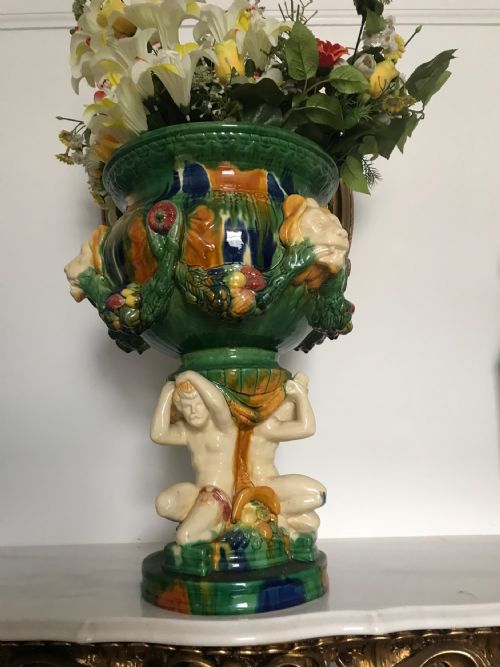
Makers applied decorative elements including lions head motifs, naturalistic textures, and painted finishes or glazes such as majolica. Workshops cast pedestals and urn bodies separately before joining them or supplying them as modular garden components.
The listings here encompass materials ranging from porous Scottish terracotta and earthenware to salt-glazed stoneware and glazed majolica ceramic.
Assessing Quality and Character
The distinction between standard utility gardenware and superior examples rests in the crispness of the moulded ornamentation and the depth of the firing. Finer pieces display sharply defined neoclassical details, balanced proportions, and well-executed figural supports like lions head decorations.
Surface patina dictates the visual success of older terracotta, where centuries of weathering create natural tonal variation across the clay. Glazed iterations depend on the stability of the majolica or salt glaze and the harmonious integration of the stand with the upper vessel.
Dunfermline Clay Company·Lipscombe And Co
The Terracotta Pedestal Planters Glossary
- Campana urn
- A bell-shaped garden vessel with an everted rim, sweeping body, and circular foot, frequently mounted on a square plinth. This classical form originates from antiquity and remained popular throughout the nineteenth century.
- Jardinière
- A large ornamental pot or stand designed to hold growing plants or flowers, often displayed indoors or upon a dedicated pedestal. These pieces typically feature decorative glazes or relief modelling.
- Plinth
- A heavy rectangular or square base block that elevates an urn, statue, or planter above ground level. In garden architecture, it provides structural stability and visual presence.
- Majolica
- A type of earthenware coated with an opaque tin glaze and painted with brightly coloured metallic oxides. This technique allows for rich, glossy finishes on figural bases and decorative planters.
- Salt-glazed stoneware
- Pottery fired at high temperatures into which common salt was introduced during the kiln process, producing a durable, slightly pitted vitreous surface. This finish protects the clay from frost damage.
Terracotta Pedestal Planters: Frequently Asked Questions
Can terracotta pedestal planters stay outside all winter?
Many nineteenth-century stoneware and dense terracotta vessels withstand low temperatures if drainage holes remain clear and water does not pool inside. Glazed ceramic and majolica pieces require more careful placement during freezing weather to protect the surface.
Elevating the pedestal slightly off damp soil using slate or stone prevents moisture absorption from the ground. Bringing vulnerable glazed jardinieres into a greenhouse or shed during severe frost extends their lifespan.
How do I secure a heavy urn to its pedestal?
Most antique garden urns and pedestals rely on their substantial weight and a locating spigot or socket to remain stable. Setting the components on a level, compacted stone foundation prevents shifting.
Avoid using permanent mortar or modern adhesives on antique terracotta, as the materials need room for natural expansion and contraction. Placing a layer of coarse gravel inside the base adds ballast without fixing the pieces together permanently.
How do I date an antique terracotta planter?
Dating relies on examining the manufacturing marks, clay body composition, and stylistic cues such as Victorian naturalism or Neoclassical revival motifs. Tool marks on the interior surface reveal whether a piece was hand-thrown, mould-pressed, or cast in sections.
Natural weathering and mineral deposits embedded within the porous terracotta also indicate age. Comparing the proportion and decorative details against documented Victorian and Georgian catalogue designs confirms the period.