




Terracotta Plant Pots
Terracotta plant pots are earthen vessels formed for cultivating flora, prized for their porous walls and the warmth they bring to gardens.
Terracotta Plant Pots
Terracotta plant pots encompass a range of garden vessels designed for housing plants, spanning utilitarian pots to decorative garden urns and jardinieres. When exploring terracotta plant pots, buyers encounter forms that include campana garden urns, rhubarb forcers, and scroll pots.
Geographic origins vary from Scottish workshops to French provincial examples such as Castelnaudary planters and Compton Pottery style creations. Buyers are most likely to meet nineteenth-century Victorian designs alongside salt-glazed urns and glazed earthenware varieties.
How they were made
Makers shaped these objects using terracotta, earthenware, and earthenware clay, forming porous bodies suited for horticultural use. Some pieces feature salt glazing or dribble glazes applied to the earthenware surface.
Certain items incorporate painted finishes, utilising oil paint on canvas for the artistic depictions recorded in the archive. The manufacturing methods reflect both utilitarian pottery traditions and ornamental garden craftsmanship.
Terracotta Plant Pots Retail Price Guide 2026
Typical asking prices for terracotta plant pots among the pieces listed under this phrase on Sellingantiques today, from the lower quarter to the upper quarter. They describe what is for sale here now, not the wider market.
Materials across these listings include terracotta, earthenware, paint, canvas, and ceramic, spanning the nineteenth and twentieth centuries.
What varies in quality
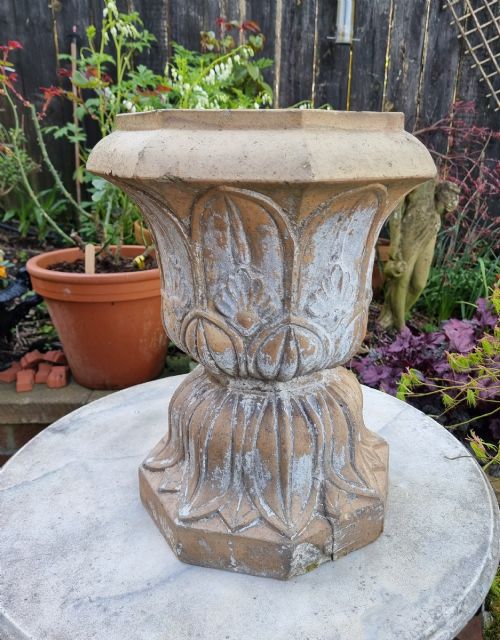
The distinction between ordinary and superior pieces rests on the depth of patination and the crispness of moulded ornament such as scrollwork or classical campana lines. Well-patinated surfaces show the weathering of time which enhances the character of the earthenware.
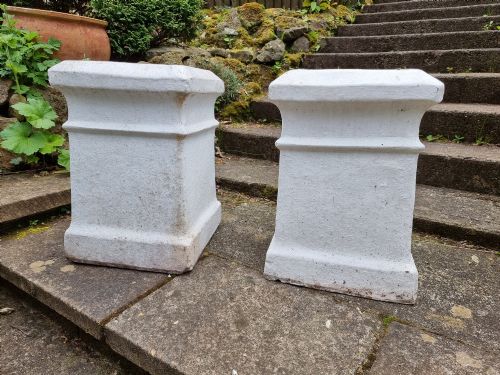
Construction quality appears in the heft and balance of large garden urns, rhubarb forcers, and pedestals intended to bear weight outdoors. The distinction also lies in the execution of the glaze, whether salt-glazed or dribble glazed, adding visual depth to the ceramic body.
Compton Pottery
The Terracotta Plant Pots Glossary
- Terracotta
- A porous fired earthenware clay of a brownish-red colour used widely for horticultural vessels and garden ornaments. It allows air and moisture to pass through the walls to plant roots.
- Campana
- A classical bell-shaped garden urn form with an everted rim, frequently rendered in terracotta. This traditional shape has been utilised in gardens since antiquity.
- Rhubarb Forcer
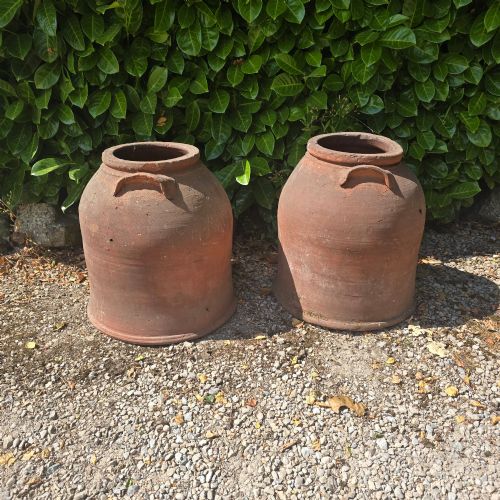
- A specialised tall earthenware or terracotta vessel placed over rhubarb plants to exclude light and blanch the stems. These nineteenth-century items are collected today as garden ornaments.
- Salt Glazed
- A ceramic finish achieved by throwing common salt into the kiln during high-temperature firing, producing a texture resembling orange peel. This treatment provides extra durability to earthenware.
- Jardiniere
- An ornamental pot or stand designed to hold flowering plants indoors or in conservatory settings. They appear in ceramic, earthenware, and majolica taste styles.
Terracotta Plant Pots: Frequently Asked Questions
How do I use antique terracotta pots in a modern garden?
These vessels suit placement on patios, borders, or garden pedestals where their aged patination complements surrounding foliage. Their natural porosity creates a healthy environment for root growth.
Ensure they are elevated during freezing weather to prevent frost damage to the earthenware body.
What periods do these terracotta plant pots come from?
The available selection spans the nineteenth century, including Victorian examples, up through twentieth-century pieces from the 1920s, 1930s, and 1960s.
Victorian and nineteenth-century items often display deep patination and traditional hand-moulded forms.
Are all terracotta plant pots made of unglazed clay?
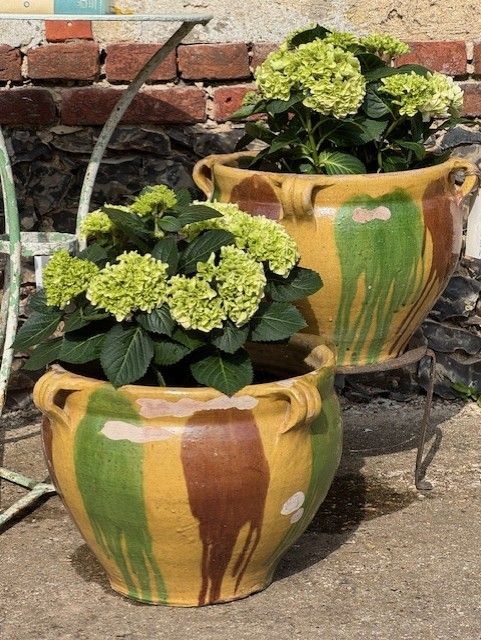
While standard vessels utilise porous earthenware clay, some pieces feature salt glazing or dribble glazes.
Glazed variants add decorative surface effects while retaining the underlying ceramic body structure.
What is a rhubarb forcer?
A rhubarb forcer is a heavy agricultural pot traditionally placed over crowns to encourage early, tender growth by blocking out light.
Today, these large nineteenth-century vessels serve as sculptural garden ornaments.