





Classical Painted Porcelain Vases
Classical painted porcelain vases bring stately nineteenth-century refinement into a room through hand-painted scenes and gilded mounts.
Classical Painted Porcelain Vases
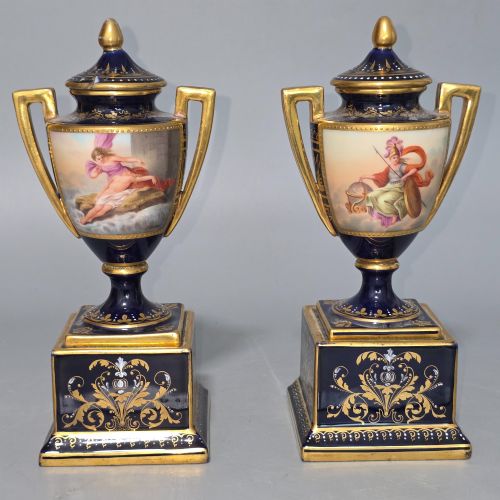
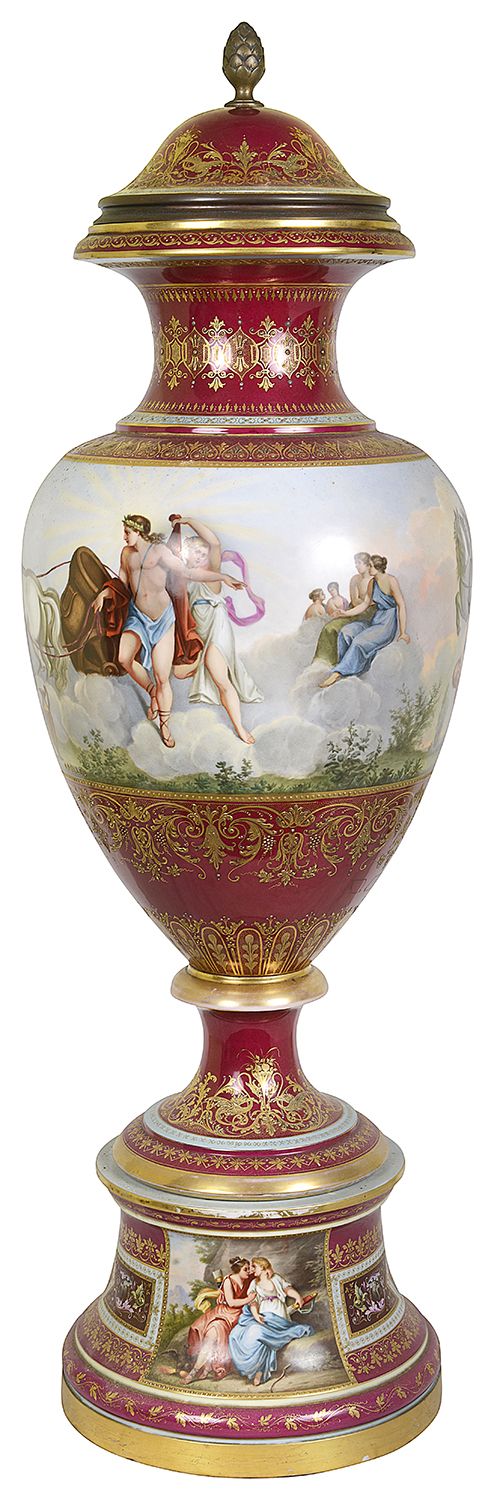
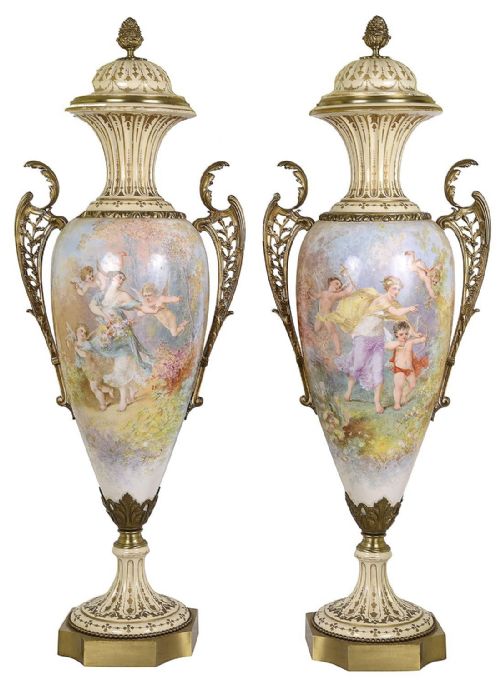
Classical painted porcelain vases span nineteenth-century production, incorporating Georgian, Victorian, and later periods up to nineteen-ten. These pieces appear as lidded urns, garnitures, ewers, jardinieres, and converted table lamps, often following Neoclassical, Empire, and Regency design codes.
The aesthetic draws heavily on classical antiquity, displaying mythological or portrait panels framed by rich gilding and enamel work. Buyers encounter significant pairs and monumental garnitures alongside individual cabinet pieces from European factories.
Materials and production methods
Craftsmen shaped fine porcelain bodies before applying intricate hand-painted enamel decoration, frequently depicting figures or floral subjects. Gold leaf, heavy gilding, and fire-gilded ormolu or brass mounts accent the ceramic forms.
Factories utilised specialised techniques to fuse metallic highlights and rich cobalt or turquoise ground colours to the porcelain body during multiple kiln firings.
Some nineteenth-century decorators squeezed elaborate mythological battles onto porcelain surfaces smaller than a dinner plate just to show off.
Assessing quality in painted porcelain
Quality rests in the precision of the hand-painted brushwork on the porcelain surface and the crispness of the gilt bronze or ormolu mounts. Superior examples display finely rendered facial expressions and detailed classical motifs rather than stencilled transfers.
The weight and stability of the porcelain body, alongside the depth of the enamel palette and gold leaf application, separate standard factory output from exceptional exhibition pieces.
Barr Flight And Barr·Meissen·Royal Vienna·Sevres·Dresden·Minton·Capodimonte·Kpm·Royal Worcester
The Classical Painted Porcelain Vases Glossary
- Garniture
- A set of three or more matching vases or ornaments designed to display together on a mantelpiece or sideboard.
- Ewer
- A large jug with a wide spout and looped handle, often modelled on classical metal vessels and rendered in painted porcelain.
- Amphora
- A two-handled ancient jar shape revived by nineteenth-century factories for classical decorative urns.
- Ormolu
- Finely ground high-carat gold applied to a bronze or brass base mount, frequently seen on French and Viennese lidded vases.
- Bleu Celeste
- A bright turquoise blue enamel ground colour popular on nineteenth-century decorative porcelain wares.
Classical Painted Porcelain Vases: Frequently Asked Questions
What is a porcelain garniture?
A porcelain garniture consists of a matched set of three or more vases or lidded urns designed to sit together symmetrically on a mantelpiece or cabinet top.
These sets were popular focal points in nineteenth-century formal interiors, often combining central centrepiece urns with flanking side vases.
How do I identify a Victorian vase?
Victorian vases date from the nineteenth century and frequently incorporate revival styles such as Neoclassical, Greek Revival, or Rococo motifs.
Examining the base marks, paste consistency, and hand-painted enamel details helps distinguish these English and continental pieces from later reproductions.
Were these vases used as lamps?
Many nineteenth-century vases and urns have been professionally converted into table lamps to suit modern lighting needs while retaining their classical painted porcelain bodies.
Original forms included lidded urns, ewers, and decorative vessels intended purely for display on tables or pedestals.
How should I clean gilded porcelain?
Gilded porcelain requires gentle dusting with a soft, dry brush to protect the delicate gold leaf and hand-painted enamel surfaces.
Avoid using water, chemical cleaners, or abrasive cloths, which can permanently damage the fragile nineteenth-century gilding and overglaze decoration.