


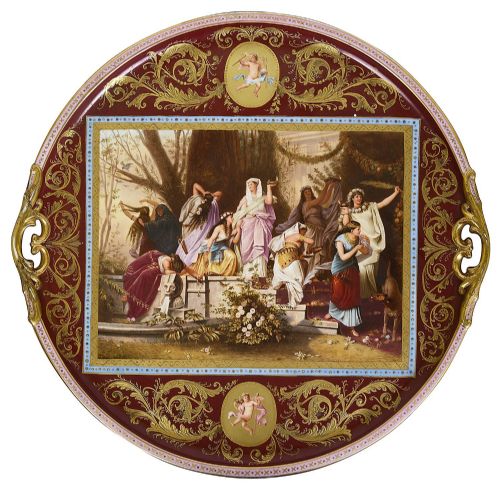

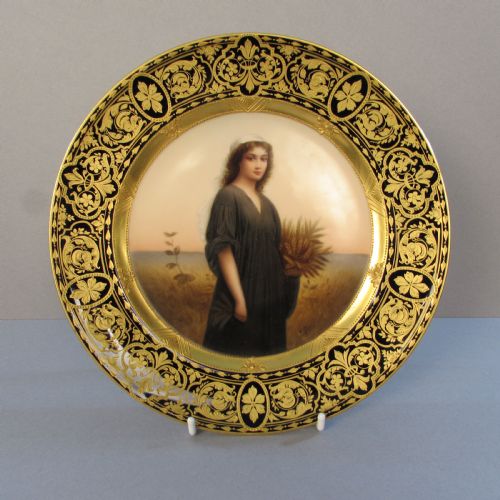

Classical Painted Porcelain Plate
A classical painted porcelain plate brings narrative history and neoclassical subjects to the wall or cabinet.
Classical Painted Porcelain Plate
A classical painted porcelain plate is a decorative vessel produced in large chargers, cabinet plates, trays, and standard plates. These pieces display intricate painted figural scenes drawn from mythology, history, and classical literature.
Buyers are most likely to encounter nineteenth-century examples and items executed in the Royal Vienna style. The forms range from standard cabinet plates to large chargers measuring sixty centimetres across.
The decorative subjects frequently depict mythological narratives such as the birth of Adonis, Bacchus and Ariadne, and Caesar at the grave of Alexander the Great. Other common themes include allegorical figures and mother and child embraces rendered with detailed polychrome enamel.
How they were made
These items are constructed from hard-paste porcelain painted with coloured enamel and highlighted with gold leaf, gilding, and gold gilt. The base porcelain provides a smooth white ground for the elaborate narrative scenes.
Painters applied fine polychrome enamels to depict classical figures and detailed backgrounds, frequently finishing the borders with cobalt blue glazes. Guilders added rich gold gilt and leaf details around the rims and framing edges.
Philosophical wisdom meets classical drama when wise and foolish virgins share display space with Bachus and Ariadne.
What varies in quality
Quality rests in the precision and detail of the painted figural work, where named artists and signed pieces command greater attention. The intricacy of the mythological narrative and the richness of the cobalt blue and gold leaf decoration distinguish finer items from simpler production.
The scale of the piece also dictates distinction, with large chargers offering greater surfaces for expansive historical depictions compared to standard cabinet plates. The crispness of the porcelain moulding and the preservation of the enamel and gilding complete the hierarchy.
Royal Vienna·Vienna
The Classical Painted Porcelain Plate Glossary
- Cabinet plate
- A decorative ceramic dish intended for display in a cabinet or on a wall rather than for dining. These items often feature elaborate painted scenes and gilded borders.
- Charger
- A large ornamental plate used for display or as a base setting. In porcelain, these pieces provide an expansive canvas for mythological and historical narratives.
- Enamel
- Vitreous coloured glass fused to the porcelain surface through firing. Painters utilise this material to achieve bright and permanent figural hues.
- Gilding
- The application of gold leaf, gold gilt, or powdered gold to ceramic surfaces. This technique adds metallic brilliance to borders and highlights.
- Neoclassical
- A style drawing inspiration from the classical art and culture of ancient Greece and Rome. This aesthetic governs the figural subjects and architectural motifs seen on these plates.
Classical Painted Porcelain Plate: Frequently Asked Questions
How were these plates used?
They served as decorative items for display within cabinets, on sideboards, or mounted on walls. Their intricate narrative paintings were meant for visual appreciation rather than practical dining.
Large chargers and trays were designed to showcase ambitious artistic compositions in domestic interiors and formal collections.
How do you date a Vienna porcelain plate?
Dating relies on stylistic clues, period markers, and specific manufacturing characteristics recorded in the nineteenth century and around nineteen-twenty. The execution of the neoclassical painting and the application of cobalt blue and gilding help establish the era.
Named subjects and signed work by artists offer further context for placing the piece within its historical period of manufacture.
How do you live with porcelain plates?
These decorative pieces suit display in wall-mounted brackets, specialised cabinets, or on sturdy plate stands. They require stable environments away from direct sunlight to preserve the vibrant enamel colours and gold leaf.
Handling should remain minimal, and cleaning requires gentle dusting with a soft, dry cloth to protect the delicate gilded surfaces.