
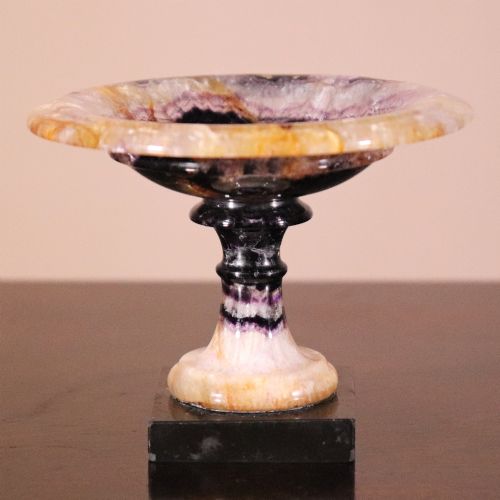


Classical Marble Tazza
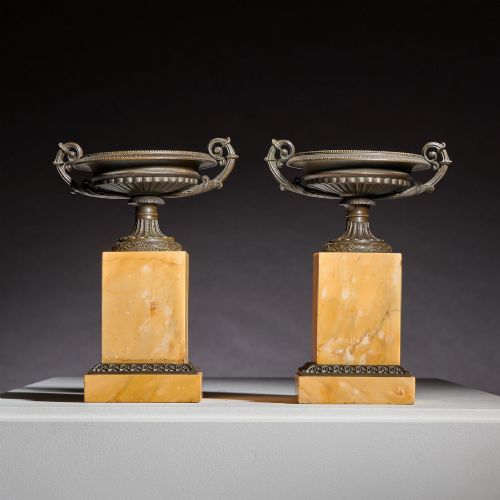
These classical marble tazza pieces bring monumental ancient presence to a room, cast in stone and metal for the grand collector.
Classical Marble Tazza
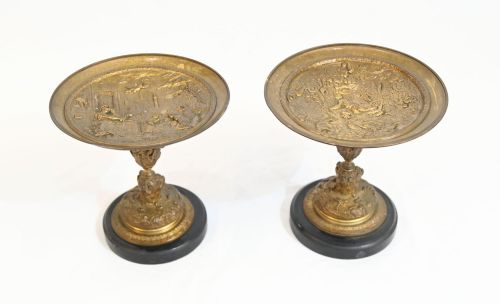
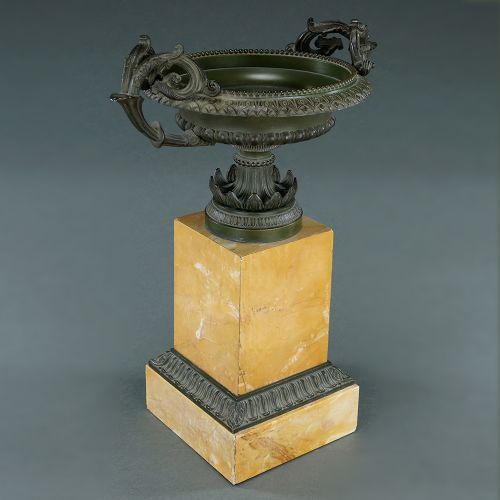
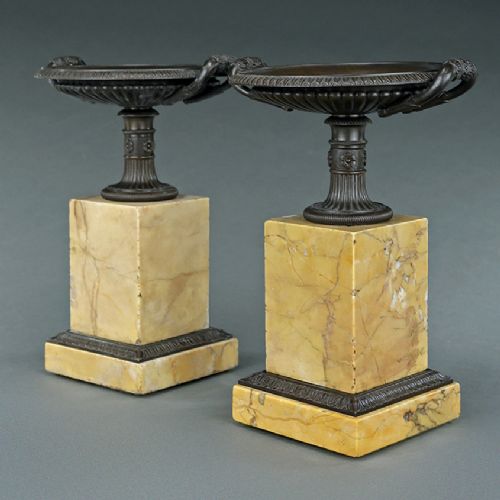
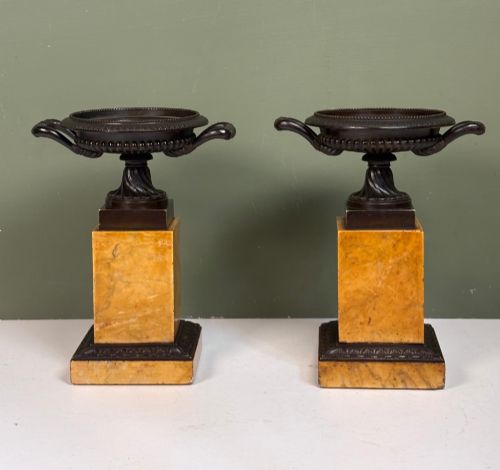
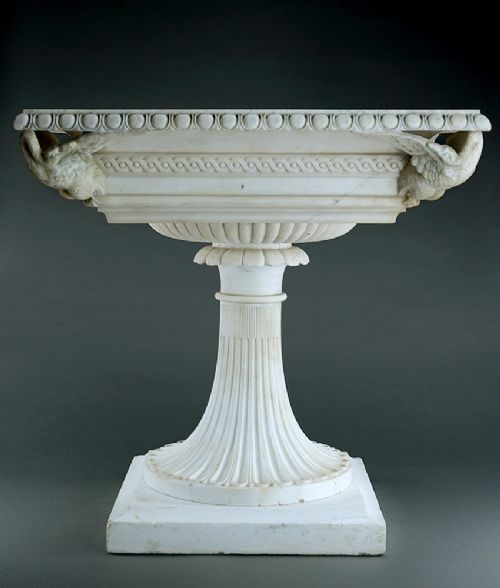
A classical marble tazza stands as a shallow ceremonial vessel or pedestal bowl raised upon a short stem and a sturdy foot. When you search for a classical marble tazza, you are looking at ornamental bowls and pedestal vessels shaped after ancient forms originating in Italy and France.
Most examples found here date from the nineteenth century, reflecting the enthusiasm of the Grand Tour through neoclassical and French Empire designs. These decorative objects take the form of tazzas, urns, and pedestal bowls designed primarily for display rather than dining.
The objects combine classical restraint with decorative flair, often appearing as pairs or single monumental pieces. Their presence draws the eye toward architectural symmetry and the heavy dignity of carved stone.
How They Were Made
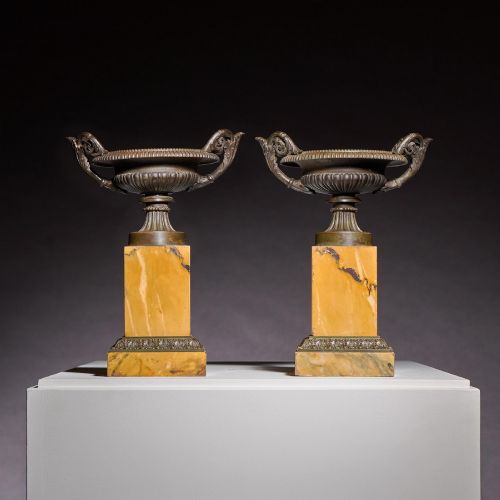
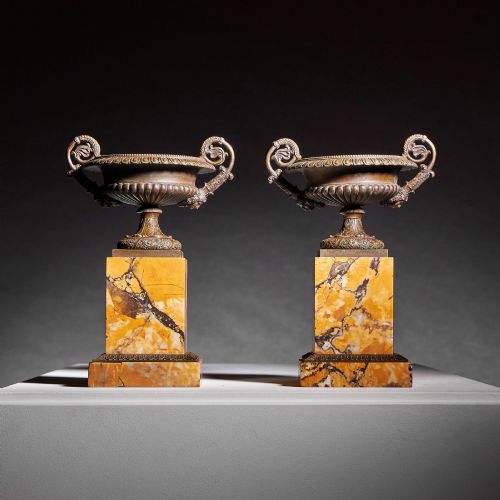
The construction of these pieces relies on the union of carved stone and cast metal, predominantly white, black, Sienna, and Antico Rosso marbles paired with bronze and ormolu. Artisans turned the marble on lathes to achieve smooth, balanced bowls and pedestals before polishing the surfaces to a high sheen.
Metal elements such as handles, rims, and mounts were cast in bronze and frequently gilt, then secured to the stone bases with pins or adhesives. Many incorporate specific mineral accents like Blue John or rouge griotte, demonstrating advanced lapidary skills developed during the nineteenth century.
Listings feature nineteenth-century pieces incorporating Sienna marble, white marble, bronze, and ormolu in neoclassical and Empire styles.
What Varies in Quality
Quality rests upon the selection and figuration of the marble itself, alongside the crispness of the bronze casting. Finer pieces display richly variegated mineral grains and deeply saturated colours, whereas lesser examples use flat or uniform stone.
The hand of the maker shows in the turning of the pedestal and the precision of the joinery between metal and marble. Superior tazzas exhibit balanced proportions and substantial weight, holding the room with a sense of architectural permanence.
Boschetti
The Classical Marble Tazza Glossary
- Tazza
- A shallow bowl on a pedestal, used historically for display or serving. The plural form is tazze.
- Grand Tour
- A cultural journey through Europe undertaken by young gentry during the eighteenth and nineteenth centuries, yielding souvenirs such as bronze and marble antiquities.
- Sienna Marble
- A highly decorative yellow-brown marble quarried in Italy, featuring dark purple or grey veins. It is frequently seen in nineteenth-century decorative arts.
- Ormolu
- Gilt bronze produced by applying a finely ground gold-mercury amalgam to cast bronze. The technique creates a rich, durable golden surface.
Classical Marble Tazza: Frequently Asked Questions
What is a tazza used for?
These vessels served as ornamental centrepieces and decorative displays on tables and mantelpieces rather than for practical domestic use.
Their substantial weight and classical form made them permanent fixtures in nineteenth-century drawing rooms and libraries.
How do I identify a Grand Tour piece?
Grand Tour pieces typically date from the nineteenth century and reproduce famous ancient Roman or Greek architectural forms in miniature.
They combine Italian marbles with French bronze casting techniques, often bearing souvenirs of classical antiquity.
What marble types are common?
White marble, black marble, Sienna marble, and Antico Rosso appear frequently across these nineteenth-century items.
Specialist stones like Blue John and rouge griotte also occur as distinct colour accents on bases and mounts.
How do I style a marble tazza?
Place a single monumental tazza on a side table or pair them symmetrically on a mantelpiece or cabinet top.
Their strong neoclassical lines require simple surroundings to let the stone and bronze details stand out.