


Marble Compote Bowl
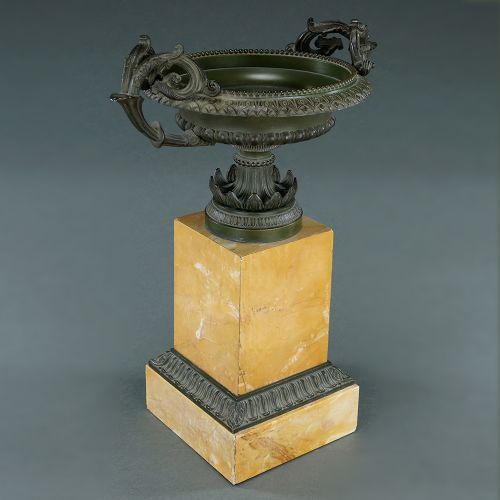
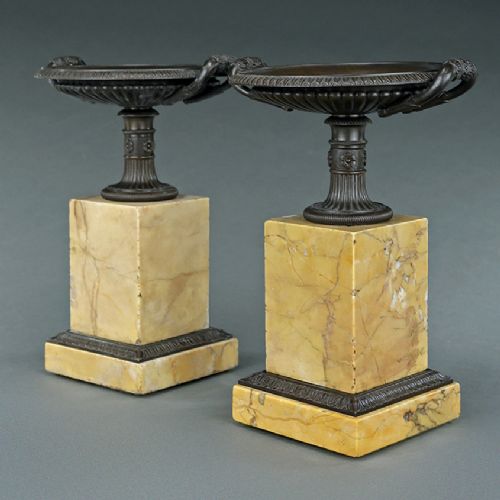
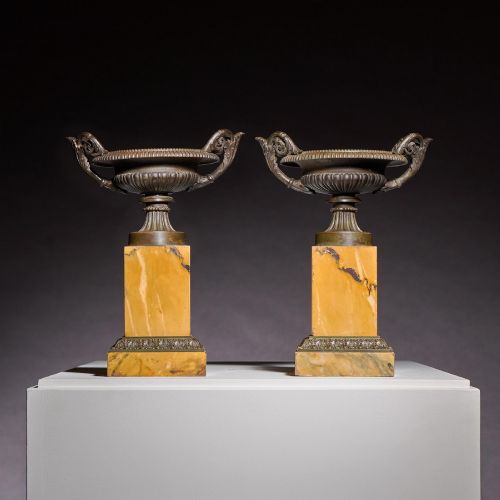
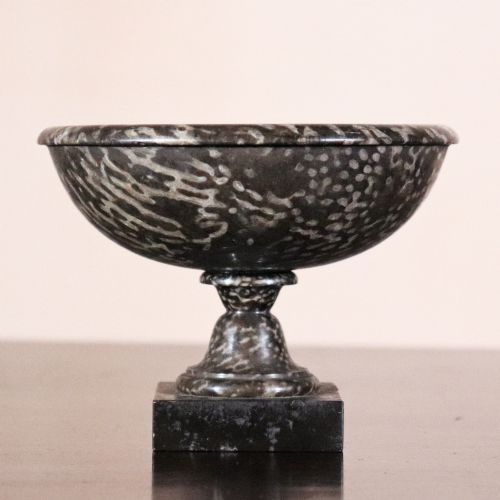
These marble compote bowls are classical pedestal vessels cast in bronze and carved from Sienna, black, and coral marble.
Marble Compote Bowl
A marble compote bowl takes the form of a pedestal dish, frequently catalogued as a tazza or ornamental urn across these nineteenth-century examples. These decorative objects draw heavily on Neoclassical, French Empire, and Grand Tour aesthetics, echoing classical antiquity.
You are most likely to encounter nineteenth-century French and Italian pieces on this page, often paired as decorative objects for a library or mantelpiece. The forms range from small Ashford coral marble items to monumental carved pedestal bowls.
The material vocabulary combines dense stone with cast metals, uniting decorative bowls with architectural supports. Makers utilised distinctive mineral varieties to achieve a striking contrast against gilded or patinated metal mounts.
Materials and construction methods
The construction relies on the pairing of carved stone bodies with cast metal components such as bronze, gilt bronze, and ormolu. Artisans turned and carved marbles including Sienna, black marble, Antico Rosso, and malachite to form the shallow bowls and supporting pedestals.
Metal mounts and figures were cast using traditional foundry techniques, then chased and fire-gilded or patinated to complement the veined stone. These metal elements frequently form the handles, rims, and classical pedestal bases that elevate the marble dish.
Grand Tour travellers hauled heavy marble bowls across Europe just to display them proudly back home.
Factors that define quality
Quality rests in the precision of the stone carving and the crispness of the bronze chasing on the mounts. Superior pieces display intricate detail in the cast ormolu and a rich, natural figuring within the Sienna or malachite marble.
The harmony between the stone selection and the metalwork determines the success of the composition. Well-proportioned pedestal bowls exhibit balanced weight and secure joints where the carved marble meets the bronze base.
The Marble Compote Bowl Glossary
- Tazza
- A shallow cup or bowl mounted on a stem and foot, originating from ancient drinking vessels. In these listings, it describes decorative pedestal bowls used for display.
- Ormolu
- Gilded bronze, where finely ground gold is applied to a bronze base using a mercury amalgam. This technique gives the metal a distinctive warm lustre.
- Grand Tour
- A cultural journey undertaken by wealthy young Europeans in the eighteenth and nineteenth centuries to study classical art. Souvenirs from these travels included marble and bronze architectural models and tazzas.
- Sienna Marble
- A yellow or ochre decorative marble quarried in Italy, featuring dark purple or grey veining. It was highly favoured for neoclassical ornamental objects.
Marble Compote Bowl: Frequently Asked Questions
What is a marble compote bowl used for?
These pieces functioned historically as ornamental vessels for display on tables, desks, and mantelpieces during the nineteenth century. They served purely decorative purposes within neoclassical interiors and Grand Tour collections.
Today, they remain purely decorative objects suited for display on sideboards or open shelving. Their classical proportions make them striking focal points in traditional room settings.
How do I identify a Grand Tour tazza?
Grand Tour tazzas typically date from the nineteenth century and incorporate classical architectural motifs inspired by Italian antiquities. They frequently combine carved marbles like Sienna or malachite with patinated bronze and ormolu mounts.
The inclusion of specific Italian marbles and classical casting styles points directly to this travel tradition. These decorative objects were collected by travellers touring European cultural centres.
How should I care for antique marble and bronze?
Dust marble and bronze gently with a dry, soft cloth to prevent the accumulation of grit in carved recesses. Avoid using commercial chemical cleaners, water, or polishes that can damage patinated metal or stain porous stone.
Keep these decorative objects away from direct sunlight and steady moisture to protect the finish of the stone and metal. Gentle handling prevents wear to delicate ormolu mounts and carved pedestals.