
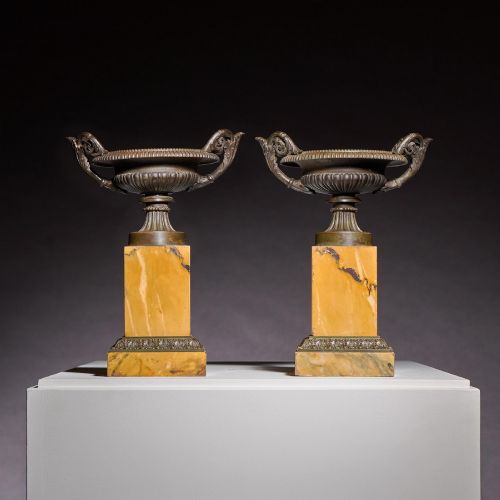
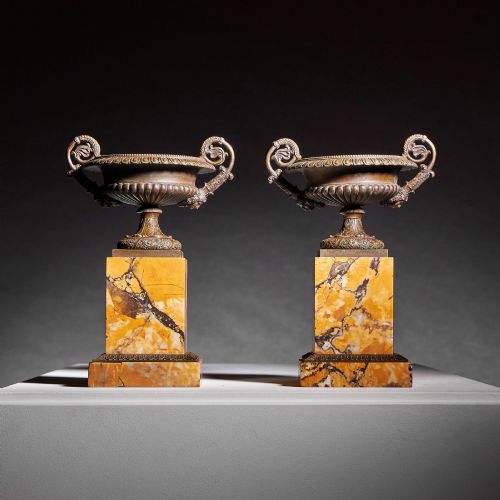
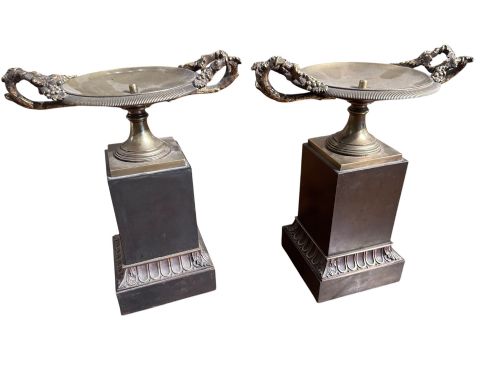


Decorative Marble Tazza
These decorative marble tazza vessels bring neoclassical grandeur and classical proportion directly into your home.
Decorative Marble Tazza
A decorative marble tazza is a low, wide ornamental dish or pedestal bowl designed to echo classical antiquity. When searching for a decorative marble tazza, buyers typically encounter nineteenth-century European works originating from France and Italy.
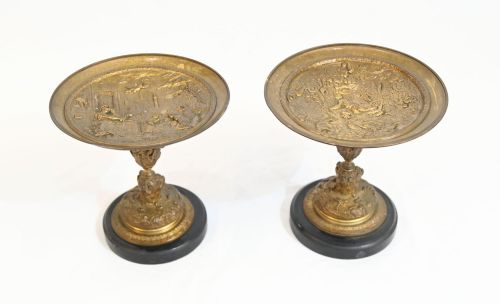
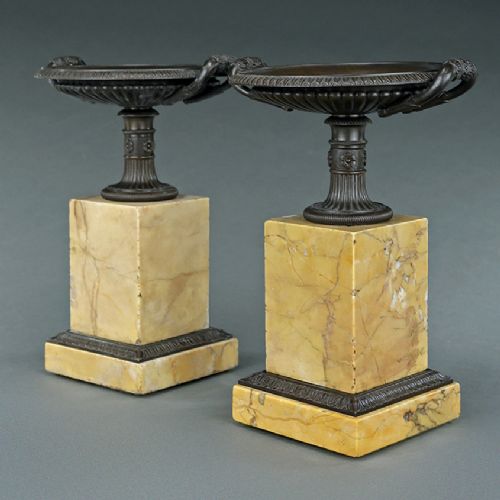
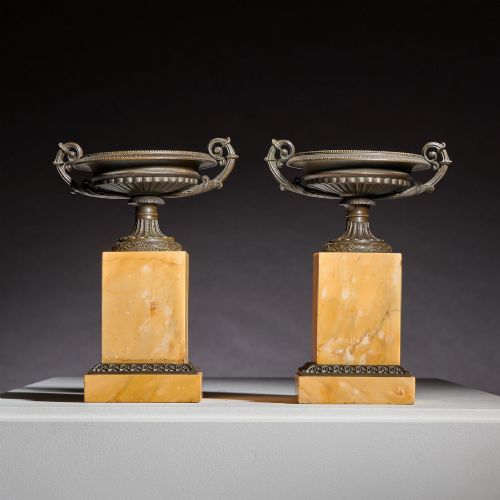
The selections on this page heavily feature French Empire, Neoclassical, and Grand Tour styles. Pairs of tazze mounted on black marble or Siena marble bases appear frequently alongside solo pieces.
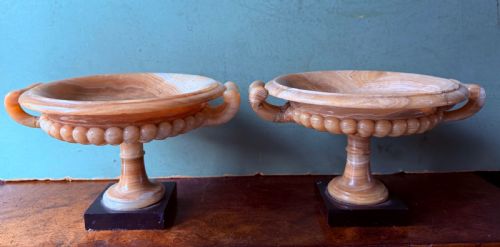
Forms range from small souvenir tazze carved from alabaster to large bronze-mounted centrepieces. Most examples date from the nineteenth century, including specific items from eighteen-eighty and eighteen-fifty.
Materials and construction methods
Craftsmen built these pieces using varied hardstones and metals, combining carved marble, black marble, and Siena marble with cast bronze, patinated bronze, and ormolu. Alabaster and gilt metal also feature in the construction of these vessels.
Many nineteenth-century examples incorporate elaborate metalwork mounts fixed to stone bowls, often utilising gilt bronze or silvered elements. Artisans carved the stone components by hand before mounting them onto decorative pedestals or blocks.
Listings feature nineteenth-century items utilising bronze, marble, ormolu, black marble, Siena marble, and alabaster.
Assessing quality in antique tazze
Quality rests in the precision of the stone carving and the crispness of the bronze or ormolu casting. Finer pieces display deeply figured marble with tight joints and cleanly chased metal mounts.
Proportion and weight distinguish superior examples from simpler ones. Pieces with complex patination, integrated enamel plaques, or substantial bronze mounts reflect higher workshop standards.
The Decorative Marble Tazza Glossary
- Tazza
- A shallow bowl or vase mounted on a stem and foot, used historically as a display vessel. The plural form is tazze.
- Ormolu
- Gilt bronze produced by applying a finely ground high-carat gold-mercury amalgam to a bronze object. It provides a rich, durable golden finish on nineteenth-century mounts.
- Grand Tour
- A traditional trip through Europe undertaken by upper-class young men in the eighteenth and nineteenth centuries. Souvenirs from these journeys included classical-style bronzes and carved stone tazze.
- Siena Marble
- A distinctive yellow Italian marble featuring deep purple or grey veining. It was highly prized for decorative objects during the neoclassical revival.
- Alabaster
- A fine-grained translucent stone used for carving decorative vessels and sculptural objects. It allows light to pass slightly beneath the surface.
Decorative Marble Tazza: Frequently Asked Questions
What is a tazza used for?
Historically, a tazza served as a ceremonial vessel or a display dish for food and valuables. Today, they function primarily as decorative centrepieces on tables, mantels, or pedestals.
Their shallow basins allow for the display of fruit, decorative spheres, or simply the intricate craftsmanship of the stone and metal itself.
How do I date an antique marble tazza?
Dating relies on examining the materials, casting techniques, and stylistic markers such as French Empire or Neoclassical motifs. Nineteenth-century pieces often show specific handling of bronze mounts and characteristic marble types.
Wear patterns on the underside of the base and the method of securing the central pin also provide clues to the period of manufacture.
Are these pieces made of solid marble?
Many tazze combine solid carved marble or alabaster bowls with metal components such as bronze, ormolu, or gilt metal. Some examples sit upon contrasting bases made of black marble or Siena marble.
Descriptions will typically specify the exact combination of stone and metal used in each individual vessel.
How should I clean a marble tazza?
Dust the stone and metal gently with a soft, dry cloth to prevent accumulation. Avoid using harsh chemical cleaners, abrasives, or excessive water which can damage patinated bronze or porous stone.
If the piece requires deeper cleaning, consult a specialist in antique conservation to protect the original finishes.