
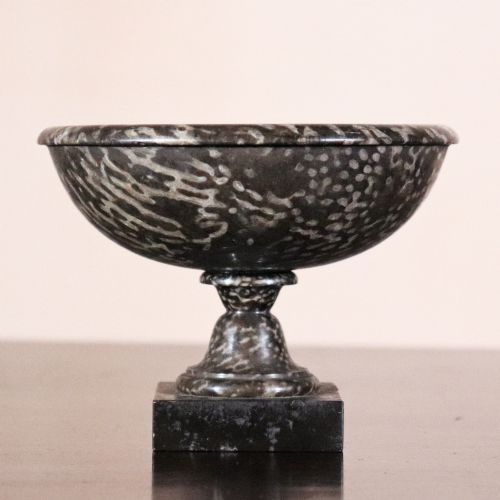


Victorian Marble Tazza
A victorian marble tazza brings classical proportion and striking mineral colour to a room, offering the weighty presence of nineteenth-century decorative stonework.
Victorian Marble Tazza
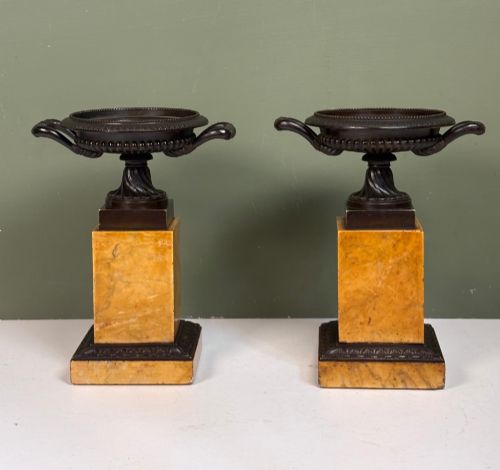
When you search for a victorian marble tazza, you are looking at low-stemmed ornamental dishes and shallow footed bowls conceived in the classical taste. These pieces draw directly on antique precedents recorded by nineteenth-century makers during the height of the Grand Tour. You will most frequently meet standard examples in black marble or variegated stone, sometimes paired as garniture sets or mounted with bronze and brass.
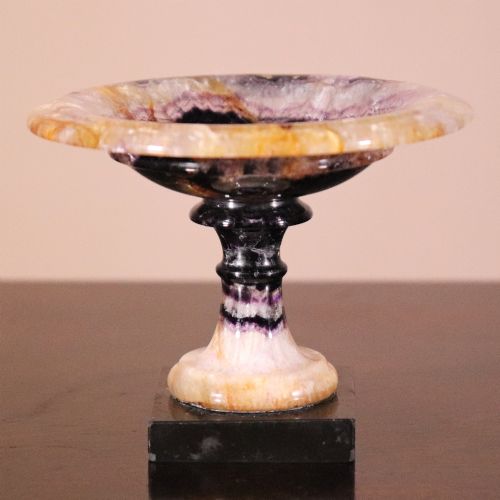
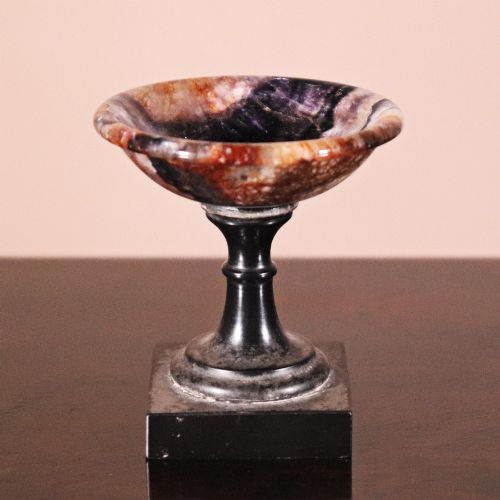
The form spans straightforward stone dishes alongside more ambitious neoclassical designs executed with patinated metal mounts. Certain items reach monumental proportions, while others remain intimate enough for a desk or smaller mantelpiece. Many incorporate contrasting materials like blue john, malachite, or slate to accentuate the shallow bowl and pedestal foot.
How they were made
Makers shaped these pieces from dense blocks of stone, turning black marble, ashford coral marble, and rouge griotte on heavy lathes to achieve smooth profiles. Skilled stonemasons selected variegated mineral slabs for their natural grain and intense colour before polishing the surfaces to a high sheen.
Metal elements like cast brass and bronze were worked separately, forming decorative bases, handles, and collars that secured the stone components. Craftsmen then assembled the heavy marble bowls onto these cast mounts using threaded pins or secure adhesives appropriate to the period.
Certain nineteenth-century travellers evidently could not resist bringing home a heavy slab of Derbyshire fluorite.
What varies in quality
The precision of the turning and the crispness of any bronze or brass mounting further distinguish finer workshops. Heavier gauge metalwork and more complex neoclassical proportions elevate a piece well above standard domestic decorativeware.
Japy Frères
The Victorian Marble Tazza Glossary
- Tazza
- A shallow ornamental bowl raised upon a central foot or pedestal. This form originated in classical antiquity and saw revival throughout the nineteenth century.
- Grand Tour
- A traditional journey through continental Europe undertaken by nineteenth-century travellers who collected antiquities and souvenirs. These pieces heavily influenced contemporary decorative styles.
- Garniture set
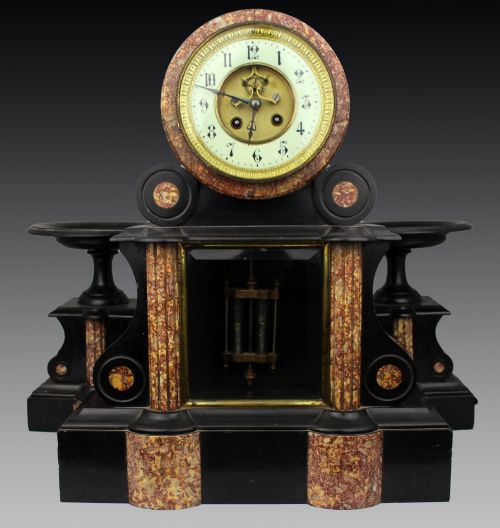
- A matched group of ornamental objects, often comprising a central clock flanked by matching vases or tazzas for a mantelpiece. These sets unified nineteenth-century interior display.
- Rouge griotte
- A rich red French marble flecked with white and grey limestone inclusions. It provides a striking contrast when mounted with bronze or black marble.
Victorian Marble Tazza: Frequently Asked Questions
What is a victorian marble tazza used for?
These pieces served strictly as ornamental items designed to display the natural beauty of stone upon mantelpieces, side tables, and cabinets. They brought classical dignity and mineral colour into nineteenth-century domestic interiors without holding a practical function.
Today, they continue to serve as decorative focal points in a room. Their shallow proportions make them well suited for placement on console tables or shelves where the mottled surface of the marble can catch the light.
Are these pieces usually found as pairs?
Nineteenth-century makers frequently produced ornamental stonework in matched pairs to ornament symmetrical spaces like mantel shelves. Pairs often formed part of broader garniture sets alongside clocks and urns.
Single examples also appear regularly, having been produced individually or separated over time. Both paired and single items reflect the nineteenth-century taste for classical domestic ornament.
How do I care for a marble tazza?
Maintaining the stone requires gentle dusting with a soft, dry cloth to prevent the accumulation of grit on polished surfaces. Harsh cleaning agents and acidic liquids must be avoided, as they can permanently etch or dull the marble polish.
Positioning the object away from direct heat sources and stable placement on a level surface protects the heavy stone and any delicate bronze mounts from unnecessary strain.