


Classical Marble Plinth Urn
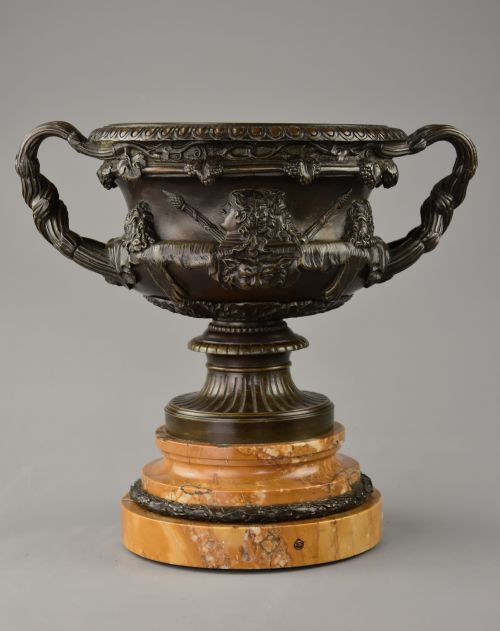
These classical marble plinth urn pieces bring tangible antiquity home, pairing carved stone bases with cast bronze to channel the grand tour.
Classical Marble Plinth Urn
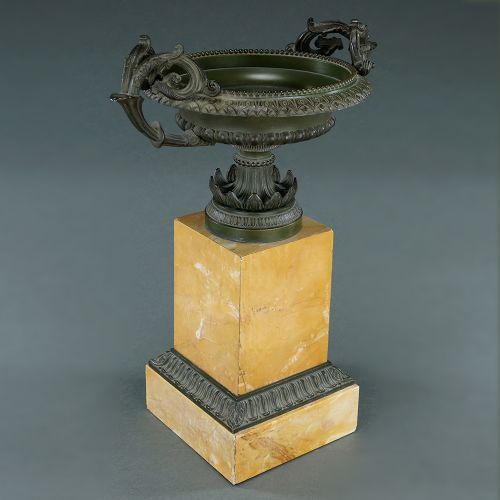
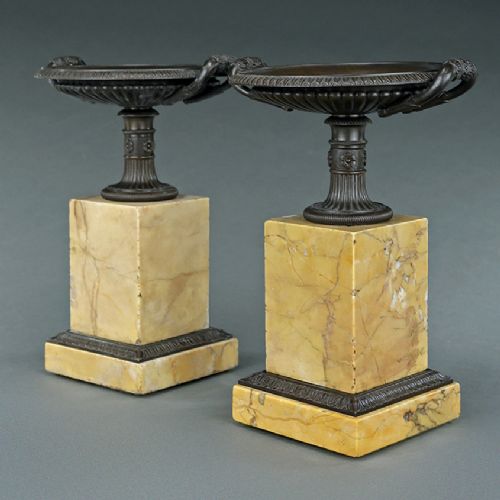
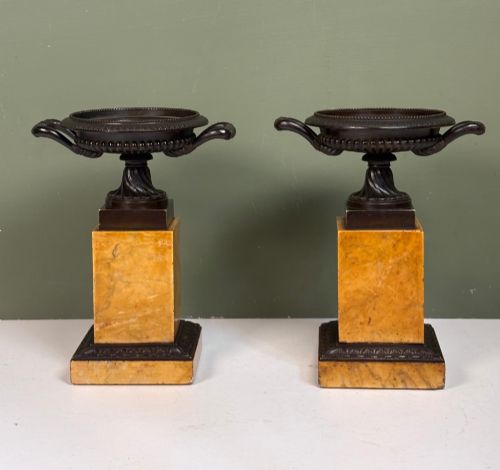
Buyers seeking a classical marble plinth urn encounter works primarily rooted in the nineteenth century, with strong representation from the Victorian period and French empire styles. These decorative vessels and pedestals draw heavily on classical antiquity, frequently taking the form of campana vases, tazzas, and architectural columns.
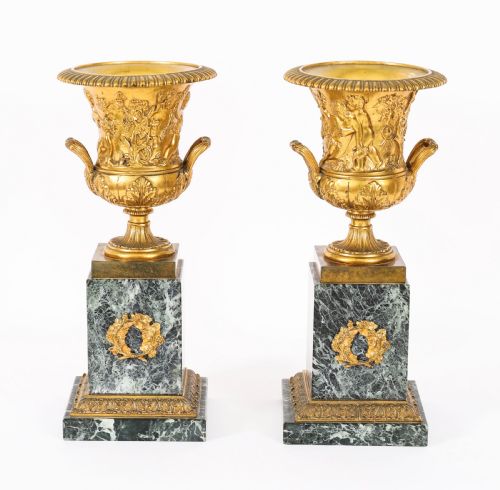
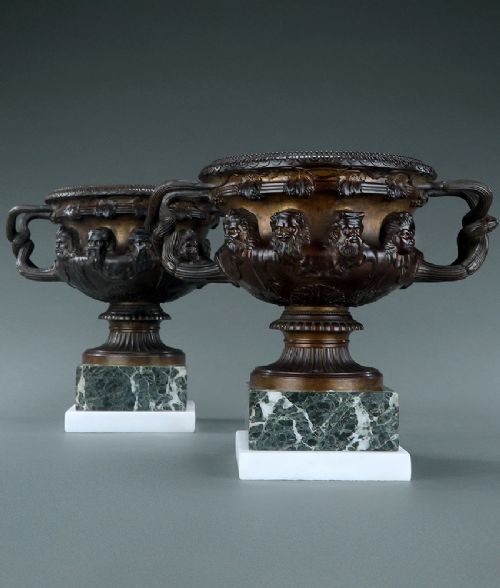
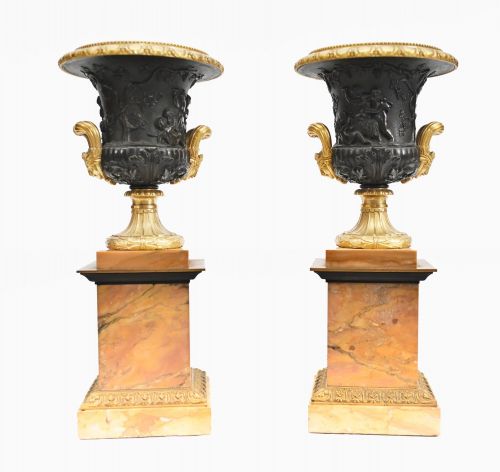
The assortment relies heavily on Grand Tour souvenirs and reductions of famous antiquities like the Warwick vase. Pieces range from matched pairs of bronze vases mounted on marble plinths to standalone green and Siena marble pedestals designed for display.
Origins trace largely to Italian and French workshops of the eighteen-sixties through the eighteen-nineties, alongside occasional early twentieth-century examples. The physical presence combines substantial stone weight with detailed metalwork casting.
How they were made
Makers shaped these objects using carved stones such as Carrara, Siena, and green marble, often mounting them on distinct plinths. Stonemasons turned and carved the pedestals and urn bodies to emulate ancient architectural fragments.
Bronze components, including handles, figures, and mounts, were cast utilising traditional methods and frequently fire-gilded or patinated. Ormolu mounts and gilt bronze details were then meticulously fitted to the stone structures.
The inventory includes Grand Tour reductions of the Warwick vase and Albani vases.
What varies in quality
Quality reveals itself in the crispness of the bronze casting and the depth of the marble figuring. Superior examples exhibit finely chiselled details on figures like cherubs or Bacchus masks rather than soft, mass-produced edges.
The choice and integration of materials dictate the upper tier, where variegated marbles and fire-gilt ormolu join seamlessly. Heavier stone selection and precise architectural proportions separate ambitious Grand Tour souvenirs from simpler decorative wares.
Selim Bright
The Classical Marble Plinth Urn Glossary
- Tazza
- A shallow bowl or vase raised on a stem and foot, frequently utilised as a decorative centrepiece in nineteenth-century collections.
- Grand Tour
- A traditional trip through Europe undertaken by upper-class young men in the eighteenth and nineteenth centuries, resulting in the acquisition of classical souvenirs.
- Ormolu
- Gilded bronze applied as a decorative mount to furniture, marble bases, and urns during the eighteenth and nineteenth centuries.
- Campana
- An inverted bell-shaped vase form popular in classical antiquity and revived extensively during the neoclassical period.
- Plinth
- A heavy rectangular or square base supporting a column, bust, or urn.
Classical Marble Plinth Urn: Frequently Asked Questions
What is a Grand Tour urn?
These pieces were purchased by travellers visiting ancient sites in Italy during the nineteenth century as portable reminders of classical art.
They often replicate famous excavated monuments on a reduced scale for domestic display.
How do I style marble plinths?
Place them in halls or reception rooms to elevate smaller sculptures, busts, or decorative vases above floor level.
Ensure the weight of the object matches the load-bearing capacity of the specific marble column.
Are these pieces actually ancient?
Most items date from the nineteenth century, created as neoclassical revivals rather than original Roman or Greek artefacts.
They reflect the period enthusiasm for recreating classical forms using traditional stone and bronze techniques.